


 | Today's Date:



Prince Group Sanctions: US Targets 45 in Billion-Dollar Scam Crackdown
The United States moved on Thursday to cut off one of the world's most prolific online scam networks, sanctioning 45 targets tied to the Cambodia-based Prince Group and accusing the organisation of stealing billions of dollars from American victims through cryptocurrency fraud, romance scams and other online schemes run from sprawling compounds across South-East Asia.
Treasury's Office of Foreign Assets Control announced the action on November 5, 2026, designating four individuals and 41 entities linked to the Prince Group Transnational Criminal Organization — the third round of sanctions against the network after October 2025 and June 2026.
Key Points
- Treasury's Office of Foreign Assets Control designated four individuals and 41 entities on November 5, 2026, in the third round of Prince Group sanctions.
- The action targets the corporate shells and financial facilitators that kept the network running and helped it hide assets and evade earlier sanctions.
- Treasury alleges the network generated billions of dollars from cryptocurrency investment fraud, romance scams and other online schemes run from large-scale scam compounds in South-East Asia.
- A separate designation hit Malaysian national Chui Kok Wa, accused of running a Madagascar-based scam network that defrauded American victims of more than $400,000.
- The designations were coordinated with the FBI, the Justice Department and the US Attorney's Office for Alaska.
What Happened
The four individuals named are Qiu Yong, Zhao Mengyao, He Yujing and Visal Pang. The 41 entities include CB General Insurance PLC and Prince International Airlines Co., Ltd., which Treasury says are controlled by Chen Bo, a previously sanctioned Prince Group executive.
Treasury said the action targets the corporate structures and financial facilitators that kept the group operating and helped conceal assets and evade earlier sanctions. The network spans Cambodia, Hong Kong, Singapore, the British Virgin Islands, Mauritius and Malaysia.
The designations were issued under Executive Orders 14390, 13581 and 13694. Once designated, the targets' US assets are frozen, Americans are barred from dealing with them, and foreign banks that keep serving them risk secondary sanctions.
Treasury also sanctioned Malaysian national Chui Kok Wa the same day, accusing him of managing a Madagascar-based scam network that defrauded Americans of more than $400,000, bringing the day's total to 46.
Background and Context
The Prince Group, also known as Prince Holding Group, is a Cambodian conglomerate whose chairman, Chen Zhi, was designated by the United States in October 2025. The group has previously rejected the allegations and has not commented on the latest round.
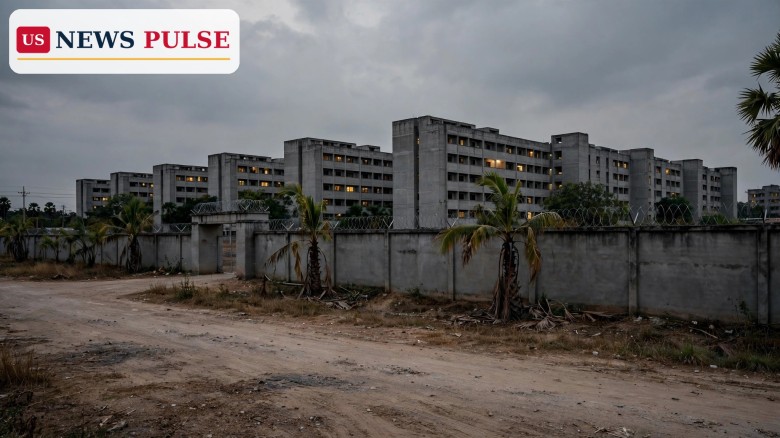
American officials say the group's alleged criminal operations sit at the centre of a vast online fraud industry across South-East Asia. Large, walled compounds in Cambodia and neighbouring countries house thousands of workers who run scams around the clock, contacting victims through social media, messaging apps and dating platforms.
The FBI has repeatedly warned that these so-called pig-butchering scams cost Americans billions a year, mostly from older savers. Last week, the Treasury's Financial Crimes Enforcement Network flagged more than $8 billion in suspicious foreign-directed wire payments through US money services businesses.
Prince Group Sanctions: How the Network Operated
What sets the Prince Group apart, according to Treasury, is how legitimate-looking businesses were woven into the alleged criminal operation. An insurance company and an airline are not the usual face of an online scam ring — but officials say that is the point: ordinary corporate fronts can hold assets, open bank accounts and move money in ways shell companies cannot.
CB General Insurance PLC and Prince International Airlines Co., Ltd. are the most prominent names on the new list, and Treasury says both are controlled by Chen Bo, an executive already under sanctions. Designating companies tied to a sanctioned executive aims to close the loopholes that let the network keep functioning after Chen Zhi's designation last year.
Reactions and Quotes
Treasury Secretary Scott Bessent framed the action as a direct response to the harm suffered by American victims. "Cyber scam syndicates continue to steal billions of dollars from American victims," Bessent said.
The State Department echoed that message, saying: "No criminal network is beyond reach." The US intends to keep pursuing the facilitators and front companies behind the scams, not only the people running the compounds.
Treasury said the action was coordinated with the FBI, the Justice Department and the US Attorney's Office for Alaska, a sign the sanctions are part of a broader effort that could include criminal cases.
Why It Matters
The action matters first for the victims. Online investment and romance scams have become one of the most damaging forms of fraud in the United States, draining life savings from people with little chance of recovering their money. Cutting a major network off from the banking system raises its costs and makes it harder to pay the people running the compounds.
It also matters as a signal. By sanctioning an insurer and an airline alongside the usual shell companies, Treasury is telling banks, auditors and business partners that respectable-sector fronts will not shield a criminal network. The third-round timing shows both persistence and frustration: earlier rounds slowed the network but did not stop it.
What Happens Next
The sanctions take effect immediately. Banks and payment firms worldwide will screen customers against the 46 new names, and any linked accounts or assets under US jurisdiction will be frozen. Investigators will watch for the network reconstituting itself under new names, a pattern seen after the first two rounds.
Criminal cases may follow, given the coordination with the FBI, the Justice Department and the US Attorney's Office for Alaska. For potential victims, the advice is unchanged: be sceptical of unsolicited investment advice from online contacts, never send cryptocurrency to someone you have only met online, and report suspected scams to the FBI's Internet Crime Complaint Center, keeping messages, wallet addresses and transaction records.
Frequently Asked Questions
What is the Prince Group?
A Cambodia-based conglomerate, also known as Prince Holding Group, whose chairman Chen Zhi was designated by the US in October 2025. US officials allege it sits behind a vast online scam network run from compounds in South-East Asia.
Who was sanctioned on November 5, 2026?
Four individuals — Qiu Yong, Zhao Mengyao, He Yujing and Visal Pang — and 41 entities, including CB General Insurance PLC and Prince International Airlines. A separate designation of Chui Kok Wa brought the day's total to 46.
How much money did the scams take?
Treasury alleges the Prince Group-linked operations generated billions of dollars, mostly from US victims. The separate Madagascar-based network was accused of defrauding Americans of more than $400,000.
What do the sanctions actually do?
They freeze assets under US jurisdiction, bar Americans from dealing with the designated people and companies, and expose foreign banks that keep serving them to secondary sanctions.
What should I do if I think I was scammed?
Stop sending money, save all messages, wallet addresses and transaction records, and report the fraud to the FBI's Internet Crime Complaint Center at ic3.gov.
Leave a Comment