


 | Today's Date:





Kohli's 74 and Two World Records Power India to Five-Wicket DLS Win Over New Zealand
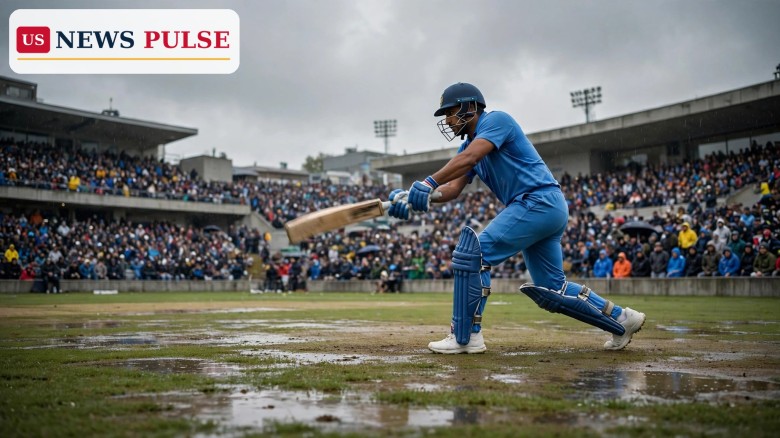
Virat Kohli scored 74 off 51 balls and broke two world records as India beat New Zealand by five wickets under the Duckworth-Lewis-Stern method in a rain-hit first one-day international at Eden Park, Auckland, on Wednesday. The win gave India a 1-0 lead in the five-match series, sealed with 56 balls to spare after rain twice interrupted the chase.
In a 113-run second-wicket stand with captain Shubman Gill, Kohli passed 13,000 one-day international runs batting at No. 3 and moved past Sachin Tendulkar to become the highest run-scorer in ODI chases.
Key Points
- India beat New Zealand by five wickets via the DLS method in the first ODI at Eden Park, Auckland, on Wednesday, November 4, 2026, to lead the five-match series 1-0.
- New Zealand were bowled out for 185 in 40.2 overs, with Tim Seifert top-scoring on 38 and Arshdeep Singh taking 4 for 70.
- Rain twice cut India's chase short, leaving a revised DLS target of 143 in 32 overs, which India reached at 143 for 5 in 22.4 overs.
- Virat Kohli made 74 off 51 balls, passing 13,000 ODI runs at No. 3 and overtaking Sachin Tendulkar as the leading run-scorer in ODI chases.
- Anshul Kamboj was named Player of the Match for 2 for 22 from 10 overs; the second ODI is in Wellington on Saturday, November 7.
What Happened
New Zealand batted first and never found a rhythm against a disciplined Indian attack. The hosts were dismissed for 185 in 40.2 overs, a total that looked well below par. Tim Seifert led the way with 38, while Blair Tickner contributed 34 from the lower order, but no New Zealand batter built a partnership of real substance.
Arshdeep Singh was the pick of the Indian bowlers with 4 for 70, while Gurnoor Brar claimed 3 for 44. Anshul Kamboj, whose control through the middle overs kept New Zealand pinned down, finished with 2 for 22 from his 10 overs.
India's reply was interrupted by rain twice. Each stoppage forced a recalculation, and by the time play resumed for the final time, India had been set a revised DLS target of 143 from 32 overs. Kohli took charge in the company of Gill, and the pair added 113 for the second wicket. Gill made 37 while Kohli drove, pulled and flicked his way to 74 from 51 balls. India reached 143 for 5 in 22.4 overs, winning with 56 balls to spare.
Background and Context
The series is a five-match contest, and the opener at Eden Park was always going to set the tone. New Zealand, playing at home, would have expected to defend a total on a ground where they have so often been formidable, but their batting faltered at exactly the wrong time. A total of 185 was never going to be enough against an Indian line-up that bats deep, and the rain only shortened the chase further.
For India, the win continues a period of transition in which the senior core and the next generation are sharing the load. Gill has been handed the leadership of the one-day side, and his partnership with Kohli is the blend the team management will want to see more of. The bowling, meanwhile, showed the depth India now possesses, with Arshdeep leading the attack and Kamboj and Brar providing control and wickets in support.
Virat Kohli's 74 Rewrites the ODI Record Books
In passing 13,000 ODI runs batting at No. 3, he reached a landmark that speaks to both his longevity and his consistency in the position he has made his own. More strikingly, he moved past Sachin Tendulkar to become the highest run-scorer in ODI chases, a record that captures the defining quality of his career: his ability to pace a run chase and finish it.
Kohli's 74 came from 51 balls, a strike rate that reflected both the modest target and the authority with which he batted. He was in control from the start, rotating the strike with Gill and punishing anything loose. Tendulkar's name has long stood at the top of the ODI chasing charts, and for Kohli to pass him in a successful chase, in the company of the man now captaining India, felt like a passing of the torch in more than one sense.
Reactions
The loudest recognition on the night went not to Kohli but to Anshul Kamboj, who was named Player of the Match for his 2 for 22 from 10 overs. It was a reward for a spell of rare discipline in a format that often punishes bowlers, and it underlined the value of Kamboj's control in setting up the win. His figures were the most economical of the match, and they ensured New Zealand never had the platform to post a competitive total.
For New Zealand, the defeat will prompt hard questions about the batting. A home side bowled out for 185 in just over 40 overs, with only two batters passing 30, has little to take from the match.
Why It Matters
This was more than a routine series opener. A five-match ODI series between India and New Zealand is a significant assignment for both sides, and the first match matters because it establishes who holds the momentum. India's win, achieved with overs to spare and with their senior batter in record-breaking form, sends a clear message that the tourists have come to win the series.
For Kohli, the records matter because they confirm his standing in a format he has dominated for more than a decade. Passing Tendulkar as the leading run-scorer in ODI chases is a landmark that will be cited whenever the great chasers are discussed. For New Zealand, the match matters as a warning: a batting line-up that collapses to 185 at home needs a swift response, and Wellington offers an immediate chance to provide one.
What Happens Next
The series moves to Wellington for the second ODI on Saturday, November 7, where New Zealand will look to level the series at 1-1. The hosts will be expected to make a stronger showing with the bat, while India will look to build on the momentum of the Eden Park win.
Frequently Asked Questions
What was the result of the first ODI between India and New Zealand?
India beat New Zealand by five wickets under the DLS method at Eden Park, Auckland, on Wednesday, November 4, 2026, reaching a revised target of 143 in 22.4 overs.
How many runs did Virat Kohli score?
Kohli scored 74 off 51 balls in a 113-run second-wicket partnership with Shubman Gill, who made 37.
Which records did Kohli break in the match?
Kohli passed 13,000 ODI runs batting at No. 3 and became the highest run-scorer in ODI chases, passing Sachin Tendulkar.
Who was named Player of the Match?
Anshul Kamboj was named Player of the Match for his figures of 2 for 22 from 10 overs.
When is the second ODI?
The second ODI of the five-match series is in Wellington on Saturday, November 7, 2026.
Also read our report on Victor Wembanyama's career-high 52 points lifting the Spurs past the Mavericks and the Wild's 4-2 win over the Flyers in Philadelphia.
Leave a Comment