


 | Today's Date:





Trump 60 Minutes Interview: Deportations 'Might Be Too Tough,' Iran Call Again
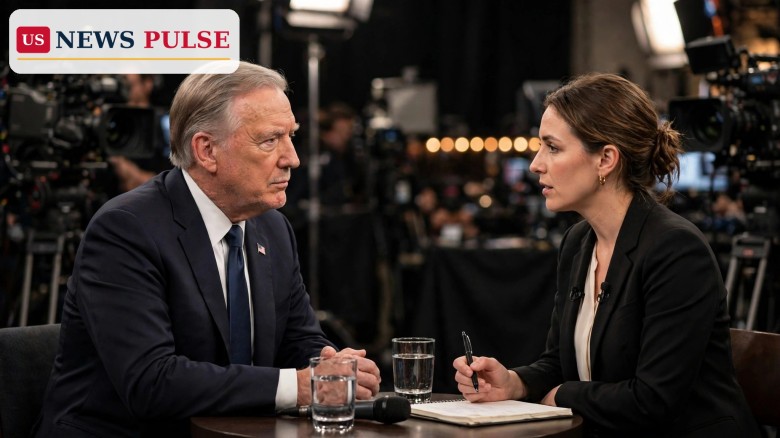
President Donald Trump said on Sunday that his deportation policy "might be too tough," conceding in his first full television interview since the November 3 midterm losses that the crackdown "both helped and hurt" him. The admission came in a CBS 60 Minutes interview with correspondent Ross Douthat that aired on Sunday night, November 8, 2026. Trump also said he would make the same decision again on Iran, opened the door to working with Democrats on immigration and artificial intelligence safeguards, and blamed the war, gas prices and dislike of Israel for the Republican defeat.
Key Points
- Trump said his deportation policy "both helped and hurt" and conceded "I think it might be too tough, yeah" and "That hurt me."
- He gave himself "an A+ for closing up the border" but described maids, cleaners and waitresses with good jobs being removed.
- On Iran, he said he would make the same decision again: "an emphatic yes because you can't let Iran have a nuclear weapon."
- On AI, he said the risks "can be managed," "I don't mind guardrails," and he is open to working with Democrats on safeguards.
- On the midterms: "number one, I was not on the ballot," blaming the war, higher gas prices and "a great dislike, incredibly, for Israel."
What Happened
The interview was taped on Friday morning, November 6, and aired on Sunday, November 8, at 7 p.m. ET on CBS — his first sit-down since the Democrats' midterm victory on November 3.
On immigration, Trump struck a different tone. He said the deportation campaign had cut both ways, conceding: "I think it might be too tough, yeah. That hurt me." He named maids, cleaners and waitresses with good jobs being removed. He also signalled he wants a deal, saying he would "love to do something on immigration" for people in the US "for ten and 15 years."
On Iran, Trump was unrepentant. Asked whether he would make the same decision again, he said: "An emphatic yes because you can't let Iran have a nuclear weapon." He added that he is not looking to escalate. CBS noted that about an hour after the taping, Trump replaced chief of staff Susie Wiles with Stephen Miller, the immigration policy's architect. Trump promised to be civil with Democrats, then called them "Dumocrats," and said he plans to fire some of his team: "I do. Yeah... Little bit."
Background and Context
The November 3 midterms delivered Congress to the Democrats, and the White House has spent the days since reshaping its team. Friday night's preview clips focused on Trump's tease of cabinet changes, covered in our earlier report on the 60 Minutes preview, but the full hour contained far more.
The war is now in its ninth month, having begun on February 28, 2026. Vice President JD Vance said on Monday, November 2, that Washington had made "progress" in talks with Iran, with no deadline set. Vance's assessment of the Iran talks contrasted with Secretary of State Marco Rubio, who said on Sunday the talks had made "no progress" and called Tehran's demands "unacceptable."
The Trump 60 Minutes Interview in Full
The hour ranged across the administration's biggest questions. On artificial intelligence, Trump said the risks "can be managed," adding "I don't mind guardrails" and saying he is open to working with Democrats on safeguards. He warned against rules that would put the United States in "a deep second position" behind China.
The openness to bipartisan work marks a shift in tone, if not yet in policy. But the interview also showed its limits: the "Dumocrats" jibe came seconds after a pledge of civility, and the promise to fire team members pointed to a president explaining a defeat rather than rethinking his course. The concession on deportations was real, but it was framed as calibration — the policy was too tough in its execution, not wrong in its aim.
Reactions and Quotes
On deportations: "I think it might be too tough, yeah. That hurt me." On the border: "An A+ for closing up the border." On immigration: "I would love to do something on immigration" for people here "for ten and 15 years." On Iran: "An emphatic yes because you can't let Iran have a nuclear weapon."
On the midterms: "Number one, I was not on the ballot," blaming the war, higher gas prices and "a great dislike, incredibly, for Israel." On his movement: "MAGA is basically common sense." On AI: the risks "can be managed," "I don't mind guardrails," but no rules leaving the US in "a deep second position" behind China. On firing team members: "I do. Yeah... Little bit." Miller takes over on Monday, when Trump meets Qatar's prime minister on Iran.
Why It Matters
Trump's admission that deportations "might be too tough" is the first public concession of its kind from a president who has made mass deportation the centrepiece of his domestic agenda. It reframes the debate: the question is now whether the policy's scale is costing the president politically. That shift could open space for the immigration deal Trump himself described as "actually doable."
As a midterm post-mortem, Trump's explanation will shape how Republicans approach the new Congress. On Iran, the interview locks in the president's position, even as diplomacy continues. On AI, the openness to guardrails is a signal the industry has awaited from the White House.
What Happens Next
Stephen Miller begins as chief of staff on Monday, November 9, the same day Trump meets Qatari Prime Minister Sheikh Mohammed bin Abdulrahman Al Thani at the White House to discuss the Iran negotiations. The timing is striking: the programme's designer takes over the White House staff the day the president concedes it "might be too tough."
The new Congress convenes in January, and Democrats have signalled they will investigate the war and the deportation programme. On Iran, Vice President Vance has been given days to pursue a settlement, and no deadline has been set. If the talks produce a framework, his 60 Minutes position gives him cover to accept it. If they stall, as Rubio suggested, his insistence suggests he would not hesitate to order further strikes.
Frequently Asked Questions
What did Trump say about deportations?
He said it "both helped and hurt," conceded "I think it might be too tough, yeah," and named maids, cleaners and waitresses being removed. He still gave himself "an A+ for closing up the border."
Would Trump make the Iran decision again?
Yes: "An emphatic yes because you can't let Iran have a nuclear weapon."
What did Trump say about AI?
He said the risks "can be managed," "I don't mind guardrails," and he is open to working with Democrats — but not rules putting the US in "a deep second position" behind China.
Why did Republicans lose, in Trump's view?
He said "number one, I was not on the ballot," blaming the war, higher gas prices and "a great dislike, incredibly, for Israel."
Who is Trump's new chief of staff?
Stephen Miller replaces Susie Wiles. Announced about an hour after Friday's taping, he starts on Monday, November 9, 2026.
Leave a Comment