


 | Today's Date:




Keystone XL Pipeline Returns in Trump Canada Trade Deal Concept as Talks Resume
US President Donald Trump has said his administration has the "concept" of a new trade deal with Canada that would include the long-stalled Keystone XL pipeline, adding a concrete energy project to a negotiation that, until Sunday, had been described only in general terms. Speaking to reporters in Dubuque, Iowa, on Sunday, November 1, 2026, a day after speaking with Canadian Prime Minister Mark Carney, Trump said Canada would build the pipeline and pay for it, and that the route had largely been determined.
Key Points
- Trump said on Sunday in Dubuque, Iowa, that the US has the "concept" of a new trade deal with Canada that would include the Keystone XL pipeline.
- "They're going to build the Keystone Pipeline. They're going to pay for it. We're going to give them the route, and it's largely been determined," Trump said, according to reports of his remarks.
- Carney said on Sunday that his call with Trump built on "recent constructive discussions" on the outlines of a mutually beneficial deal, with teams working in the coming weeks.
- A source told The Globe and Mail that Trump ordered his team to resume formal talks, with negotiations expected to begin within days.
- Canadian sources urged caution: one told Radio-Canada that "key elements" remained unresolved and "we are not on the verge of an agreement just yet."
What Happened
The pipeline detail emerged as Trump spoke to reporters in Dubuque, where he had travelled for a campaign rally on Sunday. Asked about Canada, Trump said he had spoken with Carney again the previous day. "We have the concept of a deal that's going to be great for our farmers, great for our country, and it will be fine for Canada," he said, according to CBC News reporting of his remarks.
He then went further than either leader had gone publicly before, naming the Keystone XL pipeline as part of the scope of an agreement. "They're going to build the Keystone Pipeline. They're going to pay for it. We're going to give them the route, and it's largely been determined," Trump said, according to the Union Leader and StreetInsider, which carried the remarks. He gave no further details of the proposed agreement, The Globe and Mail reported, and it was not immediately clear how the project would be revived.
Carney's own account of the call was more restrained. Earlier on Sunday, the Canadian prime minister posted on X that the exchange had been a "good conversation" that built on "recent constructive discussions on the outlines of a mutually beneficial trade deal" — one that would create jobs for workers, boost affordability for families and "fully respect Canada's languages, culture, and sovereignty." He added: "Our teams will now be working in the coming weeks to deliver that outcome."
A White House spokesperson said in a statement that "the Trump Administration welcomes continued engagement with Canada as we work toward finalizing the details of a deal that will deliver meaningful results for the American people," CBC News reported. Carney's office did not immediately respond to requests for comment on Trump's pipeline remarks, and a spokesperson for Dominic LeBlanc, Canada's minister responsible for trade with the US, had no further comment on Sunday evening beyond Carney's remarks.
Background and Context
The Keystone XL pipeline has been one of the most fought-over energy projects in North America for more than a decade. The proposed pipeline would have carried 830,000 barrels per day of oil from the oil sands of northern Alberta to the major US storage hub at Cushing, Oklahoma, and then on to Gulf Coast refineries, according to Reuters. Former President Joe Biden revoked a key permit for the project in 2021, and it was a private-sector initiative, so reviving it would require more than a handshake between two governments.
Trump has returned to the project before in his second term. In August, he said the pipeline "may be awoken from the grave," Reuters reported. The company behind Keystone XL, Canada's TC Energy, lost billions when the pipeline was cancelled. It later spun off its crude pipelines business into a new entity, South Bow, which has proposed a different project called Prairie Connector, in partnership with US company Bridger Pipeline. That 550,000-barrel-per-day project would run from Alberta to Wyoming and would use some of the Keystone XL pipe that had been installed on the Canadian side of the border before the original project was cancelled. South Bow has said it will decide whether or not to go ahead with Prairie Connector in 2027.
The wider trade dispute gives the pipeline remarks their context. Talks between the two neighbours broke down in August, mainly over car trade, prompting both countries to impose steep duties on each other, and autos are expected to remain a key sticking point, CBC News said. Trump had said last week that a trade agreement with Canada was coming soon, but Ottawa had previously reported limited progress in talks aimed at easing tariffs on steel and autos. Carney told reporters on Wednesday, October 28, that Canada was not yet in a position to agree to a deal and would only accept one in Canada's interests. Sources told CBC News that Canadian officials had been telling industry groups a deal was unlikely before the November 3 midterm vote.
Keystone XL Pipeline: What Trump Said, and What Is Still Unclear
The Keystone XL pipeline element is the new fact in this story, and it is worth separating what Trump actually said from what remains unknown. What he said is specific: the deal concept includes the pipeline, Canada builds it, Canada pays for it, and the United States would give Canada the route, which he said had largely been determined. What he did not say is equally important: he gave no timeline for construction, no financing structure, no answer on who would own or operate the line, and no explanation of how a project whose key permit was revoked in 2021 would be restarted.
That gap is why Ottawa's reaction matters as much as Trump's remark. A source familiar with the matter told The Globe and Mail that the leaders spoke on Saturday, that Trump ordered his team to resume formal talks, and that negotiations were expected to begin within days — a concrete procedural step beyond Carney's "coming weeks" language. But another senior Canadian source told CBC News it was still unclear what form the talks would take, and a source quoted by Radio-Canada said "key elements" remained unresolved: "We are not on the verge of an agreement just yet."
Those two signals can both be true. Formal talks can resume within days while the substance — autos, steel, and now a pipeline that would need permits, financing and a corporate sponsor — remains unresolved. The history of this negotiation also counsels caution: a "concept of a deal" is not a deal, and in August the same two governments walked away from the table over cars. The pipeline, if it becomes a real element of the talks rather than a rally-line flourish, would add an energy and infrastructure negotiation on top of a tariff negotiation that is already difficult.
Reactions and Quotes
Trump's fullest statement on the call came in Dubuque: "I spoke to him again yesterday, and we have the concept of a deal that's going to be great for our farmers, great for our country, and we'll be fine for that," he told reporters, according to Reuters. The emphasis on farmers fits the pattern of Trump's trade messaging in the final days before the midterms, when agricultural exports and rural votes are central to the campaign in Iowa and the Plains.
Carney's statement, by contrast, read like a deliberate counterweight. His post stressed jobs, affordability and sovereignty — including Canada's languages and culture — rather than any single project. That framing reflects the domestic politics on the Canadian side, where any deal that appears to concede sovereignty, French-language protections or the auto industry would face immediate political attack. Carney's October 28 position, that Canada was not yet in a position to agree to a deal, has not been withdrawn, and nothing in Sunday's statements withdraws it either.
The Associated Press said both countries are seeking to resolve their bitter trade dispute, and the White House statement welcomed "continued engagement" toward a deal delivering "meaningful results for the American people." Beyond those official lines, the most telling reactions came from the unnamed sources: the Globe's source describing formal talks resuming within days, the CBC source unsure of their form, and the Radio-Canada source warning that key elements remain unresolved. Taken together, they describe a negotiation that is moving again without yet being close.
Why It Matters
For the United States, the pipeline detail matters because it connects two of Trump's signature themes — energy dominance and trade leverage — in a single proposal, one day before voters decide control of Congress. If a Canada deal with a pipeline element were real, it would give Trump an energy deliverable to pair with tariff relief for farmers and manufacturers, and it would revive a project his supporters have treated as a symbol of American energy ambition since the first Trump administration.
For Canada, the stakes are different. A pipeline carrying Alberta crude to US refineries would be economically significant, but only if the terms, ownership and regulatory path are clear — and only if it does not come at the cost of concessions on autos, steel or sovereignty that Ottawa has said it will not make. Carney's careful language suggests he is keeping the door open without endorsing Trump's version of the deal, and the absence of any comment from his office on the pipeline remarks themselves is itself a signal.
For the wider trade picture, the resumption of formal talks is the development to watch. The US and Canada are each other's largest trading partners, and the tariff fight has raised costs for businesses on both sides of the border. A negotiation that produces nothing before the midterms still matters if it produces something after them — and a negotiation that collapses again over autos would confirm the August pattern rather than break it.
What Happens Next
Three things will show whether Sunday's remarks were the start of a deal or a campaign-trail flourish. First, whether formal talks do in fact begin within days, as the Globe's source said, and what form they take — the question the senior Canadian source left open. Second, whether either government puts anything in writing about the pipeline: a permit path, a corporate sponsor, or a financing arrangement would turn a remark into a project. Third, whether the tariff track moves in parallel, on steel and autos, where the real economic stakes of the dispute sit.
The calendar adds pressure. The midterm elections are on Tuesday, November 3, with all 435 House seats and 35 Senate seats contested. Trump will deliver his closing midterm remarks on Monday afternoon at the Lincoln Memorial Reflecting Pool in Washington, rather than travelling to a battleground state, and Democrats are holding final get-out-the-vote rallies on Monday, including Senate candidates James Talarico in Texas and Adam Hamilton in Kansas. Any Canada announcement before Tuesday would land in that final-stretch politics; anything after Tuesday would be judged on its substance rather than its timing.
For now, the honest summary is narrow: Trump has said a deal concept includes Keystone XL, Canada has said talks are constructive and will continue in the coming weeks, and Canadian sources say no agreement is near. The next statement from either capital — or the first concrete sign of formal talks — will tell readers which of those descriptions was closest to the truth.
Frequently Asked Questions
What did Trump say about Keystone XL and Canada? In Dubuque, Iowa, on Sunday, November 1, 2026, Trump said the US has the "concept" of a new trade deal with Canada that would include the Keystone XL pipeline, adding: "They're going to build the Keystone Pipeline. They're going to pay for it. We're going to give them the route, and it's largely been determined."
What did Carney say about the call? Carney said on X on Sunday that he had a "good conversation" with Trump that built on "recent constructive discussions on the outlines of a mutually beneficial trade deal," with teams working in the coming weeks. His office did not immediately comment on the pipeline remarks.
Is there a Canada trade deal yet? No. No terms or timeline have been announced, and a source quoted by Radio-Canada said "key elements" remained unresolved and "we are not on the verge of an agreement just yet," even as another source said formal talks were expected to resume within days.
Why was Keystone XL stalled? Former President Joe Biden revoked a key permit for the project in 2021. The proposed line would have carried 830,000 barrels per day from Alberta's oil sands to Cushing, Oklahoma, and on to Gulf Coast refineries. Its sponsor, TC Energy, later spun off its crude pipelines into South Bow.
What happens next in the talks? Watch for formal talks resuming within days, any written detail on the pipeline's permit path, sponsor or financing, and movement on the steel and auto tariffs at the heart of the dispute — before or after the November 3 midterms.
Related coverage: Canada-US trade deal gets fresh push as Carney calls Trump talk a good one, Trump brands Michigan Democrat El-Sayed a jihadist at Dubuque rally before midterms and US warns EU that $3.4B Airbus loan threatens hard-won aircraft trade truce.
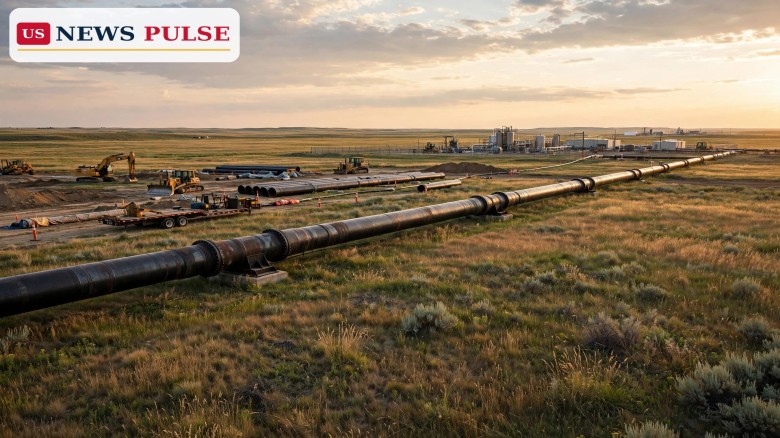
Sources: Reuters report via 94.1 Duke FM, published November 1, 2026; CBC News, The Globe and Mail and Associated Press reporting via Life News Agency, published November 2, 2026; Moneycontrol, published November 2, 2026. Trump's pipeline remarks are reported as his statements; no deal terms or timeline have been announced. The featured image is an illustrative photograph of a pipeline construction site, not a photograph of the Keystone XL pipeline.
Leave a Comment