


 | Today's Date:





DOJ Appeals Alaska Senate Lawsuit After Judge Dismisses Ballot Challenge
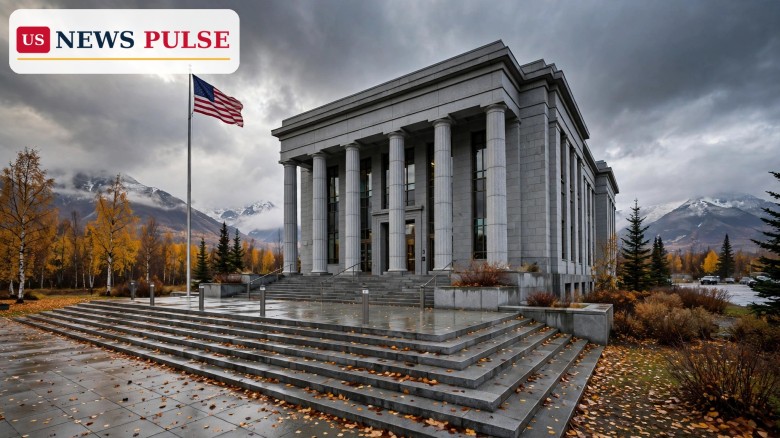
The Justice Department appealed on Sunday, November 1, 2026, hours after a federal judge dismissed its lawsuit over Alaska's Senate race, keeping alive a last-minute legal fight over ballots cast for a second candidate named Dan Sullivan just two days before voters decide control of Congress. The DOJ Alaska appeal moves the case to the United States Court of Appeals for the Ninth Circuit, after U.S. District Judge Sharon Gleason ruled that the federal government had no legal standing to force Alaska to segregate ballots and no workable plan to investigate voters without breaking ballot secrecy.
Key Points
- The Justice Department appealed on Sunday, November 1, 2026, after Judge Sharon Gleason dismissed its Alaska Senate lawsuit, with Associate Attorney General Stanley Woodward and U.S. Attorney Michael Heyman filing notice of appeal.
- Gleason ruled the federal court lacks authority to order Alaska to segregate ballots cast for independent candidate Daniel J. Sullivan so federal investigators could examine whether those voters meant to vote for Republican Senator Dan S. Sullivan.
- The department had asked the court to block Alaska from certifying a result that could be affected by voter confusion, pending an investigation into Daniel J. Sullivan's votes.
- The race pits incumbent Senator Dan Sullivan against Democratic former Representative Mary Peltola, with retired teacher Daniel J. Sullivan also on the ballot, in a contest that could affect the Republicans' 53-47 Senate majority.
- Alaska's ranked-choice system and its Supreme Court ruling that ballots must clearly identify party and incumbency are central to the state's defence, and the appeal now races against Tuesday's November 3 midterm election.
What Happened
The sequence unfolded within a single day. Gleason dismissed the case on Sunday, finding that the Justice Department could not fix its lawsuit because the remedy it sought was beyond a federal court's power. The department responded the same day, announcing through its rapid-response account that it would appeal and that Alaskan voters deserve a fair election, not to be misled in what it called an attempt to rig outcomes. USA Today reported that Woodward, who filed the case, and Heyman immediately filed notice that they would appeal, while Bloomberg Law reported an appeal to the Ninth Circuit on Sunday, the same day the ruling was issued.
Democracy Docket, which tracks the case, reported that the department asked the appeals court to overturn the ruling that dismissed its bid to block certification of Alaska's Senate election should the Republican incumbent lose. The appeal therefore does not restart the case in the trial court; it asks a higher court to revive a certification block that Gleason refused to grant. No appeals-court timetable was reported on Sunday, and it was not clear how quickly the Ninth Circuit could act before, or after, Tuesday's vote.
The underlying lawsuit, filed on October 22, argued that Daniel J. Sullivan, a retired teacher who lives in a remote fishing village, entered the race with the intention of misleading supporters of Senator Sullivan into voting for him. The department said certifying an election result that could be affected by that confusion would violate the federal government's duty to protect election integrity. It asked Gleason to bar Alaska election officials from certifying a Peltola victory if assigning all of Daniel J. Sullivan's votes to the incumbent would have changed the result, and to allow an investigation into whether voters who chose Daniel J. Sullivan had instead intended to support the senator.
Gleason rejected that framework in full. She wrote that the United States had provided no workable plan for how it proposed to segregate ballots cast for Daniel J. Sullivan on Election Day and then conduct a court-ordered, unspecified investigation of those ballots in a manner that would preserve voter secrecy. She added that requiring segregation so those voters could be further investigated by law enforcement is not a remedy the court can or should order, because it would violate Alaskans' right to a secret ballot.
Background: Two Sullivans, One Senate Seat
The dispute turns on a name collision that Alaska's own courts have already examined. The incumbent is listed on the ballot as Dan S. Sullivan, a Republican, while the independent challenger is listed as Daniel J. Sullivan Jr. The Alaska Supreme Court allowed both names on the ballot, and, as Democracy Docket noted, ruled four months ago that ballots printed would clearly identify the candidates' party and label Senator Sullivan as the incumbent. Alaska also uses ranked-choice voting, which allows voters to rank more than one candidate, so a first-choice vote for one Sullivan does not automatically behave like a simple two-way contest.
That background matters because the Justice Department's theory depends on confusion surviving those labels. The department pointed to the similarity of the names and to reporting by The New York Times on October 28 that Peltola campaign staff members worked with a Democratic operative from Ohio to find another Dan Sullivan to run and peel votes from the Republican senator. Reuters has not verified that report, and Peltola has denied involvement in any effort to recruit Daniel J. Sullivan, saying at a rally that she is not interested in tricking voters. Daniel J. Sullivan has denied in interviews that his aim is to confuse, although he has said he would prefer Peltola winning over the incumbent.
President Donald Trump has told reporters he ordered the Justice Department to file the lawsuit, has called Daniel J. Sullivan a fake candidate, and has called for Peltola to be criminally prosecuted. After the dismissal on Sunday, Trump said on social media that the other Dan Sullivan had disappeared. The department is separately conducting a criminal investigation and has issued subpoenas tied to the effort to put Daniel J. Sullivan on the ballot, according to reporting cited by NewsCubby, although nobody in the race has been charged with a crime in that inquiry.
Alaska had urged dismissal in a Saturday filing, arguing the demand was impossible at this stage because many voters had already cast ballots and ballots had been commingled to the point where the identity of each voter cannot be determined. Gleason's reasoning echoed that practical problem, but rested on a legal ground as well: the federal government lacked standing, and the time, place and manner of Alaska's election are the responsibilities of the state, not the executive branch of the federal government.
DOJ Alaska Appeal: What the Ninth Circuit Is Being Asked to Decide
The DOJ Alaska appeal asks the Ninth Circuit to do what Gleason would not: treat the possibility of voter confusion as a reason to hold up certification while an investigation sorts out intent. That is a sweeping request, because certification is normally a state function, and because the votes in question are already cast and, in many cases, already counted alongside other ballots. The department's public statement frames the appeal as a defence of fairness, saying Alaskan voters deserve a fair election and should not be misled. Its opponents frame it as an attempt to throw out results before they are known.
The American Civil Liberties Union, which intervened in support of Alaska, said the judge rebuffed a Justice Department effort to throw out Alaska's election results before a single ballot was counted, adding that the administration keeps trying to tilt the midterms and lost again on Sunday. That language captures the political stakes: the appeal is not only about one Senate seat, but about whether federal courts will intervene in state-run elections on the eve of voting, at the request of the executive branch, when the incumbent president's party holds a narrow Senate majority.
Legally, the appeals court will have to weigh the same obstacles Gleason identified. First, standing: whether the federal government can bring this kind of claim at all. Second, remedy: whether any court can order segregation and investigation of ballots without violating secrecy. Third, timing: whether a court can impose a significant change on the eve of an election, when early voting is already well advanced and more than 50 million ballots had been cast nationally by October 31, according to reporting cited in election briefings. Each obstacle alone would be formidable; together, they explain why the dismissal was framed as a procedural and constitutional barrier, not merely a disagreement about facts.
Reactions
The Justice Department's reaction was immediate and combative. Its rapid-response account said the department plans to file a notice of appeal, and its statement said Alaskan voters deserve a fair election, not to be misled in an attempt to rig outcomes. That wording keeps the department's original allegation, that Daniel J. Sullivan entered the race as a frivolous candidate to confuse voters, at the centre of the appeal, even though Gleason's order said the court did not accept the proposed remedy and found no workable plan to protect secrecy.
Alaska officials did not immediately respond to requests for comment on the ruling, according to USA Today. The ACLU, by contrast, welcomed the dismissal and cast the appeal as the latest in a series of federal efforts to intervene in state elections. Peltola's campaign had previously called the lawsuit meritless, and Peltola herself has denied recruiting Daniel J. Sullivan. Senator Sullivan has separately vowed to honour the outcome of the race, a promise reported by Al Jazeera two days before the election, even as the department he once served as a senator's ally now seeks to keep a certification challenge alive.
The broader reaction from election officials and critics has been consistent throughout this case: federal election oversight has become more aggressive, with the administration pressing states for voter-registration data and arguing that stricter measures are needed for public confidence, while Democratic and some Republican election officials view the moves as federal overreach. The Alaska appeal will test that argument in a court above Gleason, but it will do so against a record in which the trial judge found the core remedy infeasible.
Why It Matters
It matters first because Alaska's Senate race could help decide control of the chamber. Republicans hold a 53-47 majority, and Peltola, a former member of the House, is one of the Democrats' most prominent challengers in a state that has not elected a Democratic senator since 1932 in some accounts of the race's history, although the contest has tightened in the closing stretch. If the appeals court were to revive a certification block, even temporarily, it would create uncertainty over when, and on what terms, Alaska's result could be finalised, in a state where mail ballots can take days to arrive and be counted.
It matters second because the theory, if accepted, would travel. A ruling that federal courts can order segregation of ballots for a candidate with a similar name, followed by investigation of those voters, would give the executive branch a template for challenging results in other states where names, ballot design or ranked-choice rules create arguable confusion. A ruling affirming Gleason, by contrast, would reinforce the principle that states run elections, that ballot secrecy is not a technicality, and that a claim of confusion must come with a workable, lawful remedy, not merely an allegation.
It matters third because of timing. The appeal was filed two days before the midterms, when all 435 House seats and 35 Senate seats are on the ballot. Voters have already cast tens of millions of early ballots. A court order that changes how ballots are handled at this stage risks confusion of its own, which is precisely the concern Gleason raised when she said the administration offered no plan that preserved secrecy. The Ninth Circuit will therefore be asked to decide not only who is right, but how fast, and with what safeguards, any intervention could be imposed.
What Happens Next
The immediate next step is the Ninth Circuit's handling of the appeal. The department has filed notice of appeal, but the reporting available on Sunday did not specify whether it would also seek emergency relief, such as a stay or an injunction pending appeal, or how quickly the court could schedule briefing. Alaska, for its part, can proceed to administer its election consistent with state and federal law, as the state put it in seeking dismissal, unless an appeals court orders otherwise.
On Tuesday, November 3, Alaskans will vote in the midterm election, with the Senate race at the top of the ballot alongside House and state contests. Counting in Alaska, particularly of mail ballots, can take days, and the state's ranked-choice tabulation adds further steps before a winner is certified. If the Ninth Circuit acts before certification, its ruling could shape that process; if it acts after, the appeal could become a fight over a result already declared, which would raise new questions about remedy and finality.
Separately, the criminal investigation tied to Daniel J. Sullivan's candidacy continues, with subpoenas issued but no charges reported. That inquiry, and the political debate over whether Peltola's campaign played any role in recruiting him, will likely continue regardless of what the appeals court decides, because the dismissal turned on standing and remedy, not on a finding about who recruited whom. The appeal, in short, keeps the legal question alive without settling the factual dispute at its heart.
Frequently Asked Questions
What did the Justice Department appeal? The department appealed Judge Sharon Gleason's November 1 dismissal of its lawsuit seeking to block Alaska from certifying its Senate election result if voter confusion over Daniel J. Sullivan could have changed the outcome.
Why did Judge Gleason dismiss the case? She ruled the federal government lacked standing, that a federal court lacks authority to order segregation of ballots for investigation, and that the department offered no workable plan to investigate voters while preserving ballot secrecy.
Who are the two Sullivans? Incumbent Republican Senator Dan S. Sullivan is seeking re-election against Democrat Mary Peltola, while independent candidate Daniel J. Sullivan Jr., a retired teacher, is also on the ballot.
What happens on Election Day? Voters cast ballots on Tuesday, November 3, 2026, and Alaska will count and tabulate them under its ranked-choice system, unless an appeals court orders a different process before certification.
Has anyone been charged over Daniel J. Sullivan's candidacy? No. A parallel criminal investigation has issued subpoenas, but reporting on Sunday said nobody in the race has been charged with a crime in that inquiry.
Related coverage: Judge dismisses Alaska Senate lawsuit in blow to Trump bid to block certification; Alaska calls Trump ballot demand impossible in Saturday court filing; Democrat Haley Stevens endorses Republican Mike Rogers in Michigan Senate race.
Leave a Comment