


 | Today's Date:





Trump Pushes Permanent Daylight Saving as Lame-Duck Republicans' Last Win
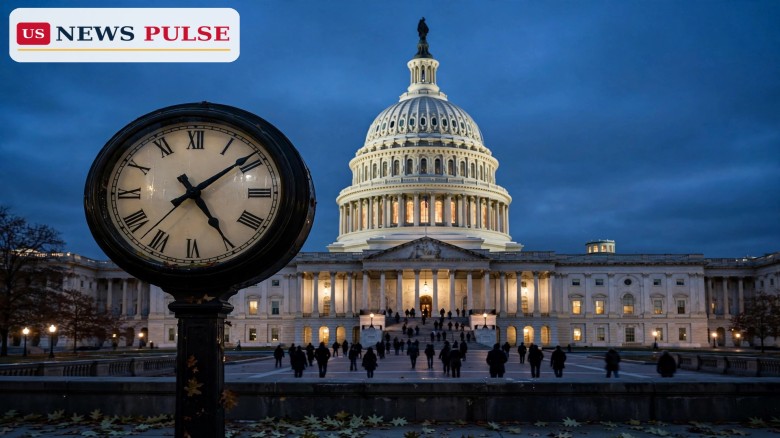
President Donald Trump has urged Republicans to use their final weeks in control of Congress to pass permanent daylight saving time. He framed the long-stalled Sunshine Protection Act as one last win before Democrats take power in January 2027. The appeal came on the evening after the November 3, 2026 midterms, days after clocks fell back into early winter darkness.
He gave the bill a new nickname: the "I Don't Want to Change My Clocks Anymore Act". He complained that sunset came at 5:06 p.m. and it was dark by 5:31 p.m., asking: "Isn't that ridiculous?" For supporters, that early darkness is the argument: summer time all year would give Americans an extra hour of evening light through winter.
Key Points
- Trump called on lame-duck Republicans to pass permanent daylight saving time after Democrats won the November 3, 2026 midterms.
- He renamed the Sunshine Protection Act the "I Don't Want to Change My Clocks Anymore Act", citing a 5:06 p.m. sunset.
- The bill would end the twice-yearly clock changes, but it stalled in the Senate during an extended election recess.
- Under the Uniform Time Act of 1966, only Congress can change the system, with the Secretary of Transportation overseeing it.
- Democrats flipped seven Senate seats and 32 House seats as of 7 p.m. Eastern Time on election night, according to USA Today.
What Happened
Mr Trump issued his statement on the evening after the midterms, when Democrats had trounced Republicans across the country. As of 7 p.m. Eastern Time, Democrats had flipped seven Senate seats and 32 House seats, according to USA Today. That rout will hand them both chambers in January 2027.
He said he had held back before the election for tactical reasons. "I didn't want to make a big deal out of this prior to the Election because I didn't want to have certain Senators lose their Race, in a landslide, but it is too bad they can't get it done," he said. He now argues the party has nothing left to lose by acting.
The timing is seasonal too. Clocks fell back on November 1, 2026, ending daylight saving time. Within days, daylight was gone before dinner, after days when, in Mr Trump's words, "it was so nice and sunny at this same time". The House passed the bill in July, but the Senate did not take it up before its election recess.
Background and Context
America has observed daylight saving time, in various forms, for more than a century. The modern system is governed by the Uniform Time Act of 1966, which sets the national framework and leaves administration to the Secretary of Transportation. Only Congress can change that framework, so a presidential wish alone cannot stop the clock changes.
Mr Trump pressed the issue before. Earlier in 2026 he clashed publicly with Senate leaders over the stalled bill, after the House passed it by 308 votes to 117 in July. That episode ended without Senate action, with senators divided over permanent daylight saving versus permanent standard time, and some warning about dark winter mornings for schoolchildren.
The issue is not a conventional left-right fight. Backers cite evening light, retail activity and public mood. Critics cite sleep science, school safety and the unpopular 1974 experiment with year-round daylight time, when winter mornings stayed dark for months. Hawaii and most of Arizona already sit outside the system, while the Navajo Nation observes it.
Permanent Daylight Saving: What the Bill Would Do
The bill is simple: stop changing the clocks. If it became law, summer time would become the time all year round. Evenings in December and January would stay light an hour later than now, while mornings would stay dark an hour later too. That trade-off has divided parents, teachers, doctors and business groups for years.
Supporters argue the evening light is worth it, giving more time after work and school. Critics argue morning darkness is the real cost, especially for children waiting for school buses in winter.
The immediate question is narrower: will the Senate, which let the bill stall through the election recess, find time and votes in a lame-duck session packed with funding bills? Mr Trump kept the stakes modest: "We have far bigger priorities, but I will keep fighting for this!" he said.
Reactions and Quotes
The president's own words carried the announcement. He complained: "It's so dark outside, so early (Sunset was 5:06 P.M., and it was dark by 5:31 P.M. — Isn't that ridiculous?)" He added: "Just a few days ago it was so nice and sunny at this same time."
No Senate leader had publicly committed to a lame-duck vote when the statement was issued, and the earlier stall suggests the path is not straightforward. House support does not guarantee Senate action, where senators have blocked the bill over regional sunrise concerns. In western states, permanent daylight saving would push winter sunrises past 8 a.m., and in some places past 8:30 a.m.
Why It Matters
The clock debate touches almost every American household twice a year. It is a rare issue on which public frustration is broad but political action is slow. Majorities have consistently said they dislike changing the clocks, yet Congress has repeatedly failed to settle on a permanent alternative, torn between daylight saving and standard time and between regions with very different sunrises.
It also tests what a lame-duck Congress can still do. A successful clock bill would be a small legacy for a Republican majority that has just lost power.
What Happens Next
Senate leaders must decide whether to bring the bill to the floor during the lame-duck session, and whether it can clear the 60-vote threshold usually needed to advance legislation, or be attached to a larger moving bill. Neither step is guaranteed, and the calendar is short, with the new Congress due in January 2027.
If the bill passes both chambers and is signed, regulators would set an effective date, and Americans would stop changing their clocks at the next scheduled switch. If it fails, the current system continues: clocks spring forward on March 14, 2027, and fall back again the following November.
Frequently Asked Questions
What is Trump asking Congress to do?
Pass the Sunshine Protection Act, making daylight saving time permanent and ending the twice-yearly clock changes.
Why is he pushing this now?
Clocks fell back on November 1, 2026, and Democrats won the midterms on November 3. Trump argues Republicans should act while they still hold Congress.
What did he call the bill?
The "I Don't Want to Change My Clocks Anymore Act", citing a 5:06 p.m. sunset with darkness by 5:31 p.m.
Can the president change the clocks himself?
No. Under the Uniform Time Act of 1966, only Congress can change the system, with the Secretary of Transportation overseeing it.
What happens if the bill does not pass?
The current system continues: clocks spring forward on March 14, 2027, and fall back again the following November.
Read more: Trump's earlier daylight saving clash with the Senate, Daylight saving time ends November 1, 2026, and Republicans concede the House after the 2026 midterms.
Leave a Comment