


 | Today's Date:





USCIS Good Moral Character Rules Tighten: Child Support, Benefits Fraud Can Block Citizenship
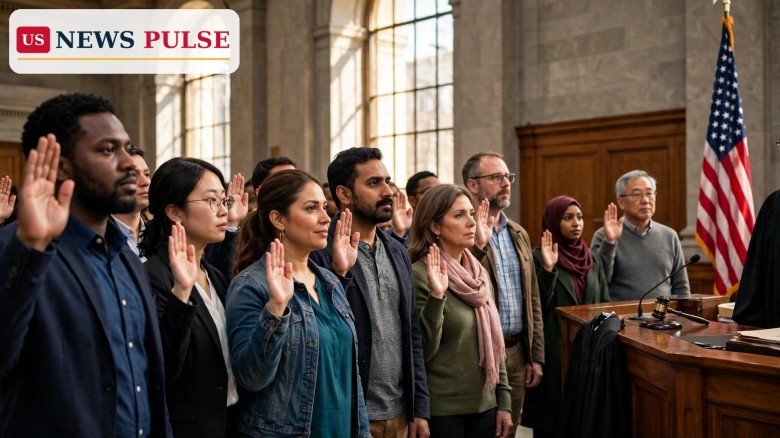
US Citizenship and Immigration Services has tightened the test every would-be American must pass — not the civics exam, but the judgement of their character. Under Policy Memorandum PM-602-0201, issued Tuesday, November 4, 2026, officers can now find that a naturalisation applicant lacks “good moral character” if they wilfully failed to support their children, cheated to obtain public benefits, or broke a sponsorship promise.
Key Points
- USCIS issued Policy Memorandum PM-602-0201 on November 4, 2026, telling officers how to weigh family support, sponsorship promises and public benefits in good moral character decisions.
- Officers may now find an applicant lacks good moral character for wilfully failing to support dependents, including minor children, or for fraud in seeking or using public benefits.
- Failing to honour an Affidavit of Support (Forms I-864, I-864EZ or I-864A) or a Declaration of Financial Support (Forms I-134 or I-134A) while enforceable can also count against an applicant.
- Receiving means-tested benefits may be a negative factor where officers judge the applicant deliberately avoided self-sufficiency, such as by stopping work to stay eligible for food or housing aid.
- The memo stresses lawful receipt of benefits alone is not a bar, and findings must rest on specific conduct “rather than poverty, disability, or lawful benefit receipt”.
What Happened
USCIS published the memorandum on November 4, 2026, giving officers detailed instructions for a part of naturalisation that has long depended on individual judgement. Every applicant for United States citizenship must show good moral character, a legal requirement in the Immigration and Nationality Act. Until now, officers had broad guidance on what that phrase meant. The new memorandum narrows it, spelling out the conduct that can sink an application.
The memorandum lists four situations where an officer may find an applicant lacks good moral character: wilful failure to support dependents, including minor children; a conviction for benefits fraud, or an admission of it; the same offence even without a conviction; and failure to meet obligations under an Affidavit of Support or Declaration of Financial Support while enforceable. Officers may also treat means-tested benefit receipt as a negative factor where the applicant appears to have deliberately avoided self-sufficiency, such as by giving up work to stay eligible for aid. A dependent’s benefit use may count as evidence the applicant failed to support them.
Background/Context
Good moral character has been part of American naturalisation law for generations. The statute does not define the phrase in full; it lists certain bars, such as murder and aggravated felonies, and leaves officers to judge the rest. The relevant period is generally the five years before filing — three years for certain spouses of US citizens — running through the oath of allegiance. Officers looked mainly at criminal records, tax compliance and honesty on forms; family support and benefit use were rarely decisive, and guidance on them was thin.
The memorandum fits a wider pattern: USCIS has proposed ending deference to its own prior approvals for work-visa extensions, and moved to shorten refugee deadlines — a change a Boston judge temporarily blocked in October. This one reaches the final stage: citizenship itself. USCIS will write new Policy Manual guidance and revise Form N-400 to collect information on benefit use and dependent support; no date has been given.
What the New USCIS Good Moral Character Rules Change
The most direct change concerns parents: an applicant who wilfully failed to support a dependent — above all a minor child — can now be found to lack good moral character. Child support has been a family-court matter, not an immigration one, so applicants behind on support must be ready to explain their circumstances.
The change on benefits fraud is also wide. A conviction has long been a problem, but officers may now treat the conduct itself as a bar even without a conviction, and an admission can count too — significant because many benefits disputes are settled administratively and never reach a criminal court. Sponsors are affected as well: failing to honour an Affidavit of Support or Declaration of Financial Support while enforceable can count against a later citizenship application.
Reactions/Quotes
The memorandum’s most important passage is the limit it sets on its own reach: findings must rest on specific conduct, “rather than poverty, disability, or lawful benefit receipt”. That is the sentence applicants and their lawyers are most likely to cite if an officer goes too far. USCIS has not given a public rationale beyond the memorandum, and no official has been quoted about it. Supporters will likely call it common sense; critics will likely focus on the discretion given to individual officers and the risk that lawful benefit use by struggling families is treated as a character flaw.
Why It Matters
Naturalisation is the last step in a long journey. Applicants have typically lived in the United States for years, paid taxes and built lives here. A finding that they lack good moral character does not just delay citizenship — it can leave them in limbo, unable to vote or sponsor relatives on the same terms. Those most affected may be least able to fight back: families on benefits and parents in arrears often have the fewest resources for a lawyer. The memorandum’s promise that poverty alone is not a bar will be tested in the interview room, not in the text. For the hundreds of thousands who naturalise each year, the practical message is simple: keep records of support payments, work history and lawful benefit receipt.
What Happens Next
USCIS will write the new approach into its Policy Manual and revise Form N-400, with no timetable given, so applicants filing in the coming weeks face the memorandum without the new form or manual guidance. Lawyers expect the first decisions to be closely watched and challenged where officers go beyond its terms. Legal challenges are a real possibility: immigration groups have challenged other recent USCIS changes, including the refugee deadlines blocked by a Boston judge in October. Applicants with complicated histories should seek legal advice and gather documents showing what they paid, when, and what benefits were received lawfully.
FAQ
What is USCIS Policy Memorandum PM-602-0201? A November 4, 2026 memorandum telling officers how to weigh family support, sponsorship promises and public benefits in good moral character decisions.
Can unpaid child support stop me becoming a US citizen? It can count against you if the failure was wilful. Evidence of payments and efforts to meet obligations will matter.
Does receiving public benefits block citizenship? Not on its own. Lawful receipt alone is not a bar, but benefits fraud, or deliberately avoiding work to stay eligible for aid, can be a negative factor.
What is an Affidavit of Support? A legally enforceable promise, usually on Form I-864, in which a sponsor agrees to support an immigrant financially.
How long is the good moral character period? Generally the five years before filing, or three years for certain spouses of US citizens, running through the oath of allegiance.
Related coverage: H-1B extension rule change would hit Indian workers hardest, USCIS data shows; Venezuelan TPS returns November 6 as Ninth Circuit rejects Trump stay bid; Judge blocks Trump refugee rule cutting response time to 10 days for 186,000 refugees.
Leave a Comment