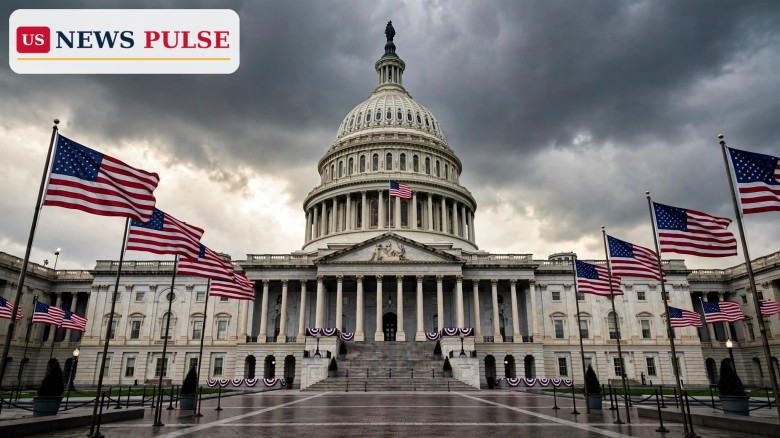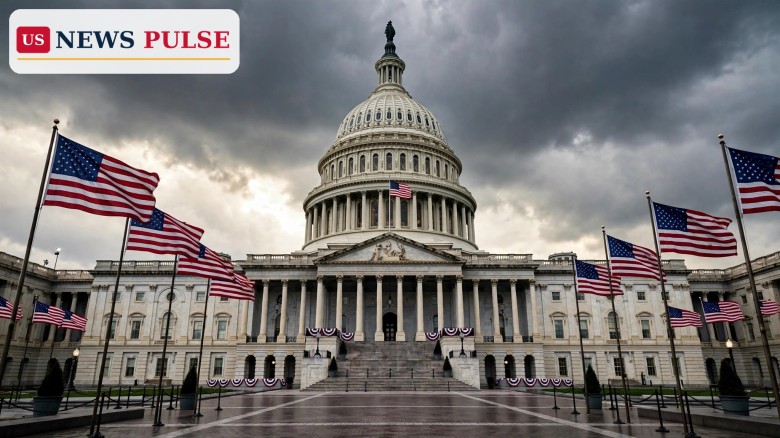
House Speaker Mike Johnson pushed back on Friday against President Donald Trump's demand that Senate Republicans scrap the filibuster to end the government shutdown, warning that the so-called nuclear option could hand Democrats a powerful weapon the next time they hold the majority. Johnson's warning, delivered at his Friday press conference, exposed a rare public split between the Republican president and the Republican Speaker over how to break a funding standoff that has now stretched into its 31st day, with the Senate's stopgap bill blocked 13 times since September 19.
The nuclear option fight has become the latest flashpoint in a shutdown that began on October 1, when federal funding lapsed after Congress failed to agree on a short-term spending bill. Trump, writing late on Thursday night after returning from a week-long trip to Asia and the Pacific, urged Republicans to change Senate rules so the funding bill could pass with a simple majority. Johnson, asked about that post on Friday, framed it as frustration rather than a plan he could support, and he reminded reporters that the filibuster is not his to change.
Trump's late-night Truth Social post was blunt. "It is now time for the Republicans to play their 'TRUMP CARD,' and go for what is called the Nuclear Option - Get rid of the Filibuster, and get rid of it, NOW!" he wrote. He argued that doing so would "IMMEDIATELY end this ridiculous, Country destroying 'SHUT DOWN,'" and would also let Republicans more easily confirm what he called "the best judges, the best US Attorneys, the best of everything."
Trump said the question had followed him on his Asia trip: how, in his telling, Democrats had shut down the country, and why Republicans had allowed it. He recalled that Democrats, when they last held a slim Senate majority, had fought for years to weaken the filibuster but were blocked by two of their own members, former Senators Joe Manchin of West Virginia and Kyrsten Sinema of Arizona. He predicted Democrats would scrap the rule on their first day back in power anyway, and he argued Republicans should act first, while they hold the White House and both chambers.
Johnson was asked about the post at his Friday press conference, and his answer was careful but unmistakable. "Look, I'll just say this in general, as I've said many times about the filibuster, it's not my call. I don't have a say in this. It's a Senate chamber issue," he said. "But the filibuster has traditionally been viewed as a very important safeguard. If the shoe was on the other foot, I don't think our team would like it."
Johnson said he read Trump's post as an expression of anger at the impasse, not as a settled instruction. "What you're seeing is an expression of the president's anger at the situation. He is as angry as I am, and the American people are, about this madness," Johnson said. "He just desperately wants the government to be reopened so that all these resources can flow to the people who need it so much."
The filibuster is the Senate practice of delaying or blocking a measure by preventing it from coming to a final vote. Under current rules, 60 votes are needed to end debate on most legislation and move it forward, a threshold known as cloture. That rule gives a minority of senators real leverage: a bill with majority support can still stall if it cannot find 60 votes.
The "nuclear option" is the nickname for changing that precedent so a measure can advance with a simple majority of 51 votes. It has been used before, but only for nominations, not for ordinary legislation: Democrats used it for most presidential nominees, and Republicans later extended it to Supreme Court nominees and, this year, to confirmations of Trump's nominees. Using it to pass a spending bill would be a far bigger step, because it would remove the minority's main check on the majority's legislative agenda.
The arithmetic in this shutdown explains why the idea keeps surfacing. Republicans hold 53 Senate seats and a 219-213 majority in the House, but the stopgap funding bill needs 60 votes in the Senate. Only three Senate Democrats have voted for it so far, leaving Republicans five votes short. Democrats, for their part, have demanded that negotiations over expiring federal tax credits that help Americans buy private health insurance through the Affordable Care Act be part of any deal, while Republicans have pressed for a clean stopgap through November 21.
The standoff has already carried a heavy price. The shutdown began on October 1 and, with the Senate adjourned on Thursday and not scheduled to meet again until Monday, November 3, it is set to run to at least 34 consecutive days. One estimate cited in reporting put the potential economic cost at between 7 billion and 14 billion dollars. Federal workers have missed paychecks, and the funding lapse has rippled into food aid, health programmes and other services, with courts only this week ordering the administration to draw on contingency funds for November food benefits.
Johnson's central warning was about what comes next. "The Democrats, look, they've said what they would do. They would pack the Supreme Court. They would make Puerto Rico and D.C. states. They would ban firearms. They would do all sorts of things that would be very harmful for the country, and the safeguard in the Senate has always been the filibuster," he said. "But again, not my issue, not something I get to even weigh in on."
That argument cuts both ways in Washington, and both parties have felt it. When Democrats held the majority, they tried to weaken the filibuster to pass voting-rights and other reforms, and were stopped by Manchin and Sinema. Trump, in his post, accused Democrats of fighting "so hard" for the change because they understood "the tremendous strength that terminating the filibuster would give them." Johnson's point was that the safeguard protects whichever party is in the minority, and that Republicans, who hope to keep winning elections, should think about the day they are back in that position.
Johnson also used the press conference to turn up pressure on Democrats, arguing that the shutdown is a matter of simple arithmetic and that Democrats should help pass the funding bill. "It's a simple math problem," he said. "We need Democrats to help. Due to its procedural rules, 60 votes are needed in the senate to pass the continuing resolution and we only have 53 Republicans."
For now, the odds of the Senate actually going nuclear on legislation look low. The chamber's Republican leadership has shown no appetite for it: a spokesperson for Senate Majority Leader John Thune said Thune's "position on the importance of the legislative filibuster is unchanged." That, combined with Johnson's public caution, leaves Trump's demand as a pressure tactic and a statement of frustration rather than an imminent rules change.
Trump's own words set the tone for the debate. Beyond the call to scrap the filibuster, he praised Thune and Johnson as doing "a GREAT job" while calling Democrats "Crazed Lunatics that have lost all sense of WISDOM and REALITY," and he blamed what he called "Trump Derangement Syndrome" for the impasse. He closed his post by urging Republicans to "Initiate the 'nuclear option,' get rid of the filibuster and Make America Great Again!"
Johnson's response was notably gentler toward the president, even as he rejected the substance of the demand. He described Trump as "as angry as I am, and the American people are, about this madness," and stressed the president's desire to reopen the government. The contrast between the two men, one demanding a rules revolution and the other defending a Senate tradition, captured the tension inside the Republican coalition as the shutdown drags on.
Thune's office added the clearest institutional signal. By confirming that Thune's support for the legislative filibuster had not changed, his spokesperson Ryan Wrasse effectively closed the door, at least for now, on the path Trump proposed. Senate Democrats, meanwhile, have continued to insist that any funding deal must address the health-care tax credits at the heart of their demands.
The filibuster fight matters because it is about far more than one funding bill. If the Senate scrapped the 60-vote threshold for legislation, the majority party could pass almost its entire agenda with 51 votes, from tax and health policy to voting rules and the structure of the courts. That is why both parties have, at different moments, flirted with the idea and then pulled back: each side knows it will eventually be in the minority again.
It also matters for the shutdown itself. The nuclear option is, in effect, a shortcut around negotiation. Without it, the only way out remains the harder path: five more Democrats voting for the Republican stopgap, or a compromise that gives Democrats something on health care in return. With the Senate out until Monday and the funding bill already failed 13 times, neither path looks quick, and the human cost of the lapse keeps growing for federal workers, food-aid recipients and the services that depend on appropriations.
Finally, the episode reveals the limits of presidential pressure on Senate procedure. The president can demand a rules change on social media, but the Senate sets its own rules, and its leaders have spent years defending the filibuster as a safeguard for deliberation and minority rights. Johnson's intervention, coming from the House, underscored that even Republican leaders outside the Senate are wary of a precedent they might one day regret.
The Senate returns on Monday, November 3, and the stopgap bill is expected to face another test. Watch for whether any additional Democrats break ranks, whether Thune signals any shift, and whether negotiators make progress on the health-care tax credits that Democrats want addressed. If the bill fails a 14th time, pressure for a new approach, whether a compromise or a different funding vehicle, will intensify.
Also watch the courts and the agencies: with November food benefits already the subject of judicial orders, and with the shutdown approaching the length of the longest in American history, the administration will face growing legal and political pressure to keep essential services running. And watch Trump's own messaging: if the Senate does not move, the president may return to the nuclear option demand, or he may turn his frustration toward a negotiated deal.
What is the nuclear option? It is a change to Senate precedent that would let a measure advance with a simple majority of 51 votes instead of the 60 votes now needed to end a filibuster.
What did Trump demand? Late on Thursday, October 30, Trump urged Senate Republicans to "get rid of the filibuster" so the stopgap funding bill could pass with a simple majority and end the shutdown.
What did Johnson say? Johnson said the filibuster is a Senate issue, not his call, but warned it is an important safeguard and that Democrats would later use a simple-majority standard for court-packing, statehood for Puerto Rico and Washington, D.C., and gun bans.
Why can't the funding bill pass now? It needs 60 Senate votes; Republicans hold 53 seats and only three Democrats have backed it, leaving them five votes short after 13 failed attempts.
When does the Senate return? The Senate adjourned on Thursday and is not scheduled to meet again until Monday, November 3.
Related coverage: Two judges order USDA to keep food aid flowing for 42 million Americans and Senate votes 51-47 to end Trump's global tariff emergency.
Leave a Comment



 | Today's Date: