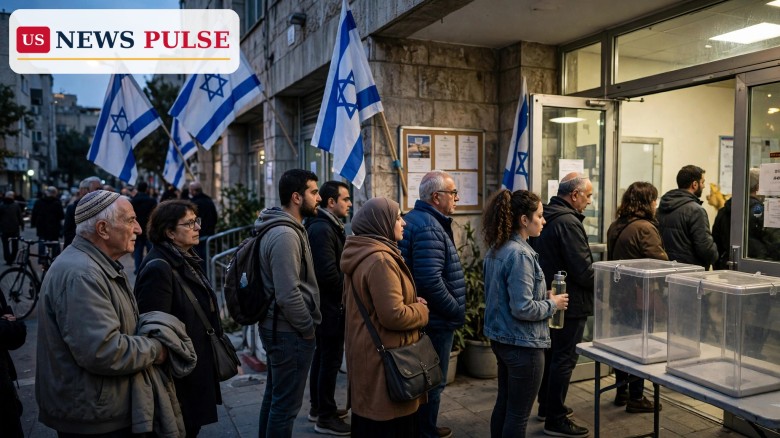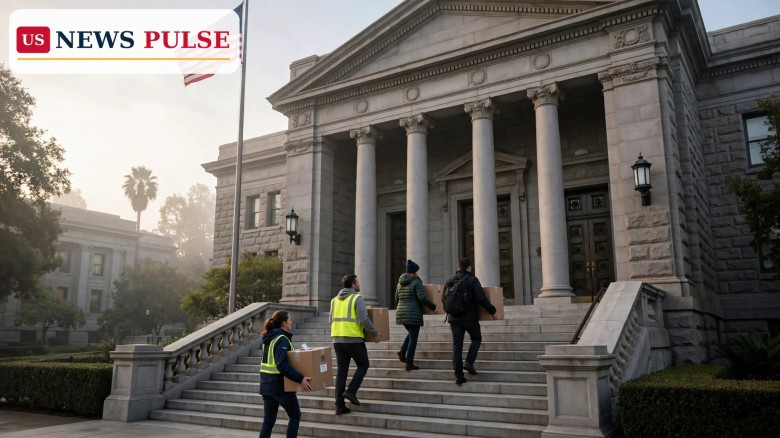
A federal judge in California has imposed a sweeping emergency order blocking the Trump administration from pressuring election officials across the United States, just four days before the 2026 midterm elections. US District Judge Trina Thompson granted a temporary restraining order on Friday evening, October 30, 2026, halting tactics she said were likely to interfere with election administration and disenfranchise lawful voters. The order bars the Justice Department and the Department of Homeland Security from demanding that officials segregate ballots, purge voters from the rolls or halt ballot processing, and from threatening election officials with criminal prosecution if they refuse.
Thompson issued the order after a coalition of labour unions and civil rights groups, including the NAACP and the League of United Latin American Citizens, challenged the administration's recent conduct, alleging Voting Rights Act violations and unconstitutional intrusion into state control of elections. CNN, which first reported the order, described the court as known to lean left.
In her opinion, Thompson directly addressed the administration's stated purpose. "Although Defendants claim that their actions are designed to halt unlawful voting by noncitizens, their actions are likely to have the effect of interfering with election administration and disenfranchising lawful voters," she wrote. The judge also rejected the idea that election officials who do their jobs lawfully could face federal prosecution because of a disputed ballot.
"When state and local government employees perform the work of distributing, processing, or counting ballots or otherwise administering the 2026 midterm election" in accordance with the law, she wrote, "they do not violate federal criminal law even if a particular ballot belongs to a registered voter alleged by Defendants to be ineligible to vote." CNN said it had reached out to the Justice Department for comment.
The order is the latest courtroom setback for an aggressive federal push, led by the DOJ and DHS, which the administration says aims to prevent noncitizens from voting. At the centre of that effort is a controversial data-matching operation spearheaded by DHS, which has compared state voter lists with federal records to build lists of suspected noncitizens.
Election officials say those lists are unreliable and include US citizens, and several judges are now scrutinising the approach. A name wrongly flagged can trigger demands to set a ballot aside or remove a voter, even when that voter is fully eligible.
Despite the lawsuits, the Justice Department has sought to increase pressure, sending letters to 29 states and Washington, DC, threatening investigations and demanding that they preserve records and voter data from the 2024 election. Federal law already requires jurisdictions to preserve election records for 22 months after an election, so the letters added a threat of investigation to an obligation states already meet.
California is the sharpest flashpoint. The Justice Department has sued there to try to block counting ballots of thousands of voters it says may be noncitizens, but the 9th US Circuit Court of Appeals rejected its demands, saying it has no right to intervene in how states verify citizenship. An appeals court earlier rejected a bid to set aside 20,000 California mail ballots.
The new order is striking for its scope. Rather than limiting relief to California or to a single state, Thompson barred the Justice Department and the Department of Homeland Security from making the disputed demands of election officials in any state while the order is in place. That nationwide reach is what makes the ruling a campaign-wide halt rather than a local ruling.
It also goes beyond the demands. By blocking prosecution threats, it removes a lever the administration has used for months, and the disclosure requirement gives the court visibility into any attempt to obtain the same materials through another route.
The ruling is temporary, not a final judgment. A temporary restraining order is an emergency measure, granted quickly when a judge finds that immediate harm is likely, and it does not decide the underlying case. That distinction matters for both sides: the plaintiffs have won breathing room through the election, but the administration can still argue its case, seek to narrow the order or appeal.
The strongest language in the case so far comes from the judge herself. Thompson wrote that the administration's actions were "likely to have the effect of interfering with election administration and disenfranchising lawful voters," a finding that frames the dispute not as a technical disagreement over procedure but as a risk to lawful voters' ballots being counted.
The plaintiffs' case rests on two claims: that the conduct violates the Voting Rights Act and intrudes unconstitutionally on state control of elections, which are run by state and local officials. They argue federal threats cross the line from enforcement into coercion.
The administration's position, as described in the opinion, is that its actions are designed to halt unlawful voting by noncitizens. That goal is not itself in dispute in the order; what Thompson questioned was the method, finding that the tactics used were likely to interfere with lawful administration instead. No response from the Justice Department had been reported when the order was published.
The timing is the story. The order landed four days before voters go to the polls on November 3, 2026, in midterms that will determine control of Congress for the final two years of President Donald Trump's presidency. Early voting is already at record levels: figures reported on October 30 showed 47.9 million Americans had already voted, surpassing the previous midterm record of 45.9 million cast ahead of Election Day in 2022.
The order therefore arrives while millions of ballots are already cast and local officials are processing and counting them. Any demand to segregate ballots, purge rolls or halt processing now would land on officials under maximum pressure, with little time to check whether a flagged voter is actually ineligible.
The ruling also answers a question hanging over election offices for months: whether lawful work could expose officials to prosecution. Thompson's answer was no, a sentence that may matter as much as the barred demands to workers who have faced threats.
The temporary restraining order is set to expire on November 16, 2026, nearly two weeks after Election Day. That window covers the vote itself and the initial counting and canvassing period, when disputes over ballots are most likely to surface. What happens after November 16 will depend on whether the court extends the order, converts it into a preliminary injunction or lets it lapse.
The Justice Department could seek to appeal or narrow the order, and any new warrant application, subpoena or demand for election materials tied to the lists must be reported to Thompson. Parallel cases on the DHS data-matching programme continue separately.
For voters, the practical effect is straightforward: ballots should be processed under normal state rules, without the barred demands, for as long as the order stands.
A short-term emergency order granted when a judge finds immediate harm is likely. It preserves the status quo and does not decide the final outcome.
It blocks the DOJ and DHS from demanding ballot segregation, voter purges or halts to ballot processing, and from threatening prosecution or coercing officials over ineligibility claims.
No. It targets the specific pressure tactics in the case, not lawful investigations unrelated to them, and it requires disclosure of new demands for election materials.
Such orders are time-limited by design. November 16 falls after Election Day and initial counting, and the court can extend it or replace it with a longer injunction.
Americans vote on Tuesday, November 3, 2026. Under the order, officials process and count ballots under normal state rules, without the barred demands, while it remains in force.
Related coverage on US News Pulse: DOJ charges green-card holders with illegal voting in five states, Trump's $1 million voter-fraud reward, and Trump's Texas rallies and the tightening Senate race.
Leave a Comment



 | Today's Date: