


 | Today's Date:




Detention Centre Visits at Stake as Appeals Court Doubts Trump Administration Ban
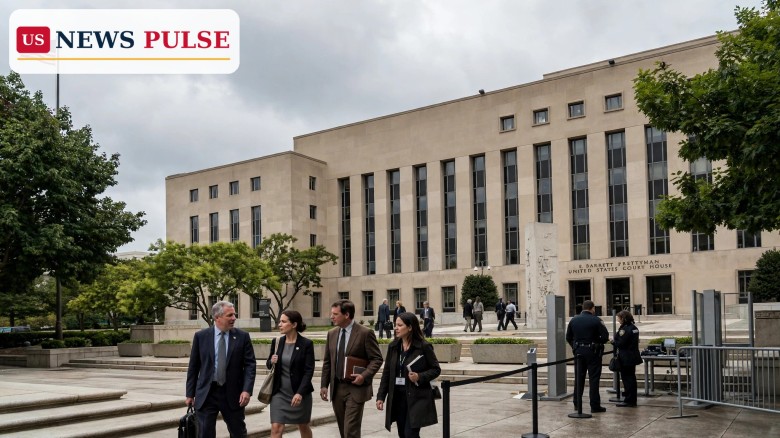
Detention centre visits by members of Congress are at the centre of a closely watched court fight in Washington, after a federal appeals panel appeared sceptical on Tuesday of the Trump administration's attempt to revive a ban on unannounced inspections of immigrant detention facilities. The hearing, in a case brought by 13 Democratic lawmakers, tested whether individual members of Congress can sue when the government blocks them from entering facilities they say they have a legal right to inspect, and whether a Department of Homeland Security policy requiring seven days' advance notice can stand against a federal spending law that says it cannot.
The three-judge panel of the US Court of Appeals for the District of Columbia Circuit heard arguments on 3 November 2026 in Neguse v.
Key Points
- A D.C. Circuit panel heard arguments on 3 November 2026 over the Trump administration's policy barring unannounced lawmaker visits to ICE detention centres.
- The administration argues the 13 Democratic lawmakers who sued lack standing, as individual members cannot assert general injuries to Congress's power.
- Judges, including Trump appointee Gregory Katsas, questioned that argument; two judges suggested members are injured each time the ban is applied.
- US District Judge Jia Cobb ruled in December 2025 that the seven-day advance-notice policy violated a federal spending law barring such a requirement.
- The case arrives amid scrutiny of ICE detention conditions, with 37 people having died in ICE custody last fiscal year.
What Happened
The hearing centred on a policy adopted by the Department of Homeland Security last year that required members of Congress to request access to ICE-operated detention centres at least seven days in advance.
The administration's lawyer, Steven Myers of the Justice Department, argued that the case should not be in court at all. Individual members of Congress, he said, cannot sue over a general injury to the institution's power, and can bring a claim only if they are singled out for particular treatment. On that view, a policy applied to all members alike is a political dispute between the branches, not a lawsuit that a court can resolve.
The judges pushed back on that framing from several directions. Circuit Judge Gregory Katsas, appointed by President Donald Trump, questioned the claimed injury at the heart of the government's position, probing how a policy that directly restricts a member's own access could leave that member without a legal remedy.
Background/Context
The legal backdrop is unusually clear-cut, at least on the statute. The spending law at issue states that the Department of Homeland Security may not require members of Congress to give advance notice before visiting detention facilities. Judge Cobb, ruling in December 2025, held that the department's seven-day rule did exactly what the statute forbids, and struck it down. The administration appealed, and the case has now reached the D.C.
The timing adds weight to the dispute. Immigration detention has expanded sharply, and conditions inside facilities have drawn sustained public attention. The queue of facts before the court included the stark figure that 37 people died in ICE custody last fiscal year, a number that critics of the administration cite as evidence that independent, unannounced oversight is not a formality but a safeguard.
Detention Centre Visits and Congressional Oversight
At its core, the case is about what congressional oversight means when the executive branch controls the doors. Congress writes the laws, funds the agencies and claims a constitutional right to watch how its laws are carried out. But that right depends, in practice, on access: a lawmaker who cannot enter a facility cannot verify a claim about it, interview the people held there, or report back to voters with first-hand knowledge.
Reactions/Quotes
The administration's position, as presented by Justice Department lawyer Steven Myers, is that members of Congress can sue only when singled out for treatment, and that a general restriction on the institution's power is not an individual injury a court can remedy. That argument frames the dispute as a political question for the branches to settle themselves, rather than a legal claim for the courts.
Judge Cobb's December 2025 ruling remains the most concrete judicial statement in the case so far. Her holding that the advance-notice policy violated the spending law's explicit bar gives the lawmakers a district-court victory to defend, and puts the burden on the administration to show why an appellate court should set it aside. The panel's questions on Tuesday suggested it is not persuaded that the administration has yet done so.
Why It Matters
The outcome will shape how Congress oversees a detention system that holds tens of thousands of people at any given time, many of them far from public view. If unannounced visits are restored, lawmakers regain a tool that can surface problems — overcrowding, medical neglect, use of force — before they become crises. If the ban is revived, oversight becomes, in effect, scheduled oversight, with facilities able to prepare and officials able to control what visitors see.
What Happens Next
The panel will now deliberate and issue a written ruling, though no timetable was announced at the hearing. Either side could seek further review: the losing party could ask the full D.C. Circuit to rehear the case en banc, or petition the Supreme Court.
Frequently Asked Questions
What is the case about?
Whether the Trump administration can require seven days' notice before congressional visits to ICE detention centres, or whether a spending law bars that and allows unannounced visits.
Who sued?
Thirteen Democratic members of Congress from California, Colorado, Maryland, Mississippi, New York and Texas, in Neguse v. US Immigration and Customs Enforcement.
What did the lower court decide?
US District Judge Jia Cobb ruled in December 2025 that the advance-notice policy violated the spending law; the administration is appealing.
Why did the appeals judges seem sceptical?
They questioned the standing argument, with two judges suggesting members are injured each time the ban is applied to them.
What happens next?
The D.C. Circuit panel will issue a written ruling; the losing side could seek en banc rehearing or Supreme Court review.
Related coverage: a federal judge recently blocked an Afghan deportation flight to Pakistan, and the first Senate call of election night went to Mark Warner in Virginia.
Leave a Comment