An Iran strike warning is hanging over the final days of the 2026 midterm campaign. According to a new Axios report, a United States official believes President Donald Trump could be more willing to order a large-scale military operation against Iran if Republicans fare badly in Tuesday's midterm elections — even as Qatari mediators report “positive progress” after more than 12 hours of talks in Tehran aimed at restarting direct negotiations.
The report, published on Friday, October 30, 2026, and carried widely on Saturday, October 31, does not say that any strike has been ordered. It describes a president weighing two very different paths — a negotiated deal or renewed military action — with the election, regional allies and a divided inner circle all pulling in different directions. The White House, for its part, has rejected any suggestion that the election result would drive a military decision.
The Axios account centres on a blunt message that the report says is being passed to Iranian officials: their best chance of a deal is now. “If he feels embarrassed or disenfranchised, he will do something bold,” a US official told Axios, adding: “That's what everyone is telling the Iranians. Their best shot to get a deal is right now.” The logic, as presented in the report, is that a bruising election night could harden Trump's approach rather than soften it.
A White House official pushed back firmly on that framing, telling Axios that election results would not factor into Trump's decisions on Iran. That denial matters, because it is the administration's on-the-record position against an anonymous official's assessment of the president's instincts. Both statements can be reported; neither, on its own, settles what Trump will actually do.
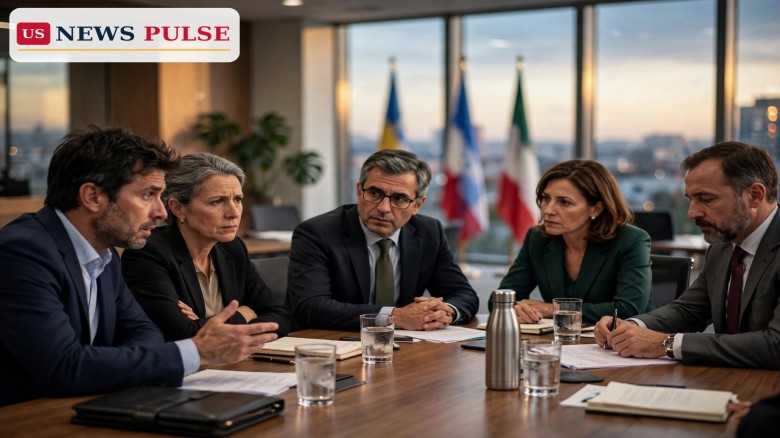
At the same time, diplomacy has not stopped. Qatari mediators spent more than 12 hours in Tehran on Friday in an effort to restart direct talks between Washington and Tehran, remaining in regular contact with the White House throughout, according to Axios. A diplomatic source described the session in upbeat terms: “There was positive progress. Talks are still ongoing in an effort to unlock a deal between the US and Iran.” The talks were due to move to Doha on Saturday.
Qatar's pitch, as described in the reporting, is a sequence of reciprocal steps over several days that would bring both sides back to direct negotiations on Iran's nuclear programme and other issues. Doha is urging Iran to allow UN inspectors into nuclear sites heavily damaged by US and Israeli strikes, in exchange for some sanctions relief. That formula is designed to give each side something it can present as a win — verification for Washington, relief for Tehran — without either side conceding its core demand first.
The current confrontation did not begin this week. The United States and Israel launched attacks against Iran on February 28, 2026, triggering Iranian retaliation across the region. Despite subsequent diplomatic efforts and a memorandum signed by Washington and Tehran in June, tensions have persisted over security arrangements and navigation through the Strait of Hormuz, the narrow waterway through which a large share of the world's seaborne oil passes.
The United States has not struck Iran since September 1, according to the latest reporting, and a third carrier strike group led by the USS Theodore Roosevelt is expected in the region at the end of November. The head of US Central Command has already briefed Trump on options for renewed strikes, the Thursday Times noted in its account of the Axios report, while Iran this week claimed tanker explosions in the Strait of Hormuz.
The cost of the conflict is already a political issue at home. A Pentagon estimate put the cost of the Iran war at about $47.1 billion through October 16, according to reporting this week, and Democrats on Congress's Joint Economic Committee have separately estimated that American families have spent hundreds of dollars more on gasoline since the war began. Against that backdrop, a recent Pew Research Center survey cited in the latest reporting found that about 65 percent of Americans disapprove of Trump's handling of military action in Iran.
Trump himself struck a notably calmer note in public on Friday. “There are talks. They want to talk. They keep talking,” he told reporters at the White House. “We have time, frankly. It's a war, but it is not a typical war.” He has previously said the conflict would be “wrapped up soon” and that any settlement must guarantee Tehran never acquires a nuclear weapon.
It is worth being precise about what has and has not been reported, because the stakes of getting this wrong are high. Axios reported an assessment by one US official about what Trump might be inclined to do after a bad election result. MS NOW, citing three senior Gulf Arab officials, reported that the administration has briefed Gulf allies to prepare for a short, intense round of strikes as early as November 4. Neither outlet reported that Trump has made a final decision, ordered a strike, or set a date — and the White House has declined to comment on military plans that, in its words, “may or may not exist.”
The stalemate at the negotiating table helps explain why both tracks — talks and military planning — are running at once. Washington wants nuclear concessions before any return to negotiations, according to a US official quoted by Axios. Tehran insists the US must first lift its naval blockade on Iranian ports along the Strait of Hormuz, release frozen funds and allow oil sales. Each side wants the other to move first, and Qatar's step-by-step proposal is an attempt to break that sequence.
Regional pressure is also building from both directions. Egypt, Türkiye, Iraq, Pakistan and Saudi Arabia have urged Iran to resume negotiations before the midterms, according to a regional source cited by Axios, and the leaders of Saudi Arabia and Türkiye have urged Trump in recent days to allow more time for diplomacy. Pakistan, which is also mediating, says it is “cautiously optimistic” about the diplomacy. In the other direction, Israeli Prime Minister Benjamin Netanyahu is lobbying for a joint operation against Iran immediately after the election.
Inside the administration, Treasury Secretary Scott Bessent — who is leading an economic pressure campaign called “Operation Economic Outcast” — is among the aides urging Trump to let that initiative play out rather than rush back into combat, according to the reporting. The argument is that sanctions and economic pressure may do work that bombs cannot, without the retaliation that strikes would invite.
“If he feels embarrassed or disenfranchised, he will do something bold. That's what everyone is telling the Iranians. Their best shot to get a deal is right now,” a US official told Axios.
“There was positive progress. Talks are still ongoing in an effort to unlock a deal between the US and Iran,” a diplomatic source told Axios about Friday's Tehran session.
“There are talks. They want to talk. They keep talking. We have time, frankly. It's a war, but it is not a typical war,” President Donald Trump told reporters at the White House on Friday.
“We do not comment on sensitive military plans that may or may not exist. President Trump keeps all options on the table to ensure that Iran can never have a nuclear weapon,” a White House official said in response to the MS NOW report.
Gulf allies, meanwhile, are pushing hard to de-escalate, and one Gulf official said they “would not be surprised” if some states pushed back on US strikes launched from their bases. Iran has vowed to respond to any US strikes on its energy infrastructure by attacking oil and gas facilities in Saudi Arabia, the United Arab Emirates, Qatar, Kuwait and Bahrain.
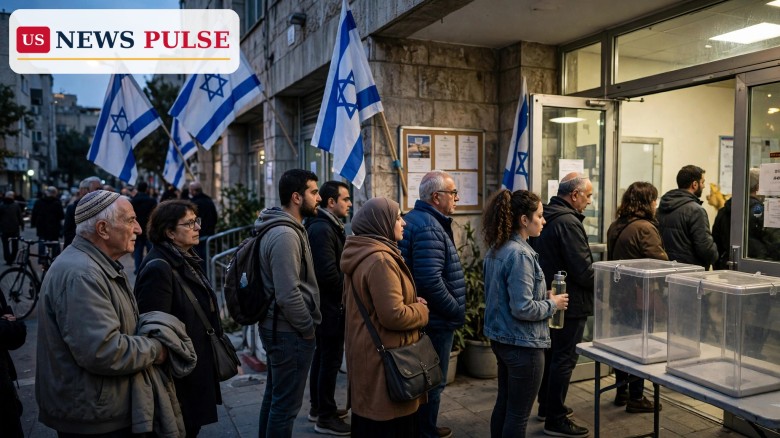
The timing is what makes this report so consequential. The midterms on Tuesday, November 3, will decide control of Congress, and the Axios account explicitly links that domestic verdict to a foreign-policy decision with global consequences. If the reporting is right, voters are not only choosing a Congress — they may also be shaping the atmosphere in which a wartime president decides his next move.
The energy stakes are equally direct. Any renewed strike campaign, and any Iranian retaliation against Gulf energy facilities, would land on a global oil market already strained by eight months of war. That is why Gulf states are lobbying so hard for diplomacy, and why the Strait of Hormuz — through which tankers carry oil to world markets — sits at the centre of both the military planning and the negotiations.
There is also a credibility question for the diplomacy itself. Qatar's “positive progress” and the White House's insistence that elections will not drive military decisions are both, in their way, attempts to keep the talks alive: one by showing momentum, the other by denying that the talks have a deadline imposed by American politics. Whether Tehran believes either claim may determine whether the Doha round produces steps both sides can accept.
The immediate test comes on Saturday, when the Qatar-led discussions are due to continue in Doha. Watch for any sign that Iran has agreed, even in principle, to admit UN inspectors to its damaged nuclear sites, or that Washington has offered sanctions relief concrete enough for Tehran to take back to its own leadership. Either would be a genuine breakthrough; the absence of either would suggest Friday's “positive progress” was process, not substance.
Tuesday, November 3, is Election Day, and Wednesday, November 4, is the earliest date cited in the MS NOW reporting for a possible short, intense round of strikes — a date that should be treated as a planning marker cited by Gulf officials, not a scheduled operation. Later in November, the arrival of the USS Theodore Roosevelt carrier strike group will add further military weight to the region, with or without a diplomatic deal.
For now, the honest summary is this: talks are moving, military options are being prepared, the president's inner circle is divided, and nobody outside the White House knows which path Trump will choose. The next 72 hours — Doha on Saturday, the midterms on Tuesday — will narrow that uncertainty, one way or the other.
Has Trump ordered a strike on Iran? No. The reporting says he has been briefed on military options and that Gulf allies were told to prepare for possible strikes as early as November 4, but it also stresses that no final decision has been made and no strike has been ordered.
What did the Axios report actually claim? That a US official believes Trump could be more inclined to order a major military operation if Republicans lose badly in the midterms, and that this message is being relayed to Iran as a reason to strike a deal now. The White House denies that election results will factor into the decision.
What is Qatar trying to achieve? A sequence of reciprocal steps over several days — including UN inspectors visiting Iran's bombed nuclear sites in exchange for limited sanctions relief — that would return Washington and Tehran to direct negotiations.
Why is November 4 mentioned? MS NOW, citing three senior Gulf Arab officials, reported that Gulf allies were briefed to prepare for a short, intense round of strikes as early as November 4, the day after the election. It is a reported planning date, not a confirmed operation.
What happens if strikes resume? Iran has vowed to hit oil and gas facilities in Saudi Arabia, the UAE, Qatar, Kuwait and Bahrain if its energy infrastructure is struck, which is why Gulf allies are pressing hard for a diplomatic outcome and why global energy markets are watching closely.
Related coverage on US News Pulse: Trump reaffirms nuclear testing plan, Trump's oil and gas holdings surge 43% as Iran war lifts prices, Democrats say, and Trump orders US nuclear weapons testing to resume after 33-year pause.
This article is based on reporting by Axios, MS NOW and other outlets carrying their accounts on October 30–31, 2026. Direct quotations are attributed to the officials and sources named in that reporting.
Leave a Comment



 | Today's Date: