


 | Today's Date:




North Korea Air-Defence Missile Test Identified After Nov 4 Sondok Launches
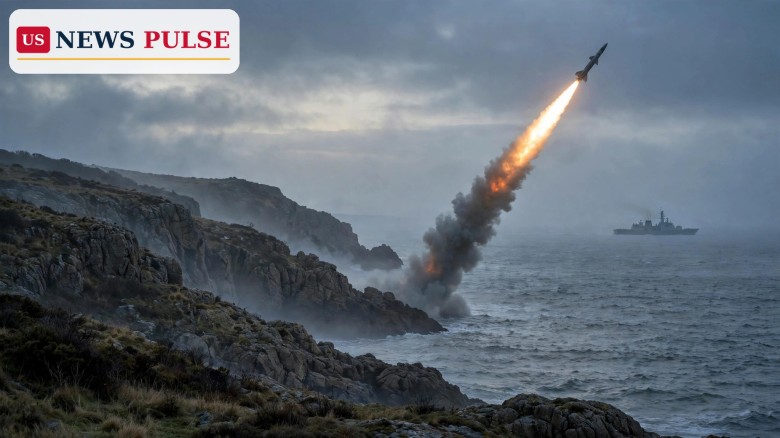
SEOUL — North Korea has identified its November 4 launches as a North Korea air-defence missile test, state media reported on Thursday, November 5, 2026, ending a day of uncertainty about what Pyongyang fired from its east coast. The Korean Central News Agency (KCNA) said the Missile Administration test-fired a newly designed air-defence missile system on Wednesday, and that a long-range cruise-missile unit staged a strike drill the same day against a virtual airport target. South Korea's military had earlier confirmed only that several missiles were fired from the Sondok area toward the sea, with their types still under analysis.
The announcement turns an ambiguous launch into a clearer claim, covering both air defence and a long-range strike weapon on the same day. That distinction matters for neighbours, because ballistic-missile launches by North Korea are prohibited under United Nations Security Council resolutions, while cruise-missile tests are not covered by the same ban — even though both raise security concerns.
Key Points
- KCNA said North Korea test-fired a newly designed air-defence missile system on November 4, overseen by senior ruling-party official Kim Jong-sik.
- A long-range strategic cruise-missile unit in the east also staged a strike drill that day, hitting a virtual airport target, KCNA said.
- South Korea's Joint Chiefs confirmed several missiles fired from Sondok toward the sea, flying under 300 kilometres.
- The launches were the fourth North Korean weapons test in a month, according to South Korean reporting.
- Analysts noted images suggesting a cluster warhead on the cruise missile and a guidance section resembling Russia's S-400 on the new air-defence missile.
What Happened
KCNA said the test confirmed the system's specifications and reliability, citing new materials, multiple guidance modes, target identification and tracking, and detection-data processing.
A firepower sub-unit of a long-range cruise-missile unit in the east staged the drill. KCNA said it hit a virtual airport target, but gave no impact point, flight time or distance. South Korea's Joint Chiefs had already confirmed the Sondok launches on November 4, and a South Korean defence ministry official said early detection data suggested several different missile types — a detail that fits KCNA's later two-part account.
The missiles flew under 300 kilometres, pointing to a test and training exercise rather than a long-range demonstration. Several launches in quick succession can look similar on radar until their trajectories are separated.
Background/Context
Sondok, on North Korea's east coast, has been used for weapons testing before, and launches toward the East Sea, also known as the Sea of Japan, follow a familiar pattern. The November 4 launches followed a busy period: a claimed strategic cruise-missile test on November 3, a weekend cluster-bomb warhead test, and earlier trials involving drones, a torpedo and hypersonic weapons.
The timing also sits in a tense regional picture. Hours before the launches, Kim Yo Jong, sister of leader Kim Jong Un, warned of a stronger response to what she called Washington's hostile policy and ruled out dialogue until that policy was abandoned. A landmine dispute had added friction too, after a joint Seoul-United Nations assessment found North Korea had planted mines more than a year earlier, wounding three South Korean soldiers — a claim Pyongyang denied.
North Korea Air-Defence Missile Test: What the New System Claims to Do
KCNA's claims should be read with care. State media reports are not independent technical verification, and North Korea routinely presents weapons development in the most favourable light. A test may demonstrate some listed features, but outside analysts cannot confirm performance from a summary alone, without flight data, video of an interception or independent tracking.
Two details drew attention. Shin Jong-woo of the Korea Defense and Security Forum said the new air-defence missile, first unveiled in November 2025, appears to have a guidance section resembling Russia's S-400 system. Shin also said images appeared to show the cruise missile carrying a cluster warhead, which would spread smaller submunitions over an area such as an airfield — significant if true, but again based on imagery interpretation.
Strategically, air defence protects North Korea's own forces, while a low-flying cruise missile can potentially evade some defences. Developing both fits a military seeking to survive an initial strike and still strike back.
Reactions/Quotes
South Korea's response was measured. The Joint Chiefs confirmed the launches from Sondok and said monitoring had begun from the preparation stage, with detailed analysis under way. No separate South Korean political condemnation tied specifically to the KCNA identification was included in the initial reporting, and no fresh Washington or Tokyo statement tied to the identification was included either.
KCNA framed the events as a straightforward technical success, saying the air-defence test confirmed the system's specifications and reliability and that the cruise-missile drill hit its target. Analyst reaction focused on the hardware: Shin's observations about a possible cluster warhead and an S-400-like guidance section gave observers concrete features to examine, while stopping short of confirming North Korea's broader performance claims.
Why It Matters
The identification clarifies the threat picture, shows the pace of the programme — four launches in a month across several weapon types — and complicates diplomacy. For South Korea and Japan, the practical concern is warning time and defence: low-flying cruise missiles can be harder to detect than high-arcing ballistic missiles, and an improved North Korean air-defence system could make any future air operation over the North more dangerous. Both factors feed into alliance planning.
What Happens Next
Analysts will scrutinise the photographs and any video released by North Korea, and South Korea's military is likely to refine its assessment as more tracking data is analysed. There is no sign in the initial reporting of a new round of talks, and Kim Yo Jong's recent warning suggests Pyongyang is not seeking an immediate negotiation. Further tests are possible, given the current tempo, and neighbouring militaries will remain on heightened watch — particularly for any test that moves from short-range, sea-directed flights to longer-range trajectories.
Frequently Asked Questions
What did North Korea say it tested on November 4?
KCNA said the Missile Administration test-fired a newly designed air-defence missile system, and a long-range cruise-missile unit staged a strike drill against a virtual airport target the same day.
Where were the missiles launched from?
South Korea's Joint Chiefs said the missiles were fired from the Sondok area on North Korea's east coast toward the sea, flying under 300 kilometres.
Are cruise-missile tests banned by the United Nations?
Unlike ballistic-missile launches, cruise-missile tests are not prohibited by UN Security Council sanctions, although they still raise serious security concerns.
Why did analysts mention Russia's S-400 system?
Shin Jong-woo said the new air-defence missile's guidance section appears to resemble Russia's S-400. That is an observation about appearance, not proof of a Russian supply link.
What happens next?
Analysts will study the released imagery, South Korea will refine its assessment, and neighbours will watch for further tests. No new round of diplomacy is confirmed in the initial reporting.
Related coverage: North Korea fires missiles into Sea of Japan in new Sondok weapons test; Kim Yo Jong warns North Korea will answer US hostility with stronger response; South Korea expands Hormuz patrol mission with P-8A aircraft and mine team.
Leave a Comment