US nuclear testing is back on the agenda for the first time in more than three decades after President Donald Trump ordered the Pentagon to resume testing American nuclear weapons, a dramatic break with a moratorium that has held since 1992. The order, announced on October 30, 2026, minutes before Trump sat down with Chinese President Xi Jinping in Busan, South Korea, has alarmed arms-control experts, drawn condemnation from Iran, and raised a blunt practical question: what kind of testing did the president actually order, and how soon could it happen?
Trump announced the move on Truth Social while travelling by helicopter to the meeting with Xi, the closing act of a whirlwind Asia trip that had already produced a fragile trade truce with Beijing. "Because of other countries' testing programs, I have instructed the Department of War to start testing our Nuclear Weapons on an equal basis. That process will begin immediately," Trump wrote. He added that the United States has more nuclear weapons than any other country, that "Russia is second, and China is a distant third, but will be even within 5 years."
The announcement came without warning and without detail. Trump posted the order while aboard Marine One en route to Gimhae Air Base for his meeting with Xi, their first face-to-face talks since 2019. He did not elaborate on what form the testing would take, and he did not answer a reporter's shouted question about the post after his opening remarks to Xi, according to reports of the meeting. Speaking to reporters aboard Air Force One later, Trump said testing was necessary to ensure American readiness and parity with rival powers.
The timing was impossible to miss. Hours earlier, Trump and Xi had been set to discuss trade, fentanyl, rare earths and technology; the two leaders emerged from a meeting lasting more than 90 minutes with a one-year trade truce that trimmed overall US tariffs on China from 57 percent to 47 percent. The nuclear-testing order, issued on the way into that meeting, was widely read as a show of strength. It also followed a burst of Russian weapons announcements earlier in October: Moscow said it had successfully tested the Burevestnik nuclear-powered cruise missile, which Russia claims can fly more than 8,700 miles and stay airborne for 15 hours, and the Poseidon nuclear-powered torpedo, both of which President Vladimir Putin hailed as next-generation deterrents.
Trump framed the decision as reluctant. "Because of the tremendous destructive power, I HATED to do it, but had no choice!" he wrote, according to reports of the post. At the same time, he has also spoken of wanting denuclearisation in the longer term, saying he would like to see the great powers reduce their arsenals. The tension between those two messages — test now, disarm later — is now at the centre of the global debate his order has set off.
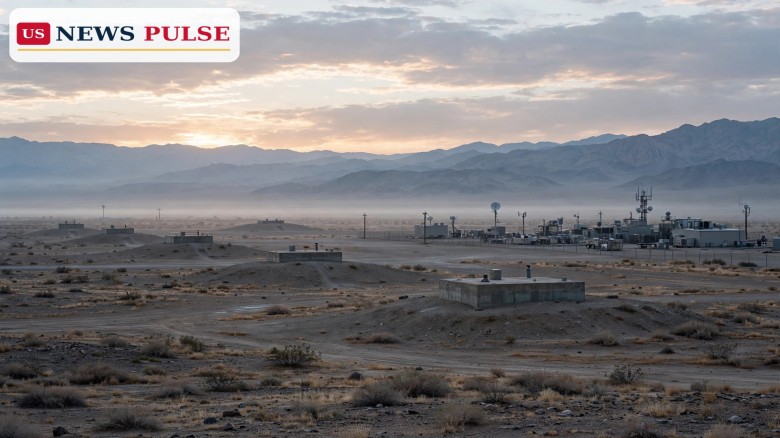
The history here is long, and it explains why the order landed with such force. The United States conducted 1,054 explosive nuclear tests between 1945 and 1992, most of them underground at what is now the Nevada National Security Site, about 65 miles from Las Vegas. President George H. W. Bush imposed a moratorium in 1992, and no American explosive test has taken place since. The United States signed the Comprehensive Nuclear-Test-Ban Treaty in 1996 but never ratified it, while maintaining the moratorium through presidents of both parties.
Since 1992, the American stockpile has been certified without explosive detonations. Scientists use supercomputer simulations, laboratory experiments and subcritical tests — implosions that stop short of a self-sustaining nuclear chain reaction — to check that warheads remain safe and reliable. Supporters of that system say the United States still holds extensive Cold War-era test data, making new explosive tests scientifically unnecessary. Critics of the moratorium, including some in Trump's orbit, argue that simulations cannot fully substitute for live testing as warheads age and new designs enter service.
The other nuclear powers have observed their own restraint, at least in public. No country has conducted an explosive nuclear test since North Korea in 2017. Russia and China have both denied conducting tests that would violate test-ban norms, although Washington has in the past accused Russia of low-yield testing and speculated about Chinese activity — claims that experts have debated. What is not in dispute is the direction of China's arsenal: the Center for Strategic and International Studies estimates Beijing has more than doubled its stockpile to about 600 warheads in 2025, up from about 300 in 2020, and Pentagon estimates have suggested China could reach 1,000 warheads by 2030. Arms Control Association figures cited in recent reporting put Russia at about 5,580 warheads and the United States at about 5,225 — a reminder that Trump's claim of American numerical superiority is contested.
The first complication is bureaucratic, and it matters. Explosive nuclear testing in the United States is not run by the Pentagon at all. It falls to the National Nuclear Security Administration, part of the Department of Energy, which oversees the Nevada site. Trump's order was addressed to the "Department of War," the renamed Department of Defense. That mismatch has fuelled confusion about whether the president means explosive detonations, missile flight tests of nuclear-capable delivery systems, or the "system tests" — non-nuclear explosions that check the non-nuclear parts of a weapon — that the Energy Department already conducts as part of stockpile modernisation.
The second complication is time and money. Reporting by The Washington Post on October 31, citing experts, said restarting explosive testing would take years and cost hundreds of millions of dollars. Former Energy Secretary Ernest Moniz estimated that even a single "show-off" explosion, conducted without collecting scientific data, could take "potentially a year" to prepare. Corey Hinderstein, a former senior nuclear security official, said the agency would need to dig a new vertical underground shaft at an estimated cost of around 100 million dollars. Paul Dickman, a longtime nuclear official, warned that the United States may struggle to find personnel with direct testing experience, since the last generation of test engineers has largely retired. The Arms Control Association has estimated it would take at least 36 months to prepare the Nevada site for contained underground detonations, including environmental assessments, infrastructure upgrades and political approvals — including cooperation from Nevada state officials.
The third complication is diplomatic. Moscow has warned that any American nuclear test would draw a proportionate response, according to the Washington Post reporting. Arms-control advocates warn that an American detonation could give Russia and China a pretext to resume their own explosive testing, unwinding three decades of restraint and weakening the 1968 Treaty on the Non-Proliferation of Nuclear Weapons, the cornerstone of global arms control. Others argue the opposite: that a credible American testing capability deters adversaries and makes nuclear conflict less likely, because rivals cannot doubt that the arsenal works.
Inside the administration, the defence of the order came quickly. Treasury Secretary Scott Bessent defended the decision on Thursday, saying it was crucial to help America "certainly catch up" with China, and describing the United States as behind Beijing in momentum even if ahead in absolute capability. Defence Secretary Pete Hegseth offered support in similar terms. "The president was clear: We need to have a credible nuclear deterrent," Hegseth said, according to the Associated Press. "Resuming testing is a pretty responsible — very responsible — way to do that. And I think it makes nuclear conflict less likely."
The condemnation was equally swift abroad. Iranian Foreign Minister Abbas Araghchi called the move "regressive" and irresponsible, writing that a "nuclear-armed provocateur is resuming atomic weapons testing" after the department responsible for American defence had been renamed the Department of War. Iran's reaction carries particular weight given the parallel standoff over its own nuclear programme and the reported American military planning around Iran in recent weeks.
Experts urged caution about reading too much into the announcement too quickly. Several noted that Trump has not specified explosive testing at all, and that the order as written could be satisfied by expanded system tests and subcritical experiments of the kind already under way. Others warned that the ambiguity itself is dangerous: if Moscow or Beijing reads the order as a promise of detonations, they may respond in kind before Washington clarifies what it intends. "Nobody saw this coming," one nuclear official told CNN, describing confusion inside the nuclear security establishment after Trump's initial remarks — a confusion that the administration has yet to fully clear up.
This matters first because it breaks a taboo that has held for a generation. For 34 years, American presidents of both parties treated explosive nuclear testing as a closed chapter, something the country had outgrown as simulation and stewardship improved. A return to testing would not just be a technical step; it would signal that Washington no longer believes the post-Cold War arms-control order can hold without demonstrating its weapons in the ground. That signal would be heard in Moscow, Beijing, Pyongyang and New Delhi alike.
It matters second because of the midterm context at home. The order landed four days before the November 3 midterm elections, in a campaign in which Trump has put himself at the centre of the Republican effort and warned supporters that Democratic control of Congress could bring impeachment. A dramatic national-security announcement days before voters go to the polls inevitably becomes part of that argument — about strength, about deterrence, and about who voters trust with the world's most destructive weapons.
It matters third because the costs are real and immediate even if no explosion ever happens. Preparing a test site, rebuilding a workforce, conducting environmental reviews and managing the political fallout in Nevada — a state whose residents lived downwind of hundreds of Cold War tests — would consume years and hundreds of millions of dollars. Those resources would come from the same nuclear modernisation budget that is already funding new warheads, submarines and missiles. The question for Congress, which controls the money, is whether testing is the best use of it.
The next steps will reveal what the order really means. Watch for a formal directive from the White House to the Energy Department, which would be needed before any explosive test could be prepared, and for any statement from Energy Secretary Chris Wright or the National Nuclear Security Administration clarifying whether detonations are planned. Watch, too, for Congress: lawmakers from Nevada, from both parties, have historically opposed a return to testing, and legislation to block it cannot be ruled out.
Internationally, the key reactions to watch are from Moscow and Beijing. If either conducts its own visible weapons test in response, the spiral that arms-control experts fear will have begun. If both stay quiet, the order may settle into the pattern of past presidential rhetoric on nuclear weapons: dramatic, ambiguous, and ultimately absorbed by the machinery of stewardship and simulation. The Busan trade truce, with its one-year expiry, offers a parallel: deals and declarations in this relationship now come with short fuses.
For now, the Nevada desert is quiet. No test has been announced, no shaft has been dug, and no date has been set. What has changed is the policy: for the first time since 1992, a president has ordered American nuclear weapons testing to begin again. Whether that order produces a mushroom cloud, a laboratory experiment, or nothing at all is the question the world will be watching in the weeks ahead.
The United States last conducted an explosive nuclear test in 1992, at what is now the Nevada National Security Site. President George H. W. Bush imposed a moratorium that year, and every president since has maintained it — until Donald Trump's October 30, 2026 order.
Trump wrote on Truth Social that he had "instructed the Department of War to start testing our Nuclear Weapons on an equal basis" and that the process would "begin immediately." He did not specify whether he meant explosive detonations, missile flight tests, or non-nuclear system tests, and that ambiguity remains unresolved.
Explosive nuclear testing would fall to the National Nuclear Security Administration, part of the Department of Energy, not the Pentagon. The Energy Department oversees the Nevada National Security Site, where American explosive tests were conducted before 1992.
Experts cited by The Washington Post on October 31 said it would take years and cost hundreds of millions of dollars. One estimate put a single demonstration explosion at "potentially a year" of preparation, while the Arms Control Association has estimated at least 36 months to prepare the Nevada site for contained underground detonations.
Iran condemned the move as "regressive" and irresponsible. Russia has warned that any American nuclear test would draw a proportionate response. Arms-control experts have warned that a US detonation could prompt Russia and China to resume their own explosive testing, while administration officials argue testing strengthens deterrence.
Related coverage: Trump-Xi trade deal cuts China tariffs to 47% after Busan breakthrough, US-Iran strike plans: forces ready within 96 hours of Trump order, reports say, and Hegseth fires Brett Sylvia, Pentagon top planner, as Trump weighs Iran strikes.
Leave a Comment



 | Today's Date: