The United States has warned Iran that it cannot be allowed to hold the region and the global economy "hostage" over the Strait of Hormuz, and that Washington is "prepared to go in another direction" if maritime traffic through the vital waterway is not restored to normal. The warning was delivered on Sunday, November 1, 2026, by Donald Blome, the US Assistant Secretary of State for Near Eastern Affairs, at the Manama Dialogue security forum in Bahrain, as Qatari-mediated talks over reopening the strait continued behind the scenes.
Blome's message was deliberately two-handed: diplomacy remains open, but American patience is not limitless. "The hand of negotiation has been extended and those channels have continued to be open and active. At the same time, we've been also prepared to go in another direction. We just can't allow Iran to take this region and the global economy hostage," Al Jazeera quoted him as saying. The remarks, reported by The Tribune from an ANI dispatch, are the clearest public statement yet that Washington is setting a limit on how long the Hormuz standoff can continue.
Blome was speaking at the Manama Dialogue, Bahrain's annual security forum, where the Hormuz question has dominated the sidelines. His intervention came as Iranian Foreign Minister Abbas Araghchi confirmed that discussions with the Qatari side had narrowed the proposed implementation period for reopening the strategic waterway, from five days to two days. "The Qatari side proposed shortening the implementation period of the Iranian proposal to five days. We have reached a proposal at this stage that reduces the implementation period to two days," Araghchi said, according to Al Jazeera.
The two-day figure is significant because it turns an open-ended standoff into a timetable. If Washington accepts Tehran's conditions, the strait could, on Araghchi's account, reopen within 48 hours. If it does not, Blome's warning suggests the United States is ready to change course, although he did not specify what "another direction" would mean in practice. The ambiguity is likely deliberate: it preserves room for diplomacy while signalling that the status quo is not cost-free for Tehran.
Araghchi also set out Tehran's demands in detail. "Our conditions include lifting the sanctions imposed following the Islamabad memorandum and reducing US forces in the region. We demand the restoration of oil waivers and the release of all our frozen funds, including those held in Qatar," he said. Iran is also seeking recognition of the shipping routes in the Strait of Hormuz that Tehran discussed with Oman, along with the closure of other routes. "Reopening the Strait of Hormuz in accordance with our conditions paves the way for the resumption of negotiations with Washington regarding outstanding issues," he added.
The demands go further than the strait itself. Tehran's list, as reported, includes ending the war on all fronts, particularly Israel's attacks on Lebanon, and its conditions are tied to the collapse of the Islamabad Memorandum of Understanding in July. The oil waivers at issue were granted in June as part of that memorandum, and the frozen funds include money held in Qatar, which is now acting as mediator.
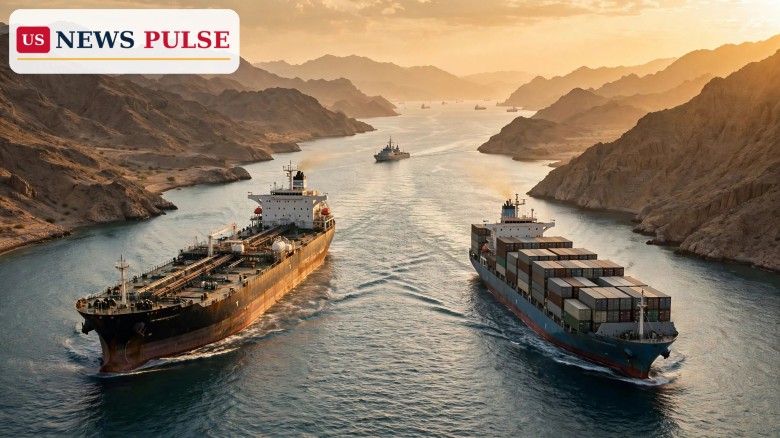
The Strait of Hormuz is one of the world's most important maritime chokepoints, the narrow passage through which a large share of the world's seaborne oil and liquefied natural gas must pass. Any prolonged closure, or even the threat of one, pushes up energy prices, disrupts shipping insurance and forces navies to plan for escort operations. That is why a warning framed in terms of the "global economy" carries weight far beyond the Gulf: it is a signal to energy markets and to allies that Washington regards the strait as a global interest, not a regional dispute.
The current diplomatic track runs through Qatar. The exchanges follow the delivery of a letter from US Vice President JD Vance to Rezaei, secretary of Iran's Supreme National Security Council, through Qatari mediators. Rezaei had earlier said Washington's tone in that communication had "completely shifted", describing it as a positive indication. "Their tone has shifted completely, which is a good sign that shows that our people have secured their victory," he told state broadcaster IRIB, according to Al Jazeera.
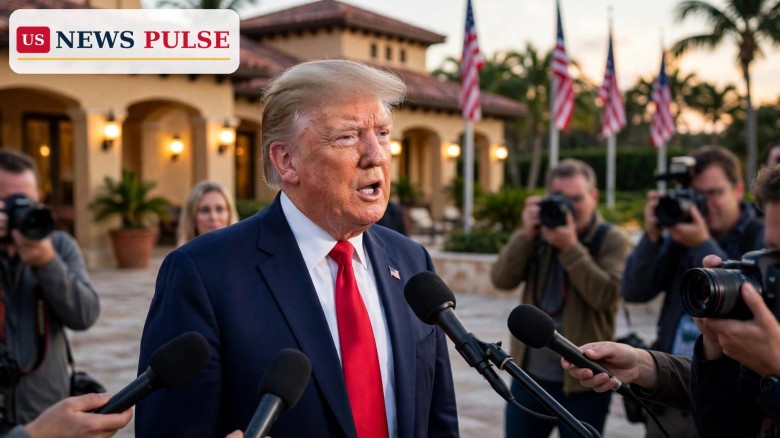
At the same time, the military backdrop has not gone away. President Donald Trump has maintained that Iran wants to negotiate, saying "There are talks, they want to talk, they keep talking." He has also warned that the United States could target Iran's remaining nuclear sites, saying Washington could carry out such an operation "in 10 minutes". When asked whether he would order renewed strikes against Iran, Trump dismissed the question, saying, "Let's say I did, would I tell you? I can't tell you." Blome's Manama remarks sit between those two poles: negotiation first, but with an alternative ready.
The central obstacle to reopening the strait is not logistics but conditions. Rezaei has repeatedly stated that Iran's seven conditions must be fulfilled before diplomacy can proceed. "We have repeatedly stated: the seven conditions announced by Iran must be fulfilled. If the conditions are met, the path of diplomacy will be open," he said. Until then, on his account, there will be no talks and the strait will remain closed.
Rezaei has paired that diplomatic condition with a military warning. In a post on X, he warned that Iran would deliver "devastating blows" to any aggressor using "new weaponry" if the country was attacked, while maintaining that diplomacy remained possible if Tehran's conditions were fulfilled. He linked the warning to a directive from the Supreme Leader to the armed forces, a formulation designed to show that the threat is not a personal opinion but an instruction from the top of the Iranian system.
The gap between the two sides is therefore clear. Washington, through Blome, says the channels are open and active but that it will not accept the strait being used as leverage indefinitely. Tehran, through Araghchi and Rezaei, says the strait can reopen within two days, but only on its conditions, and that those conditions must be met first. Qatar's role is to narrow that gap, and the reduction of the implementation period from five days to two suggests the mediators have made at least procedural progress, even if the substantive conditions remain unresolved.
Blome's own words are the most important reaction in the story, because they define the American position in public for the first time at this level of specificity. "The hand of negotiation has been extended and those channels have continued to be open and active," he said, before adding the warning that American tolerance is not limitless: "We just can't allow Iran to take this region and the global economy hostage."
Araghchi's response, as reported, was to keep the focus on the two-day proposal and on Tehran's conditions, rather than to answer Blome's warning directly. His emphasis on the shortened timetable reads as an attempt to show flexibility on process while holding firm on substance: the strait can reopen quickly, but only if Washington moves first on sanctions, forces, waivers and frozen funds.
Rezaei's X post provides the hardest edge of the Iranian position. By warning of "devastating blows" with "new weaponry" while simultaneously insisting that diplomacy remains possible, he is mirroring Blome's own dual message from the other side. Both governments are, in effect, saying the same thing: we prefer talks, but we are ready for something else.
The Hormuz warning matters for three audiences at once. For energy markets, it is a reminder that the strait remains a live risk, and that a diplomatic breakthrough, if it comes, could arrive within days rather than months. For Gulf states, it is a test of American credibility: Blome's warning will be measured against what Washington actually does if the two-day proposal stalls. And for American voters, it matters because the standoff arrives two days before midterm elections in which the president's handling of the war in Iran has already been identified as a drag on his approval rating.
It also matters because the conditions Tehran is demanding reach beyond the strait. Lifting sanctions, reducing the US military presence, restoring oil waivers and releasing frozen funds would amount to a significant reshaping of the post-Islamabad order, and recognising a new shipping route discussed with Oman would give Tehran a say over how the waterway itself is organised. Washington has not publicly accepted any of those conditions, which is why Blome's "another direction" phrase, vague as it is, will be parsed so closely in Gulf capitals.
The immediate question is whether the two-day proposal moves from a Qatari-mediated outline to an implemented agreement. Araghchi's account suggests the timetable is agreed in principle; the conditions are not. The next statements from Washington, Doha and Tehran will show whether Blome's warning accelerates that process or hardens it.
If the proposal stalls, the United States will face the choice Blome hinted at: continue negotiating through Qatar, or, in his phrase, go "in another direction". What that direction would involve, military, economic or diplomatic, was left unsaid at Manama, and that silence is itself part of the message. If the proposal succeeds, the strait could reopen within days, and negotiations with Washington on the outstanding issues, as Araghchi put it, could resume from a very different starting point.
What did the United States warn Iran about at the Manama Dialogue?
Assistant Secretary of State Donald Blome said Iran cannot hold the region and the global economy "hostage" over the Strait of Hormuz, and that the US is "prepared to go in another direction" if Hormuz traffic is not restored.
What is Iran's proposal for reopening the Strait of Hormuz?
Foreign Minister Abbas Araghchi said talks with Qatari mediators have produced a proposal to reopen the strait within two days if the United States implements Tehran's conditions, down from an initial five-day implementation period.
What conditions is Iran demanding?
Lifting sanctions imposed after the Islamabad memorandum, reducing US forces in the region, restoring oil waivers, releasing frozen funds including those held in Qatar, and recognising shipping routes discussed with Oman.
What are Iran's seven conditions, according to Mohsen Rezaei?
Rezaei says seven conditions announced by Iran must be fulfilled before talks can take place, and that the strait will remain closed until they are met. He has also warned of "devastating blows" with "new weaponry" if Iran is attacked.
Why does the Strait of Hormuz matter globally?
It is a vital waterway for seaborne oil and gas shipments, so any prolonged closure threatens energy supplies, shipping and the global economy, which is why Washington framed its warning in global rather than regional terms.
Related coverage: Qatar mediation races the clock as Iran talks shift to Doha before the midterms, Trump's Iran strike warning: US can hit Pickaxe Mountain in 10 minutes, and Early voting passes 50 million as Democrats lead Republicans before the midterms.
Leave a Comment



 | Today's Date: