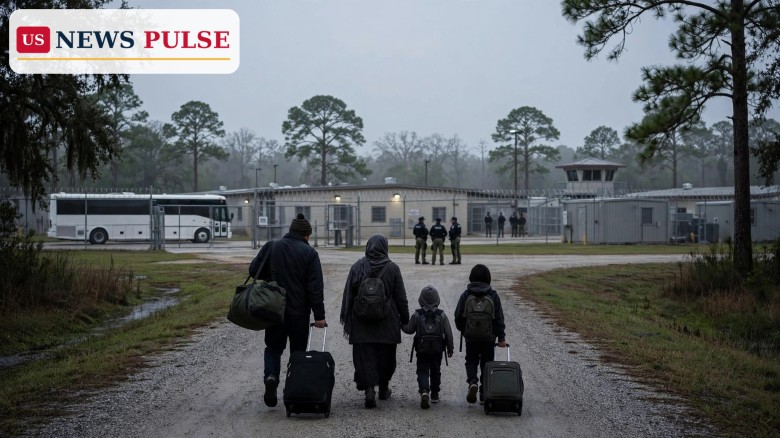
The Trump administration plans to deport more than 150 Afghan immigrants to Afghanistan, a move that would send people who fled the Taliban's return to power back to the country they escaped, according to a US official and a coalition of veterans and advocacy groups who spoke on Friday, October 30, 2026. The Afghan deportations, reported first by The New York Times and confirmed in outline by Reuters, are expected to begin with a flight as soon as Monday, November 2, and would rank among the largest single expulsions of Afghans from the United States since the chaotic withdrawal of 2021.
Dozens of the Afghans facing removal have already been detained in Louisiana, the Times reported, and the administration intends to route the deportations through Pakistan because Washington has no diplomatic relations with the Taliban government in Kabul and therefore cannot arrange direct returns. The Department of Homeland Security declined to confirm any future removal operation, citing operational security, leaving families, lawyers and advocates to piece together what happens next from detention transfers and official silence.
Reuters reported on Friday that the administration plans to deport some Afghan immigrants to Afghanistan, citing a US official and a coalition of veterans and advocacy groups. The New York Times, cited by Reuters, put the expected number at more than 150 and reported that dozens of Afghans had been detained in Louisiana ahead of the removals, with the first flight expected as soon as Monday. Neither the White House nor the Department of Homeland Security has publicly confirmed the number, the destination routing in detail, or the flight schedule. The department's public position, as reported by Reuters, was that it would not confirm future removal operations, citing operational security.
The practical route matters. Because the United States does not recognise the Taliban government and maintains no diplomatic ties with it, it cannot simply hand deportees to Afghan authorities at Kabul airport in the ordinary way. A US official told Reuters the deportations would instead go via Pakistan, a neighbouring country that has itself expelled more than 2 million Afghan nationals to Afghanistan since 2023. That onward journey through Pakistan is one reason advocates are alarmed: recent reporting by the group No One Left Behind found that Afghan allies deported from third countries, overwhelmingly from Pakistan, reported abuse during removal and threats or violence after return.
President Donald Trump has presented his immigration crackdown and deportation drive as a measure to improve domestic security, Reuters noted. Rights advocates counter that the crackdown violates due process and free speech protections and has created an unsafe environment for minorities, who have raised concerns about racial profiling. That clash of framing — security enforcement on one side, legal and humanitarian risk on the other — has defined almost every major removal operation of the second Trump administration, but the Afghan cases carry an extra charge because of who many of the deportees are and what they did during America's longest war.
Almost 200,000 Afghans were relocated to the United States between the US withdrawal in August 2021 and the start of the second Trump administration, according to the advocacy group Refugee Rights, arriving as Special Immigrant Visa holders, humanitarian parolees, refugees and asylees. Roughly 200,000 Afghans came to the US after the fall of Kabul in August 2021, the refugee resettlement agency HIAS likewise reported, many of them through humanitarian parole programmes after the airlift that followed the Taliban's return to power.
For years their status was temporary and layered. Afghanistan was first designated for Temporary Protected Status in May 2022, in recognition of the risk to civilians after the Taliban's return, and the designation was extended and redesignated in September 2023. TPS shielded its holders from deportation and allowed them to work while their longer-term cases — asylum claims, Special Immigrant Visa applications, or other forms of relief — were pending. Then, on May 12, 2025, Homeland Security Secretary Kristi Noem announced the termination of Afghanistan's TPS designation, effective July 14, 2025, affecting about 11,700 Afghans, according to the Department of Homeland Security's own estimate cited in later reporting. A seven-day reprieve from the Fourth Circuit Court of Appeals briefly delayed the end, but the termination took effect after July 21, 2025, leaving those who had not secured another status without deportation protection and, in many cases, without valid work authorisation.
The administration's stated justification was that conditions in Afghanistan had improved, citing what it called notable improvements in the security and economic situation, and that continued TPS would be contrary to the national interest. Advocacy groups and legal experts strongly disputed that assessment, pointing to continuing Taliban repression, targeted killings and conflict. The United Nations refugee agency has reported more than 9 million refugees and internally displaced people in Afghanistan, more than 20 percent of the country's population, a measure of how unsettled the country remains five years after the takeover.
Alongside the TPS termination, the administration suspended refugee resettlement on its first day in office in January 2025, moved to narrow parole, and later closed the State Department's Coordinator for Afghan Relocation Efforts office. The Afghan Adjustment Act, which would have given Afghans who arrived on parole a path to permanent residence, was introduced in 2022 and reintroduced in 2025 but stalled in Congress, leaving tens of thousands to navigate a backlogged asylum system and a strained Special Immigrant Visa programme, or face removal.
The human core of the new deportation plan is the link between the deportees and the American war effort. Shawn VanDiver, head of #AfghanEvac, the coalition that has tracked the fate of Afghan allies since 2021, told Reuters that many facing removal fled Afghanistan after the 2021 Taliban takeover and US withdrawal. Some, he said, are "brothers and sons of men who served alongside US forces, families the Taliban already has every reason to target." That warning is not abstract. The Taliban has spent five years hunting former soldiers, interpreters, police officers and government workers, and relatives of those who served are routinely treated as proxies for the people themselves.
A survey published in October 2026 by No One Left Behind, based on responses gathered between September 3 and September 30 from Afghan allies deported to Afghanistan from third countries, found that allies faced abuse from security and immigration officials during deportation and targeted threats and violent retaliation for their service to the United States once returned. Of 127 respondents who said they had Chief of Mission approval — confirmation from the US government that they completed Special Immigrant Visa-eligible service — or another approved pathway to safety, 101, or 80 percent, reported being deported or subject to removal in the last year. The vast majority, 86 percent, were deported from Pakistan, the same country through which the new US removals are expected to pass, and Pakistan was also where most respondents reported physical abuse, harassment and extortion during the process.
One account in the survey described a man and his eight-months-pregnant wife physically mistreated by Pakistani police during forced removal, then separated and interrogated by the Taliban after deportation to Afghanistan. The family, the report said, remains in Afghanistan living in fear of Taliban reprisals while their approved visa case waits. Advocates cite such cases to argue that a deportation to Afghanistan is not a routine immigration return but, for US-affiliated Afghans, a transfer into the hands of the very movement they fled.
VanDiver's response was blunt and directed at Congress. He urged lawmakers to pass legislation granting Afghans in the United States temporary protected status to protect them from deportation — the demand now embodied in the Afghanistan TPS Act of 2026. The bill, H.R. 9899 in the House, introduced on July 23, 2026, with a Senate companion, S. 5308, introduced on August 6, would designate Afghanistan for Temporary Protected Status through July 1, 2029, restoring deportation protection and work authorisation for vetted Afghan allies already living in the US, directing the Department of Homeland Security to adjudicate applications within 90 days and waiving filing fees. Its bipartisan House leads are Jason Crow, Don Bacon, Sam Liccardo and María Elvira Salazar; its Senate sponsors include Chris Coons, Lisa Murkowski, Amy Klobuchar and Bill Cassidy.
#AfghanEvac has called the bill the single most important piece of legislation for Afghan allies in the United States right now, describing TPS as a bridge, not a path to citizenship, for people who are already here, already vetted and already working in American communities. A special rule filed to set up a discharge petition in the House, reported in late October, is the latest attempt to force the measure to a vote despite its months in the House Judiciary Committee. The group has also warned supporters to show up after the November 3 midterm elections, writing that whoever wins, thousands of Afghan allies will wake up on November 4 facing the same uncertainty: no restoration of Afghanistan's TPS designation, precarious work authorisation, and the possibility of detention or removal despite their service.
The administration has not, in the Reuters reporting, addressed the allies' argument directly. Its public case rests on the broader deportation drive and domestic security, and the Department of Homeland Security's refusal to confirm operations means the first public confirmation of the plan may come only when a flight leaves. Veterans' groups, which have been among the most persistent advocates for Afghan allies across party lines, are likely to treat any such flight as a test of the promises made during the withdrawal — promises that interpreters and soldiers who served alongside American troops would not be abandoned to the Taliban.
The planned Afghan deportations matter on three levels at once. First, they are a humanitarian decision with immediate, irreversible consequences: once a person is returned to Taliban-controlled Afghanistan, American courts, lawyers and advocates lose almost all practical ability to protect them. Second, they are a credibility decision. The United States spent twenty years asking Afghans to work with its military, its diplomats and its aid agencies, often at mortal risk; how it treats those people now will be watched by every potential partner in every future conflict, a point veterans' advocates have made since the first Adjustment Act debate. Third, they are a political decision days before the November 3 midterm elections, arriving as a record 47.9 million Americans have already voted early and as immigration remains one of the most contested issues of the campaign.
The scale also matters. More than 150 people in a single operation would make this one of the largest expulsions of Afghans since 2021, and the use of Louisiana detention followed by a Pakistan routing suggests a system being built for repeat operations, not a one-off removal of a handful of individuals with final orders. If the first flight goes ahead on Monday, lawyers will be watching for emergency court challenges over the weekend, for the identities and legal postures of those detained, and for whether any hold TPS, asylum or Special Immigrant Visa claims that should bar their removal. The Refugee Rights explainer noted that the administration has also begun a "re-vetting" programme aimed at putting Afghan refugees back into detention, a context that makes advocates expect further operations even if this one is delayed.
There is also a regional dimension. Pakistan's expulsion of more than 2 million Afghans since 2023 has already strained its border regions and aid agencies, and a US operation routing deportees through Pakistan would deepen that country's role as the funnel through which Afghans are returned, willingly or not, to Taliban rule. European governments, including France, Germany, Belgium and Sweden, have separately opened channels with the Taliban over deportations of Afghans they consider security risks, according to #AfghanEvac's October update — a sign that the question of what to do with Afghans who cannot safely return is becoming a shared Western dilemma rather than an American one alone.
The immediate timeline is short. If the Times reporting holds, the first flight could leave as soon as Monday, November 2, 2026, which gives lawyers and advocates the weekend to identify detainees, file emergency motions and seek court orders blocking individual removals. Watch for statements from the Department of Homeland Security, from Louisiana detention facilities, and from #AfghanEvac and No One Left Behind, which have been the earliest sources of information on Afghan removals throughout 2026. Any court filing will likely argue that some detainees hold pending asylum or visa claims, or that their removal would violate protections against return to persecution.
In Congress, the discharge-petition effort for the Afghanistan TPS Act will be the legislative test. Its supporters need a majority of House members to sign on to force a vote; its opponents argue, as they have since the Adjustment Act debates, that vetting must be strengthened first. The midterm outcome on November 3 will shape whether that effort gains or loses momentum in the lame-duck session, and #AfghanEvac has explicitly told supporters that the work continues after the election regardless of the result.
Longer term, the operation will set a precedent. If more than 150 Afghans can be removed to Taliban-controlled territory via Pakistan without a court blocking the flights, further groups detained in Louisiana and elsewhere could follow, drawing on the pool of roughly 8,000 or more Afghans nationally who, according to a Mercury News report cited in late October, remain at risk of deportation after the TPS termination. If a court intervenes, the administration will face the same choice it has faced in other removal fights: pause, narrow the operation, or test the ruling on appeal. Either way, the weekend before the flight will be decisive for the people already in detention.
More than 150, according to The New York Times as reported by Reuters, in what would be one of the largest single expulsions of Afghans from the United States. Dozens have already been detained in Louisiana.
As soon as Monday, November 2, 2026, according to the Times reporting. The Department of Homeland Security has not confirmed the schedule, citing operational security.
The United States has no diplomatic ties with the Taliban government, so it cannot arrange direct deportations to Afghanistan. A US official said the removals would go via Pakistan, which has itself expelled more than 2 million Afghans since 2023.
Many fled after the Taliban takeover in August 2021. Advocates say some are brothers and sons of men who served alongside US forces, and warn their families are already targets for the Taliban. Some may hold pending asylum or Special Immigrant Visa claims.
Emergency court orders for individual detainees, or legislation: the bipartisan Afghanistan TPS Act of 2026 (H.R. 9899 / S. 5308) would restore deportation protection and work authorisation through July 1, 2029, but it has sat in committee since July and now faces a discharge-petition effort.
Related coverage: Judge Blocks Trump Refugee Rule Cutting Response Time to 10 Days for 186,000 Refugees and China Visa-Free Travel Suspended for Northern Mariana Islands Over Security Fears. More US News Pulse politics coverage is on the homepage.
Leave a Comment



 | Today's Date: