


 | Today's Date:



CENTCOM Says Iran Killed Over 20 Mariners in Deliberate Attacks on Gulf Shipping
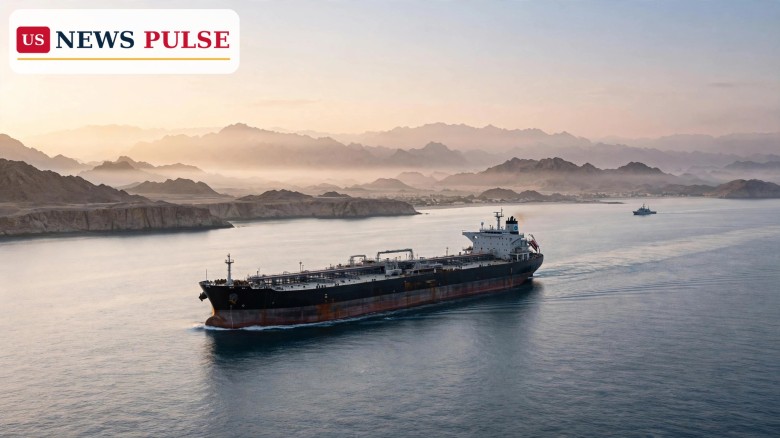
United States Central Command said on Monday that Iran has deliberately attacked civilian mariners at sea, killing more than 20 people in recent months, in a direct public rebuttal to Tehran's claim that it has not attacked civilians in neighbouring countries. The statement, posted on social media on November 2, 2026, landed on the same day that Iran's Foreign Ministry spokesman said the Strait of Hormuz will not reopen until the United States lifts its naval blockade and meets Iran's demands, leaving the two sides publicly further apart even as messages continue to pass between them through mediators.
CENTCOM did not name any vessel, incident or victim in its post, and it did not explain how it counted the deaths. That gap matters, because the only public international tally close to the figure counts deaths from attacks by both sides, not by Iran alone. The exchange is therefore best read as two competing claims about the same waterway: Washington accusing Tehran of deliberately killing civilian crews, and Tehran insisting that the strait stays closed until Washington changes course.
Key Points
- US Central Command said Monday that Iran deliberately attacked civilian mariners at sea, killing more than 20 in recent months.
- CENTCOM called Iran's claim that it has not attacked civilians in neighbouring countries "false" and described the alleged attacks as "indiscriminate aggression" that is "inexcusable".
- The CENTCOM post named no vessels, incidents or victims and did not explain how the death toll was counted.
- Iran's Foreign Ministry spokesman Esmaeil Baghaei said Monday that Hormuz will not reopen until the US lifts its naval blockade and meets Iran's demands.
- Baghaei said "the ball is in the US court", that Iran has shortened its reopening timetable from seven days to two, and that messages still pass through mediators.
What Happened
CENTCOM posted its statement on X on Monday, November 2, framing it as a fact-check of a recent public claim by Iran's Foreign Minister Abbas Araghchi. The full text of the post, as reported by Kurdistan 24 and other outlets, reads: "CLAIM: Iran's foreign minister recently claimed publicly that Iran has not attacked civilians in neighboring countries. This is FALSE. FACT: Iran has not only intentionally attacked civilian infrastructure, neighborhoods, and other facilities in neighboring Gulf countries, but it has also deliberately attacked civilian mariners at sea — killing more than 20 in recent months. Iran's indiscriminate aggression is clearly evident and inexcusable."
The post did not list incidents, name vessels or explain how it counted the deaths, a point stressed in the reporting that followed. It also did not announce any new military operation or give a detailed incident-by-incident account of the reported casualties. Its significance is political and rhetorical rather than operational: the US military command publicly attached a death toll to its accusation, and tied that accusation to civilian infrastructure and neighbourhoods in Gulf countries as well as to shipping at sea.
Hours later in the same news cycle, Iran's Foreign Ministry spokesman Esmaeil Baghaei gave his weekly press conference in Tehran, reported by Iran International and Kurdistan 24. He said the Strait of Hormuz will not reopen until the United States lifts its naval blockade and Iran's demands are met, and that the decision now rests with Washington. "The ball is in the US court," he said, adding that Washington has so far proved it works to defeat any diplomatic process, has shown no initiative, and keeps trying to pull the region deeper into war instead of advancing peace.
Baghaei also said Iran has stated its demands clearly, that its proposal still stands, and that messages continue to pass between Tehran and Washington through mediators. He said Iran had shortened its proposal, which had allowed seven days to reopen the strait, so it could be carried out within two days, calling the shorter timetable a sign of goodwill. He said Iran has conveyed its legitimate demands to the US side in a reasonable manner and will accept no conditions or unilateral decisions.
Background and Context
The dispute over who has killed civilians at sea sits inside a war that began on February 28, 2026, and has repeatedly spilled into the Strait of Hormuz, through which about a fifth of the world's oil usually passes. Shipping through the strait has been disrupted for months by attacks, mines and naval blockades, and the human cost at sea has become a contested statistic in its own right.
The International Maritime Organization has not published a figure that matches CENTCOM's. Its last public tally, reported by Agence France-Presse on August 25, counted at least 20 seafarers or port workers killed, 35 wounded and one missing in 68 incidents in and around the Strait of Hormuz over six months of war. It did not assign responsibility for those deaths, and the UK Maritime Trade Operations centre classified 47 of those incidents as attacks. USNI News noted that the IMO count covered attacks by both Iranian and US forces. In May, the IMO said Iran's attacks on vessels in the Gulf or the strait had killed at least 10 seafarers, according to Al Jazeera's reporting of the figure.
Iran's own merchant mariners union has given a different toll from the other side of the war. It told Al Jazeera that at least 44 Iranian seafarers, fishermen and dock workers were killed between February 28 and April 1 in US and Israeli attacks on its ports and ships, a claim Kurdistan 24 said it had not verified. The gap between these tallies — CENTCOM's "more than 20" attributed to Iran, the IMO's "at least 20" unattributed, and the Iranian union's "at least 44" attributed to the US and Israel — shows why the death toll at sea cannot yet be stated as a settled, single number.
Araghchi has repeated his denial through the war. In March he told Al-Araby Al-Jadeed that Iran had attacked no residential or civilian target and offered to form a joint committee with Gulf neighbours to examine the sites hit. Gulf governments have made their own accusations in return. Reuters has reported Gulf states calling on Iran to stop attacks that damaged energy facilities and residential areas. Anwar Gargash, diplomatic adviser to the president of the United Arab Emirates, said the scale of Iranian missile and drone fire contradicts Tehran's claim that it targets only US bases. Saudi Arabia condemned in May what it called an attack on civilians and economic facilities in the UAE, along with a tanker belonging to an Emirati company. In March, Iranian President Masoud Pezeshkian apologised on state television for strikes that hit Gulf countries, then retracted the remarks hours later after criticism from hardliners, according to Gulf Countries Media.
CENTCOM Iran Mariners: The Blockade at the Centre of the Dispute
Baghaei's briefing put the naval blockade at the centre of the dispute. The United States imposed it on April 13, after talks in Islamabad led by parliament speaker Mohammad Bagher Ghalibaf and US Vice President JD Vance failed. CENTCOM lifted it on June 18, after the sides signed a memorandum of understanding, then reimposed it on July 14, along with new strikes, after Iran attacked commercial ships in the strait.
In September, Iran offered, through Qatar, to reopen the strait and resume nuclear talks within seven days if the United States lifted the blockade, waived oil sanctions and observed a ceasefire including Lebanon. President Donald Trump rejected that offer on September 26. The two-day timetable now described by Baghaei is a shortening of that September offer, and it matches the timetable described by Foreign Minister Araghchi in the Qatar-mediated talks: a proposal to reopen the strait within two days if the United States meets Tehran's conditions, with an implementation period cut from five days to two.
Baghaei also addressed the negotiating machinery itself. He said the Supreme National Security Council manages diplomacy and that Ghalibaf remains head of the negotiating team. The trip to Doha by Deputy Foreign Minister Kazem Gharibabadi is meant to facilitate the exchange of messages with the US side through Qatar. Asked about a shift in tone in a letter from Vance to the council's secretary, Mohsen Rezaei, Baghaei said differences in tone are normal but Tehran will judge Washington by its actions. He noted that the letter came from the US lead negotiator at the Islamabad talks even though Trump had called them a waste of time, and he recalled writing on X on Wednesday that the remark showed Washington's "contempt for diplomacy".
The Qatari mediation itself reached a new point on Monday. Iranian negotiators left Doha on Sunday after three days of talks with Qatari mediators, but their departure was not due to difficulties in the discussions, an official briefed on the talks told Reuters on Monday. The consultations focused on efforts to reach a deal to end the US-Israeli war on Iran, amid concerns that the conflict could escalate again after the November 3 US midterm elections. Iran's Foreign Ministry said on Monday that it was considering a two-day plan to reopen Hormuz, having previously proposed a one-week timeline, and Baghaei said Tehran has not closed the window of diplomacy and that messages are still passed to the United States via intermediaries.
Reactions and Quotes
The only direct quotes that can be verified in full from Monday's exchange are CENTCOM's post and Baghaei's briefing remarks. CENTCOM's words were blunt: "Iran's indiscriminate aggression is clearly evident and inexcusable." Baghaei's were equally pointed in the opposite direction: "The ball is in the US court." Together they capture a negotiation in which each side is speaking past the other in public while still exchanging messages in private.
Baghaei also warned of the consequences of US threats against Iran's nuclear facilities. He said it is regrettable that the United Nations, the Security Council and the IAEA Board of Governors have taken no position on direct threats against the principles of peace and stability, and that this silence only strengthens Tehran's resolve to build up its defensive capabilities. He said explicit or implicit threats, and talk of using "special weapons", encourage others to violate fundamental international treaties, and that other nuclear-armed states are closely watching Washington's behaviour, which he called a destructive roadmap for the collapse of global stability. He did not say what he meant by special weapons. Trump has repeatedly threatened to strike Pickaxe Mountain, a buried site near Natanz that analysts say is beyond the reach of the largest conventional bunker-buster, and has said he would never use a nuclear weapon on Iran.
Asked what legal steps Tehran will take over the president's remarks, Baghaei said Iran continues to document flagrant violations of international law and the UN Charter and to register them with the relevant bodies, but that experience shows these mechanisms have remained mere slogans. Pressure will not create a crack in Iran's national will, he said, and will make it more determined to strengthen its infrastructure and domestic capabilities to defend its territory. Iran's Foreign Ministry had not responded specifically to CENTCOM's statement at the time Kurdistan 24 published its report, so Baghaei's briefing should not be read as a point-by-point reply to the mariners accusation; it is a parallel statement of Tehran's position on the same day.
On the American side, the context for CENTCOM's post is a decision that has not yet been made in public. Secretary of State Marco Rubio said on Saturday that Trump has not decided on new strikes and prefers a diplomatic outcome. Trump told an Iowa rally on Sunday that he may eventually have to give Iran "the hammer". Gulf officials have told reporters that Washington has warned them of possible action as early as November 4, the day after the US midterms, and Axios reported that Prime Minister Benjamin Netanyahu pressed Trump in a Saturday call to strike immediately after the elections, while Trump favoured giving negotiations more time.
Why It Matters
This matters first because civilian crews are now at the centre of the argument about the war, not at its margins. If CENTCOM's figure is right, more than 20 civilian mariners have been deliberately killed by Iran in recent months, which would make the shipping war a war on civilian life, not only on commerce. If the IMO's unattributed tally is the safer guide, then both sides have blood on their hands at sea, and the argument becomes about proportionality and accountability rather than a single accusation. Either way, the crews of tankers and cargo ships transiting Hormuz are the people most exposed to the next escalation, and they have no vote in the negotiation that decides their risk.
It matters second because the strait itself remains closed to normal traffic, and Baghaei's condition for reopening it — lifting the blockade and meeting Iran's other demands — is a condition Washington has already rejected once, in September. The two-day timetable is a concession on speed, not on substance: it shortens the time to reopen, but it does not lower the price. Until Washington answers the questions Tehran has put through Qatar, as Araghchi has said progress depends on it doing, the strait stays shut and the economic pressure on Gulf shipping, oil prices and global supply chains stays in place.
It matters third because of the calendar. The US midterm elections are on Tuesday, November 3, and every statement this week is being read for what it signals about the day after. CENTCOM's public accusation, Baghaei's "ball is in the US court", Netanyahu's push for immediate post-election strikes and Trump's own "hammer" remark all point to a decision point that arrives within days, not months. A tanker was also hit off Saudi Arabia's Ras Al Khafji port on Sunday, according to a UKMTO map, with no attacker named in the sources reviewed — a reminder that the waterway can produce a new incident faster than diplomacy can explain the last one.
What Happens Next
The next steps to watch are narrow and concrete. First, whether Washington answers the questions Tehran has raised through Qatar, and whether that answer unlocks the two-day reopening plan or confirms that the plan is dead. Second, whether CENTCOM or another US agency publishes any incident list behind the "more than 20" figure, which would allow the claim to be checked against the IMO tally and against individual vessel reports. Third, whether Iran's Foreign Ministry issues a specific response to the mariners accusation, rather than the general position Baghaei set out on Monday.
Fourth, what happens on and after November 4, when Gulf officials say Washington has warned them strikes could resume. Rubio's statement that no decision has been made and Trump's statement that he favours diplomacy for now both leave room for a different decision after the midterms, and Netanyahu's reported pressure points in the same direction. Finally, whether shipping incidents in the strait — mines, projectiles or attacks on tankers — continue to outpace the negotiation, as they did on Sunday with the two tankers that exploded after hitting mines and the tanker hit off Ras Al Khafji. Each new incident narrows the space for a deal and widens the space for retaliation.
Frequently Asked Questions
What did CENTCOM accuse Iran of on Monday?
US Central Command said Iran deliberately attacked civilian mariners at sea, killing more than 20 in recent months, and intentionally targeted civilian infrastructure, neighbourhoods and facilities in neighbouring Gulf countries.
Did CENTCOM name the vessels or victims?
No. The post named no vessels, incidents or victims and did not explain how the death toll was counted.
Does the IMO tally support CENTCOM's figure?
Not directly. The IMO's August 25 tally counted at least 20 seafarers or port workers killed in 68 Hormuz incidents over six months, but it did not assign responsibility, and the count covered attacks by both Iranian and US forces.
What did Iran say about reopening Hormuz?
Foreign Ministry spokesman Esmaeil Baghaei said Monday that Hormuz will not reopen until the US lifts its naval blockade and meets Iran's demands, and that "the ball is in the US court".
What happens next?
Watch for Washington's answer to Tehran's questions via Qatar, any incident list behind CENTCOM's figure, a specific Iranian response to the mariners claim, and whether strikes resume after the November 3 midterms.
Related coverage: Netanyahu urges Trump to strike Iran right after midterms, Axios reports, Two Hormuz tankers explode after hitting mines as Trump says Iran war will end soon and Al Mayeda LNG tanker attack near Hormuz draws Qatar condemnation on Sunday.
Leave a Comment