


 | Today's Date:


NAACP Asks Court to Block Federal Agents as Election Monitors on Eve of Vote
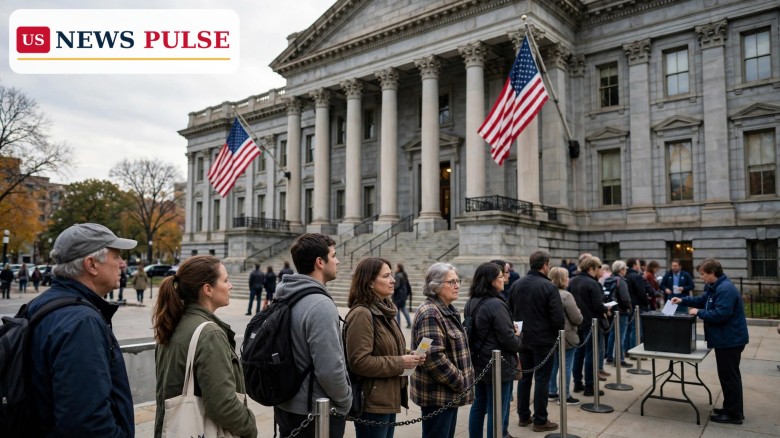
The NAACP asked a federal court on Sunday to stop the Justice Department from sending federal law enforcement agents to polling places as election monitors on Tuesday, November 3, 2026, arguing that the plan would amount to unlawful voter intimidation on the eve of the midterm elections. The emergency request, filed in Washington, asks U.S. District Judge Reggie Walton to issue a temporary restraining order barring the Trump administration from assigning agents, officers or other federal law enforcement personnel to the department's election monitoring programme, or, failing that, to forbid those monitors from carrying firearms or badges, using camera equipment, or carrying out law enforcement activities while they watch the polls.
The filing lands at an unusually sensitive moment. More than 1,000 federal monitors are expected to be deployed across the country on Election Day, a far larger and more muscular presence than the Justice Department has traditionally fielded. The NAACP says the change is not a routine administrative update but a wholesale departure from decades of practice, and it wants a judge to rule before voters arrive at polling stations on Tuesday morning. Judge Walton ordered a hearing for Monday afternoon, November 2, at 1:30 p.m. Eastern Time, leaving only hours between any ruling and the opening of the polls.
Key Points
- The NAACP filed an emergency motion on Sunday, November 1, 2026, asking Judge Reggie Walton to block federal law enforcement agents from serving as election monitors on November 3.
- The Justice Department plans to deploy at least 1,000 monitors nationwide, including personnel from the Bureau of Prisons, the Drug Enforcement Administration and the Bureau of Alcohol, Tobacco, Firearms and Explosives.
- The NAACP argues the plan violates the Voting Rights Act's ban on voter intimidation and marks a complete break with the department's traditional monitoring practice.
- The department opposes the request, arguing that the intimidation provision does not apply to the federal government and that monitors will not act as law enforcement officers while on duty.
- Judge Walton set a hearing for Monday, November 2, at 1:30 p.m. Eastern Time, one day before the midterm elections decide control of Congress.
What Happened
According to the NAACP's filing, the dispute crystallised on October 28, when the Justice Department confirmed that it would deploy personnel from federal law enforcement agencies to polling sites across the country as monitors. The civil rights organisation quoted the department's own words back to the court, saying the confirmation covered staff from the Bureau of Prisons, the Drug Enforcement Administration and the Bureau of Alcohol, Tobacco, Firearms and Explosives. That confirmation, the NAACP says, changed the character of the programme: monitors would no longer be drawn mainly from the civil lawyers who have historically staffed it, but from agencies whose employees carry law enforcement credentials.
The filing leans heavily on a declaration from Eric Neff, an attorney who leads the Voting Section of the department's Civil Rights Division. Neff said the plan to deploy 1,000 monitors would be no different from the department's practices during past races, while at the same time disclosing the possible use of federal agents — a combination the NAACP describes as contradictory. Neff said employees from the Bureau of Prisons, the Drug Enforcement Administration and the Bureau of Alcohol, Tobacco, Firearms and Explosives would watch polls on Tuesday, but added that those employees would be prohibited from carrying firearms with them and from taking any action while monitoring. The NAACP argues that the very need for such prohibitions underlines the point: the people being sent are, in substance, law enforcement personnel, even if they are told to stand back while they observe.
The department, in a filing opposing the NAACP's request, took a different legal position. It argued that deploying federal agents to polling places could not constitute illegal intimidation under the Voting Rights Act because the statute's intimidation provision does not apply to the federal government. The department further argued that Congress did not intend the word "persons" in that provision to encompass the United States itself. The NAACP countered that the statute expressly bars a "person, whether acting under color of law or otherwise," from engaging in voter intimidation, and that federal agents acting at polling places fall squarely within that language.
Background: How Election Monitoring Used to Work
For decades, the Justice Department's election monitoring programme was built around a narrow, legalistic mission: making sure voters had adequate access to the polls as required by federal voting law. To that end, past administrations sent civil attorneys or legal support staff from the Voting Section of the Civil Rights Division, not prosecutors or law enforcement agents. Monitors observed, took notes and reported back. They were not there to investigate voters, to challenge ballots on the spot, or to project the authority of a law enforcement agency inside a polling place.
That tradition has been under strain throughout 2026. Documents obtained earlier this year indicated that the department deployed at least one law enforcement official — an FBI agent — as a monitor during Arizona's July primary election. Although the agent was detailed to the Justice Department at the time, he remained a sworn federal law enforcement officer when he was selected to monitor the primary vote in Maricopa County. The department's decision to send criminal prosecutors to monitor primaries earlier this year also marked an unusual departure from previous practice. The NAACP's filing presents the November 3 plan as the culmination of that shift: a programme once staffed by civil lawyers, now staffed in part by the employees of prison, drug and firearms agencies.
The distinction matters, the NAACP says, because of who the Bureau of Prisons employees are. The organisation highlighted that the Justice Department itself reported this year that almost all Bureau of Prisons employees are credentialed law enforcement agents, meaning that any Bureau of Prisons employees deployed as monitors will likely be law enforcement officials in fact, whatever label the department gives them while they are inside a polling place. A voter who sees a credentialed agent standing near the ballot box, the filing argues, does not parse the fine print of a departmental instruction about firearms and inaction. The voter sees authority, and that perception alone can chill participation.
NAACP Election Monitors: The Intimidation Argument
At the heart of the NAACP's case is a single, blunt sentence from its filing: "Simply put, Defendants' plans to deploy any federal law enforcement agent, investigator or personnel for the November 3, 2026, general election constitutes unlawful voter intimidation." The organisation argues that the plan violates the Voting Rights Act's prohibition on voter intimidation and represents a "whole cloth change" in the Civil Rights Division's election monitoring programme. The phrase is deliberate. It is meant to tell the court that this is not a marginal adjustment to an existing programme, but a new programme wearing an old programme's name.
The NAACP also placed the monitors plan in a wider pattern of federal pressure on election administration in the final days of the campaign. It noted that the Trump administration has already used federal law enforcement agents to pressure California election officials not to count ballots cast by people the federal government claims are noncitizens — a dispute that reached the Supreme Court on the eve of the election, after a district judge rejected the department's attempt to set those ballots aside. Election officials in other states, the filing added, have reported law enforcement officials stationed near election sites. Taken together, the NAACP says, the pattern shows why a court should not wait to see whether intimidation actually happens on Tuesday: by then, the election will already be under way.
The department's response, as summarised in the court filings, does not dispute that agents may be present. Instead, it disputes the legal consequence. Monitors, it says, will not be acting as law enforcement personnel, law enforcement officers or law enforcement agents "as commonly understood" while they monitor, because they will be barred from carrying firearms and from taking action. Neff's declaration put it this way: "Thus, while monitoring, the monitors will not be acting as 'law enforcement personnel,' a 'law enforcement officer,' or a 'law enforcement agent' as commonly understood." The NAACP's answer is that a job title does not change when a person walks into a polling place, and that a prohibition on action does not erase the intimidation created by presence.
Reactions and Quotes
Only the court filings themselves have spoken so far, and they speak in sharply different registers. The NAACP's language is categorical, framing the case as a straightforward application of the Voting Rights Act to a plan it calls intimidation by design. The department's language is technical and jurisdictional, arguing that the statute simply does not reach the federal government in this context. Neither side, in the filings reported so far, has addressed the practical question voters will care about most: what exactly will a monitor do if a voter asks who they are, and what will happen if a dispute breaks out at a polling place while an agent is standing nearby.
Civil rights lawyers watching the case have long warned that the mere presence of armed or credentialed officers near polling places can suppress turnout, particularly among voters who already distrust government authority or who fear immigration enforcement. The Justice Department, for its part, has consistently said its election work is aimed at ensuring that only eligible voters cast ballots, and that monitoring is a legitimate federal function. The court must now choose between those two accounts of the same facts, and it must do so on an emergency timetable, with the election a day away.
Why It Matters
The stakes extend well beyond the 1,000 monitors themselves. Tuesday's midterms will decide control of the House of Representatives and, potentially, the Senate, with all 435 House seats and 35 Senate seats on the ballot. Early voting has already drawn record numbers — more than 54 million ballots cast before Election Day nationwide, according to election officials — and the final result may hinge on turnout in a handful of competitive states. Any factor that depresses turnout, even marginally, could matter in close races, and any factor that is perceived to depress turnout could undermine confidence in the result.
The case also matters because it is part of a cluster of election litigation that has arrived in court in the final week of the campaign. A federal judge in California has already barred the Justice Department and the Department of Homeland Security from threatening election workers with prosecution over how they handle ballots, in an order running through November 16. A federal judge in Alaska dismissed the department's attempt to block certification of the Senate result there if the Republican incumbent loses narrowly. And the Supreme Court has been asked, on the eve of the election, to direct California to set aside ballots cast by voters the administration alleges may not be citizens. The NAACP monitors case is the latest thread in that pattern, and its outcome will signal how far federal courts are willing to let the executive branch reshape election administration in the final hours before voting ends.
What Happens Next
Judge Walton's hearing on Monday afternoon is the immediate next step. The judge could grant the temporary restraining order and bar federal law enforcement personnel from serving as monitors, grant the narrower alternative relief and forbid monitors from carrying firearms, badges or camera equipment or conducting law enforcement activities, or deny the request and allow the deployment to proceed as planned. Any ruling will come with almost no time for appeal before polls open on Tuesday, although an emergency appeal remains possible.
If the request is denied, the monitors will fan out to polling places across the country on Tuesday under the department's stated rules: no firearms, no action while monitoring, observation and note-taking only. If it is granted, the department will have to staff the programme with civil personnel at the last minute, or scale it back. Either way, the case is unlikely to end on Monday. A temporary restraining order is a short-term emergency measure, not a final ruling on the merits, and the underlying lawsuit over the monitoring programme will continue after the election. Voters, meanwhile, will cast their ballots under whatever rules the court leaves in place when the polls open.
Frequently Asked Questions
What did the NAACP ask the court to do? The NAACP asked Judge Reggie Walton to issue a temporary restraining order barring the Trump administration from assigning federal law enforcement agents, officers or personnel to serve as election monitors on November 3, 2026.
What is the alternative relief the NAACP requested? If the court does not bar agents outright, the NAACP asked that agents be prohibited from carrying firearms or badges, using camera equipment, or conducting law enforcement activities while serving as monitors.
Which agencies' personnel are involved? The filing cites the Bureau of Prisons, the Drug Enforcement Administration and the Bureau of Alcohol, Tobacco, Firearms and Explosives, as confirmed by the Justice Department on October 28.
How many monitors are planned? The Justice Department plans to deploy at least 1,000 monitors across the country on Election Day, Tuesday, November 3, 2026.
When will the judge decide? Judge Walton ordered a hearing for Monday, November 2, 2026, at 1:30 p.m. Eastern Time. No ruling had been reported at the time of publication.
Related coverage: Trump takes California ballot fight to Supreme Court on election eve, Alaska rural polling places lawsuit puts 18 remote sites in spotlight, and Ohio early voting record: 1.7 million ballots cast before Election Day.
Leave a Comment