


 | Today's Date:




Westchester Ballot Scanners: 'Too Thick' Claim Withdrawn as NY-17 Count Faces Delay
Westchester County, New York — Westchester ballot scanners failed across the county on Election Day, and the explanation first offered for the breakdown did not survive the day. After officials initially said the paper ballots were too thick for the machines to accept, that explanation was removed from the board's statement, leaving voters and candidates without an official cause for a closely watched voting disruption of the 2026 midterms.
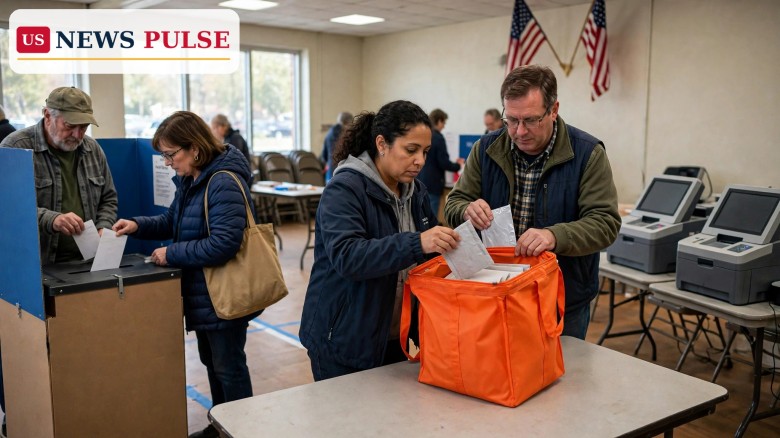
The withdrawal matters because it turns a simple paper problem into an unresolved technical failure. Scanners began rejecting ballots shortly after polls opened at 6 a.m. on Tuesday, November 3, 2026. Voting never stopped: paper ballots were sealed in secure orange emergency bags under bipartisan control. But bagged ballots cannot be tallied until processed, so results in the competitive NY-17 race — Westchester is roughly 30 percent of the district — could arrive late.
Key Points
- Westchester County's Board of Elections first blamed ballots that were too thick for the scanners, then withdrew that explanation, and no cause has been given since.
- Scanners began rejecting ballots shortly after polls opened at 6 a.m. on Tuesday, November 3, 2026, and the countywide failure continued through the day.
- Voters still cast paper ballots, sealed in secure orange emergency bags under bipartisan control, with officials saying every eligible vote will be counted.
- Representative Mike Lawler said officials are working with vendors to determine whether the ballots or the machines are at fault.
- Because emergency-bag ballots must be processed before they can be tallied, results in the NY-17 race between Lawler and Cait Conley could be delayed.
What Happened
Scanners across Westchester began rejecting paper ballots as voting started, forcing poll workers to use the standard emergency procedure: a paper ballot placed in a sealed orange bag. The board confirmed the countywide issue at around 7:30 a.m.; by mid-morning it was clear it was not confined to a few polling places.
At first, the board offered a concrete-sounding cause: the ballots were too thick for the machines to accept. That explanation was then removed from the board's statement, and no replacement followed. County Executive Ken Jenkins said there was no word on when the problem would be fixed.
Lawler, the Republican incumbent seeking re-election in NY-17, said officials were working with vendors to determine whether the ballots or the machines were at fault. A ballot-stock problem and a machine or software problem would point to different fixes and different questions about pre-election testing. The State Board of Elections said there was no disruption to voting — true in that no voter was turned away, but silent on the counting delay emergency bags create.
Background and Context
Westchester is a populous New York suburban county with long midterm ballots carrying different contests. That complexity made a thickness claim sound plausible — and why it needed testing first.
Scanner failures are not new in American elections, and administrators plan for them. Administrators plan for scanner failures: secure bags, bipartisan custody and later counting under observation are meant to stop a machine failure becoming a lost-vote failure. Less routine is a board offering a cause, then withdrawing it without a replacement, on a high-stakes day. Tuesday's midterms decide House control; NY-17 is closely watched. Polls stayed open until 9 p.m., so the question was never whether people could vote, but how quickly votes could be counted.
Westchester Ballot Scanners and the Withdrawn Explanation
The withdrawn claim deserves care, because an early explanation can quickly harden into public narrative. When a board speaks, campaigns, journalists and voters reasonably treat its words as authoritative. A thickness claim invites questions — who printed the ballots, to what specification, and were they tested in the exact machines used on Election Day? Withdrawing it without answers invites speculation a prompt technical account could have prevented.
Two broad possibilities remain, and officials have not ruled either out: a ballot problem involving stock, printing or finishing, or a machine or software problem involving scanners, firmware or configuration. Lawler's comment keeps both alive. That is honest while an investigation is under way, but it prolongs uncertainty for a possibly close race. Plainly, what has not been alleged: no official has said votes were lost, altered or counted twice, and no evidence suggests the failure favoured either candidate. The harm so far is procedural — ballots cast in good faith must wait longer to be counted.
Reactions and Quotes
Jenkins acknowledged the uncertainty directly. Lawler's focus on the vendor review reflected his interest, as candidate and official, in a credible count. His Democratic challenger, Cait Conley, had earlier joined Lawler in urging voters to stay and vote, telling both parties' voters a paper ballot was safe and would count. The county board's assurance has been consistent: every eligible vote will be counted.
Why It Matters
The episode matters for three reasons. First, it tests transparency under pressure: an unverified explanation must later be retracted, and the retraction can damage trust more than an initial admission of uncertainty. Second, resilience is measured in counting, not just voting — a system that lets everyone vote but cannot promptly count has protected only half the process, and in a close race slowness feeds suspicion. Third, it will shape reviews elsewhere, as counties check scanner testing and whether statements separate facts from hypotheses.
What Happens Next
After polls closed at 9 p.m., the task was processing the emergency-bag ballots: verifying custody, counting them under bipartisan control, and reporting totals as confirmed. The board is expected to say whether ballots or machines were at fault once the vendor review concludes. For NY-17, the consequence is patience: a delayed count is not an incomplete count, and early returns elsewhere should not be treated as final while much of Westchester remains unprocessed.
Related coverage: our earlier report, Westchester ballot scanners down on Election Day as voters use orange bags, and Justice Department names 1,000 election monitors across all 50 states. The featured image is illustrative.
Frequently Asked Questions
Why did Westchester ballot scanners fail on Election Day?
The official cause is not yet known. The board first said ballots were too thick, then withdrew that explanation, and no replacement cause has been given while officials work with vendors to determine whether the ballots or the machines were at fault.
Did voters in Westchester still get to vote?
Yes. Voters cast paper ballots, placed in secure orange emergency bags under bipartisan control. The State Board of Elections said there was no disruption to voting, and the county board said every eligible vote will be counted.
Will the NY-17 result be delayed?
It could be. Bagged ballots cannot be tallied until processed, and Westchester covers roughly 30 percent of NY-17, so a slow Westchester count can delay the district-wide result.
Was the 'too thick' ballot claim proven?
No. It was offered and then withdrawn by the county Board of Elections, and officials have not confirmed whether ballot stock, printing, machines or software caused the failure.
Are the emergency-bag votes secure?
Officials say yes: the bags are sealed and held under bipartisan control, and ballots are counted after polls close under observation. No official has alleged votes were lost or altered.
Leave a Comment