


 | Today's Date:




Richard Walters Leaves White House in First Major Shakeup Under Miller
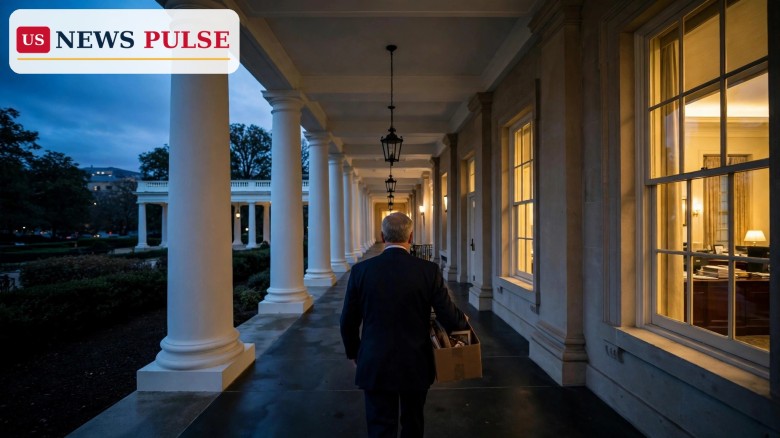
White House Deputy Chief of Staff Richard Walters is leaving the Trump administration, Axios reported on November 7, in the first major departure of the staff shakeup now under way as Stephen Miller prepares to take charge as chief of staff. Walters, one of outgoing chief of staff Susie Wiles’ closest political lieutenants, resigned on Friday, November 6. His exit, carried out without conflict, signals a changing of the guard inside the West Wing days after Republicans lost both chambers of Congress.
Key Points
- Axios reported on November 7 that Walters is leaving, the first major departure in an expected staff shakeup.
- He submitted his resignation letter on Friday, November 6; the process was conducted without conflict.
- He was one of Susie Wiles’ closest lieutenants for more than a decade, and previously served as Republican National Committee chief of staff.
- He joined the White House in May 2026, so his West Wing tenure lasted about six months.
- Stephen Miller, 41, becomes chief of staff on Monday, November 9; Wiles moves to the Trump Political Operation.
What Happened
Axios first reported the departure on November 7, with further accounts following on November 8. Walters submitted his resignation letter on Friday, November 6, and the process was conducted without conflict. No public statement from Walters had been reported, and the White House did not immediately name a successor.
The timing puts the resignation at the centre of a fast-moving reorganisation. Trump ousted Wiles on Friday, November 6, days after the midterm losses, and announced Miller would become chief of staff on Monday, November 9. The exit is described as the first major departure in an expected shakeup, and more changes are expected as Miller assembles his senior team. The deputy chief of staff helps run the West Wing’s daily operations, so a vacancy now underlines how thoroughly its leadership is about to change.
Background: Walters and Wiles
Walters arrived at the White House in May 2026, a senior appointment reflecting his long ties to Wiles. The two had worked together for more than a decade, and he had previously served as chief of staff of the Republican National Committee. That background made him one of the most politically experienced figures in the West Wing.
His departure therefore means more than a single resignation. Wiles was widely credited with bringing discipline to the second Trump White House after the churn of the first term, and Walters was part of that system. His exit on the same day Wiles was removed suggests the new leadership intends to reshape the staff in its own image. It also comes at a difficult moment: Republicans lost the House and Senate on November 3, and several House Republicans have blamed Miller’s hardline immigration agenda for the scale of the defeat.
Richard Walters and the Changing of the Guard
The focus keyword of this story is Richard Walters, and his departure is best understood as the first visible step in a changing of the guard. Miller, 41, is one of the most powerful and controversial figures in the administration, the architect of its immigration crackdown. His promotion was presented as a reward for loyalty; his critics see it differently, and Walters’ exit gives them a concrete example of the old guard leaving as the new one takes hold.
What happens next will depend on whom Miller brings with him. Reporting says his team is poised to move into more powerful roles, pointing to promotions from within his circle rather than outside hires. That would concentrate power among aides who share his approach to immigration and political combat, just as the administration faces a Democratic Congress. The White House is about to enter divided government, and whoever replaces Walters must manage Congress and the agencies while the new team finds its feet.
Reactions and Quotes
No public comment from Walters had been reported when the news broke, and reporting stressed the resignation was handled without conflict, a managed handover rather than a sacking.
The reaction dominating Washington since Miller’s promotion came from House Republicans. Representative Marlin Stutzman of Indiana told CNN’s Manu Raju on Sunday that Trump had made a “bad mistake” promoting Miller: “If your team takes a beating as badly as we took this last week, you have to fire people. You don’t promote those who are, who were in charge of what was supposed to be delivered.” Stutzman added Miller is “not liked out here in the Midwest by people. They don’t like his tone.”
Others defended Miller just as strongly. Vice President JD Vance has called him “an amazing patriot”, and White House spokeswoman Lauren Bis has described him as a key player in the America First agenda. The split captures the party’s argument: whether the midterm defeat was a failure of message and personnel, or a setback to answer with the same team.
Why It Matters
The departure matters because it is the first concrete change, not a rumour. The first resignation landed the same day the old chief of staff was removed, which tells Washington that Miller’s takeover will be thorough and more departures are likely. It also matters because of who is leaving: Walters was an operator, a Wiles loyalist with deep party experience, whose job was to make the building work. Losing that institutional knowledge at the start of a new chief of staff’s tenure is a risk, and it matters for the next two years of negotiating with a Democratic House and Senate.
What Happens Next
Miller formally becomes chief of staff on Monday, November 9, and his first days will be watched for further staff announcements. The deputy chief of staff vacancy is the most immediate question, and the name chosen will signal how Miller plans to run the West Wing. Further departures are expected, and Wiles moves to the Trump Political Operation.
US News Pulse will keep following the shakeup. For further reading, see our coverage of the House Republican backlash over Miller’s promotion, the Democratic response to the Miller appointment, and Hakeem Jeffries’ demand that Trump fire Miller.
Frequently Asked Questions
Who is Richard Walters?
Richard Walters is the White House Deputy Chief of Staff who joined the administration in May 2026, after serving as chief of staff of the Republican National Committee. He was one of Susie Wiles’ closest lieutenants.
When did Richard Walters resign?
According to Axios, Walters submitted his resignation letter on Friday, November 6, 2026, the same day Trump removed Wiles. The news was first reported on November 7.
Why is Richard Walters leaving the White House?
His departure is reported as the first major exit in an expected staff shakeup as Stephen Miller takes over. The process was conducted without conflict, and no separate reason has been given.
Who is replacing Susie Wiles as chief of staff?
Stephen Miller, 41, becomes chief of staff on Monday, November 9, 2026. Wiles is moving to the Trump Political Operation.
Will there be more White House departures?
More changes are widely expected, with Miller’s team poised to move into more powerful roles.
Leave a Comment