


 | Today's Date:



Alaska Rural Polling Places Lawsuit Puts 18 Remote Sites in Spotlight Before Election Day
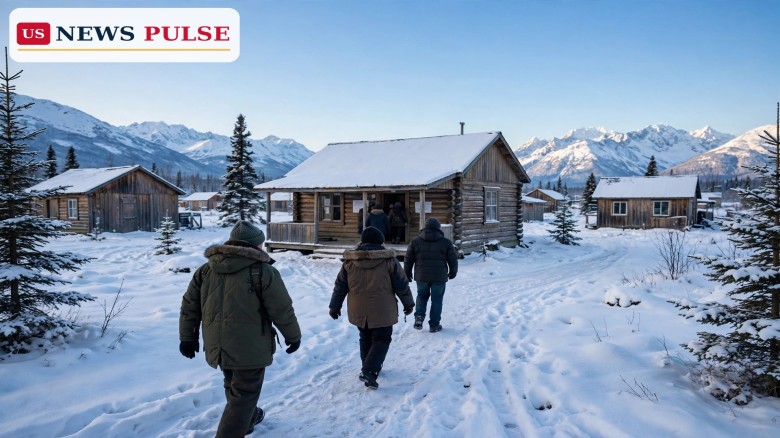
Democrats in Alaska have gone to court over at least 18 rural polling places that they say failed to open, opened late, kept irregular hours or had no ballots at all, in a last-minute legal fight over voting access in remote communities just days before the 2026 midterm election.
The complaint, filed on Friday afternoon in Anchorage Superior Court, warns that several thousand voters across remote, predominantly Alaska Native communities face being shut out of early voting in a state where elections are routinely decided by a few thousand votes, or even a few hundred. A hearing in the case was set for Monday morning, the day before Alaskans vote in a Senate contest that could help decide control of the United States Senate.
Key Points
- Alaska Democrats and rural state representatives sued the state Division of Elections over at least 18 rural absentee voting sites they say did not operate as advertised.
- The complaint says the sites failed to open, opened late, kept irregular hours or lacked ballots during the early voting window that began on 19 October.
- Plaintiffs are seeking an emergency court order requiring the division to follow the law now and on Election Day, Tuesday 3 November.
- The division's director said 12 of the 18 sites had confirmed they were open, three no longer planned to open and three had not replied.
- The case is separate from the federal lawsuit over the two Dan Sullivans on the ballot, which a judge dismissed on Sunday and the Justice Department has appealed.
What Happened
The Alaska Democratic Party and state representatives from rural Alaska announced on 29 October that they would file suit the next day against the Division of Elections, and the complaint was filed on Friday afternoon, 30 October, in Anchorage Superior Court. The suit accuses election officials of failing to properly operate at least 18 rural polling locations during the in-person absentee and early voting period.
Under Alaska law, any qualified voter can request an absentee ballot, and an in-person absentee and early voting window opens 15 days before Election Day. That meant early voting began on 19 October, with some Alaskans casting ballots from that date. In remote communities, however, the state relies on agreements with local municipal and tribal offices to host and staff the sites where residents can vote absentee in person, and the complaint says that system broke down at site after site.
The plaintiffs are asking the court for an emergency order requiring the division to follow the law now and on Election Day itself. A second lawsuit, reported by the Anchorage Daily News, was also filed by other political groups alleging that the division failed to open dozens of absentee in-person voting locations in rural Alaska ahead of Election Day. Both suits argue that the closures breach the Alaska Constitution's guarantee of the right to vote.
The division has pushed back on the scale of the problem. Elections Director Carol Beecher wrote that 12 of the 18 sites named in the Democratic complaint had confirmed they were open, three no longer planned to open and the state was still trying to reach the other three. A state judge set a hearing in the case for 9 a.m. on Monday, according to the Anchorage Daily News, putting the dispute before a court on the final full day of campaigning.
Background/Context
Alaska is by far the largest state in the country, and voting there has always depended on a patchwork of small, local sites. Villages scattered across the Arctic, the Aleutian chain and the western coast often have no road connection to the rest of the state at all, and a polling place may be a tribal office, a school or a community hall staffed by a handful of local workers. When a site does not open, the alternative for a voter may be a long and expensive journey, or a mailed ballot that must travel the same difficult routes in reverse.
The complaint lands in a state where the margins are famously tight. Alaska's elections are routinely decided by a few thousand votes, and sometimes by a few hundred, which is why the loss of even a small number of rural sites matters far beyond the villages themselves. Rural Alaska is also home to large Alaska Native populations, including Yupik-speaking communities in the west, and the Democratic complaint argues that failing to open the sites is likely to breach a federal court consent decree in Toyukak v. Dahlstrom requiring Yupik language assistance for voters in western Alaska.
The funding fight behind the suit goes back to April, when Governor Mike Dunleavy vetoed bipartisan legislation that would have increased funding for the Division of Elections for polling access and addressed the practical challenges of voting in rural Alaska. The plaintiffs say that veto left the division short of the resources it needed to staff and supply remote sites, while the governor's office has defended the veto as a fiscal decision.
Alaska Rural Polling Places and the Fight for Early Voting Access
At the heart of the Alaska rural polling places dispute is a simple question: does the right to vote early mean anything if the place where you are supposed to vote is closed when you arrive? The plaintiffs say it does not, and they argue that the division's duty is not satisfied by listing a site on a schedule. It is satisfied only when the site is open, staffed and stocked with ballots for the hours voters were told to expect.
The division's own account suggests a messier picture than either side's headline claims. If 12 of the 18 sites were in fact open, as Beecher wrote, then part of the dispute may be about poor communication rather than locked doors: voters told a site would be open, arriving to find different hours, or a site that had quietly decided not to open at all. But for the three sites that no longer planned to open, and the three the state could not reach, the complaint's core allegation stands unanswered in public, and it is those sites that the emergency order is aimed at.
The timing sharpens everything. Early voting has been running since 19 October, so some rural voters have already lost days of access they cannot get back. An order issued on Monday can still matter, however, because it can govern what happens on Election Day itself, when every polling place in the state is supposed to be open and when the same staffing problems could recur on a larger scale.
Reactions/Quotes
House Speaker Bryce Edgmon, who backed the suit, tied the dispute directly to the governor's veto. "Making voting accessible in a state as vast, rural and remote as Alaska is the state's responsibility," Edgmon said. "The Legislature upheld our end of the deal in passing a bipartisan bill that would have improved access, strengthened transparency, and maintained the integrity of our elections. Governor Dunleavy vetoed that bill."
Representative Nellie Unangiq Jimmie, who represents a rural district, said the problem repeats every cycle. "Year after year, the Division has failed to open polling places in rural Alaska, making it harder to vote here than anywhere else in the state," Jimmie said. "If I was home in Toksook currently and not in Bethel, I would not be able to vote early. The right to vote must be meaningful in practice, and recurring disruptions require more than assurances that individual problems will be addressed."
Representative Robyn Frier said voters were being left without reliable information. "Alaskans deserve to have accurate information about where and when to vote and the ability to do so easily, whether they're in downtown Anchorage or in our smallest communities," Frier said. "The Division has failed, again, to provide equitable access to voting by failing to staff absentee voting locations."
Alaska Democratic Party Chair Eric Croft said the party had filed because waiting was no longer an option. "The Alaska Democratic Party wants the Division of Elections to succeed in their duty to run open and fair elections across Alaska," Croft said. "We are filing this suit because we cannot sit idly by while, yet again, the Division of Elections makes it harder to vote in rural Alaska. This lawsuit will hold the Division of Elections accountable to the people they serve: Alaskans."
Why It Matters
The lawsuit matters first for the thousands of rural voters it names, and second for the Senate race it surrounds. Alaska's Senate contest pits Republican incumbent Dan S. Sullivan, who is seeking a third term, against former Democratic Representative Mary Peltola, with retired teacher Daniel J. Sullivan Jr. and Gerald Heikes also on the ballot. The final New York Times/Siena poll, released on 1 November, put Peltola ahead 48 per cent to 46 per cent, inside the margin of error of plus or minus five points, and the race is one of a handful that will decide whether Republicans keep their 53-47 Senate majority or Democrats gain the net four seats they need for control.
Rural Alaska does not vote as a bloc, but its communities have often been decisive in close statewide races, and the ranked-choice system Alaska uses means that small shifts in first-preference votes can change which candidates survive to the final round of counting. A result may not even be known for about two weeks after Election Day, because absentee and ranked-choice tabulation takes time. Against that background, a dispute over whether several thousand people could vote early is not a side issue. It goes to the legitimacy of whatever result eventually emerges.
The case also matters as a test of how courts handle election administration claims filed on the eve of voting. Judges are traditionally reluctant to change election rules at the last minute, but ordering an agency to do what the law already requires it to do is a different matter from rewriting the rules. The plaintiffs have framed their request in exactly those terms, and the Monday hearing will show whether the judge agrees.
What Happens Next
The immediate question is what the Superior Court judge decides after Monday's hearing. An emergency order could require the division to open and staff the disputed sites on Election Day, to publish corrected hours and locations, or to take other steps to make sure rural voters are not turned away. A refusal would leave the division's existing arrangements in place and push any remedy beyond the election.
Polls in Alaska close at 8 p.m. local time on Tuesday, which is midnight Eastern time on Wednesday, with one Aleutian Islands polling place closing an hour later. After that, attention will turn to the count, including absentee ballots and the ranked-choice tabulation that could stretch for days. The rural voting dispute is likely to resurface in that period if any candidate's margin is close enough for the missing sites to matter, and lawyers on both sides will be watching the turnout figures from the affected villages closely.
Separately, the federal fight over the Alaska ballot continues. Judge Sharon Gleason dismissed the Justice Department's lawsuit seeking to block certification if Sullivan loses narrowly, and the department appealed to the Ninth Circuit the same day. That case concerns the two candidates named Sullivan. The rural polling places case concerns whether voters in remote Alaska could cast a ballot at all, and it will be decided in state court, on its own timetable.
Frequently Asked Questions
What does the Alaska lawsuit allege?
It alleges that at least 18 rural absentee voting sites failed to open, opened late, kept irregular hours or had no ballots during the early voting period that began on 19 October.
Who filed the lawsuit?
The Alaska Democratic Party and state representatives from rural Alaska filed the suit in Anchorage Superior Court on 30 October, seeking an emergency order against the state Division of Elections.
What does the Division of Elections say?
Elections Director Carol Beecher wrote that 12 of the 18 sites had confirmed they were open, three no longer planned to open and three had not replied when the state tried to reach them.
When do Alaskans vote?
Election Day is Tuesday 3 November. Polls close at 8 p.m. Alaska time, which is midnight Eastern time on Wednesday, and the Senate result may not be known for about two weeks because of absentee and ranked-choice counting.
Is this the same as the lawsuit over the two Dan Sullivans?
No. The federal lawsuit, dismissed on 1 November and now on appeal, sought to block certification if the incumbent lost narrowly because a second candidate shares his name. The rural polling places suit is a separate state case about voting access in remote communities.
Related coverage: Judge dismisses Alaska Senate lawsuit in blow to Trump bid to block certification; DOJ appeals Alaska Senate lawsuit after judge dismisses ballot challenge; Final NYT/Siena polls: Democrats lead all seven key Senate races before Election Day.
Leave a Comment