


 | Today's Date:





Saudi Arabia Economy Shrinks 3.8% in Q3 as Oil Output Falls 20.4% Amid Iran War Fallout
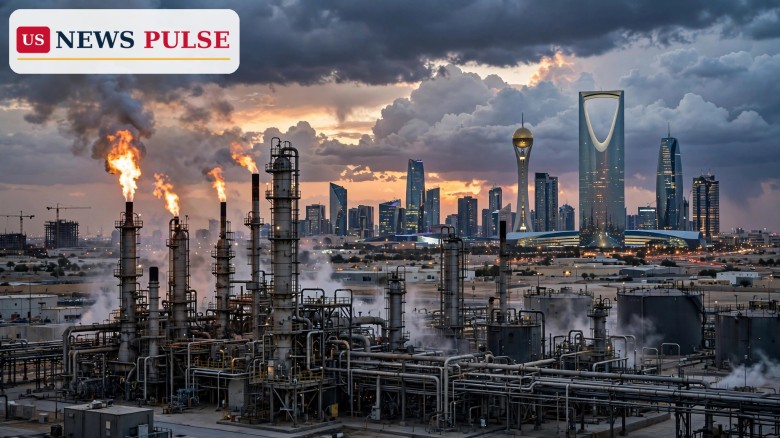
Saudi Arabia's economy shrank 3.8% in the third quarter of 2026, according to preliminary figures from the kingdom's General Authority for Statistics (GASTAT), as a sharp fall in oil output dragged down overall growth despite a welcome acceleration in the non-oil economy. The contraction, released on Sunday, November 1, was slower than the 4.7% fall in the second quarter, but it marked the first time since 2023 that the Saudi economy has contracted for two consecutive quarters, as the US-Iran war weighed on the world's largest oil exporter.
Oil activities fell 20.4% year on year, subtracting about 4.7 percentage points from growth. The war, which began on February 28, 2026, disrupted shipping through the Strait of Hormuz and hit Saudi energy exports, including a temporary September shutdown of the East-West pipeline to the Red Sea. Non-oil activities grew 1.9%, up from 0.8-0.9% in the previous quarter, while government activities fell 2.7%. On a seasonally adjusted basis, real GDP rose 1.3% quarter on quarter, a sign the economy stabilised within the quarter even as the annual comparison stayed deeply negative.
Key Points
- Saudi Arabia's real GDP shrank 3.8% year on year in Q3 2026, after a 4.7% contraction in Q2 — the first back-to-back quarterly contractions since 2023.
- Oil activities plunged 20.4% year on year, subtracting about 4.7 percentage points from growth, as the US-Iran war disrupted Hormuz shipping and energy exports.
- Non-oil activities grew 1.9%, accelerating from 0.8-0.9% in the previous quarter, the clearest sign of resilience in the diversification drive.
- Government activities fell 2.7%, while seasonally adjusted GDP rose 1.3% quarter on quarter, suggesting stabilisation within the quarter.
- The IMF's October outlook forecasts a 3.3% contraction for Saudi Arabia in 2026, then a 7.9% rebound in 2027; Riyadh projects a 2026 budget deficit of 4.9% of GDP.
What Happened
GASTAT published its preliminary third-quarter estimates on November 1, giving the first official read on how the Saudi economy coped with a summer dominated by war in the Gulf. The headline figure was an improvement on the second quarter, but its composition told a more complicated story: almost the entire drag came from oil. A 20.4% collapse in oil activities, reflecting lower output and disrupted exports, subtracted roughly 4.7 percentage points from growth on its own, meaning the rest of the economy, taken together, actually added to growth.
The non-oil sector was the bright spot. Growth of 1.9% was more than double the pace of the previous quarter, suggesting domestic demand, services and non-oil industries kept expanding even as energy contracted. Government activities fell 2.7%. The quarterly comparison added further nuance: after seasonal adjustment, real GDP rose 1.3% on the second quarter, indicating the worst of the shock may have passed during the summer rather than deepening into autumn.
Background and Context
Saudi Arabia's economy is still dominated by oil. Hydrocarbons account for the bulk of government revenue and export earnings, so any sustained disruption to production or shipping flows through quickly to the national accounts. The US-Iran war has been exactly that kind of shock: fighting around the Strait of Hormuz, through which a large share of the world's seaborne oil passes, has repeatedly threatened tanker traffic, pushed up insurance and shipping costs, and forced Gulf producers to reroute or curtail exports.
For Saudi Arabia the disruption has been direct as well as indirect. The temporary September shutdown of the East-West pipeline, which moves crude from the eastern oilfields to the Red Sea port of Yanbu, removed a key export route just as Hormuz shipping was under strain. The last time the kingdom recorded two consecutive quarterly contractions was in 2023, when voluntary OPEC+ production cuts weighed on output. The current episode is different in kind: it is driven by war, not by a policy choice to restrain supply.
Saudi Arabia Economy: Oil Output Falls 20.4%
The 20.4% fall in oil activities is the single most important number in the release. It reflects both lower volumes and the logistical chaos of wartime exports, and GASTAT's estimate implies oil alone subtracted about 4.7 percentage points from headline growth — more than the economy's total contraction — so the non-oil and government sectors combined partly offset the energy collapse.
That arithmetic also explains why the quarterly figure looks better than the annual one. Year-on-year comparisons still capture the depth of the shock against a pre-war baseline, while the 1.3% seasonally adjusted quarterly rise suggests activity picked up within the third quarter itself. For global energy markets, the figures are a reminder of how much supply the war has removed: Saudi Arabia is the world's largest crude exporter and the swing producer within OPEC+, so a one-fifth fall in its oil activities reverberates through prices and the import bills of oil-consuming economies. Brent crude plunged more than 7% in a single session on November 2 on hopes of a diplomatic breakthrough.
Reactions and Quotes
The International Monetary Fund, in its October outlook, forecast that the Saudi economy will contract by 3.3% across 2026 as a whole before rebounding by 7.9% in 2027 — a profile that assumes the conflict does not escalate further and oil exports normalise. The Saudi government projects a 2026 budget deficit of 4.9% of GDP, reflecting both lower oil revenues and continued spending on diversification projects.
Why It Matters
The Saudi contraction matters far beyond Riyadh. As the world's largest oil exporter, Saudi Arabia's output and export capacity shape global energy prices, and energy prices shape inflation, interest rates and growth everywhere else. A 20.4% fall in Saudi oil activities helps explain why oil markets have been so volatile this autumn, and why policymakers from Washington to New Delhi watch Gulf diplomacy as closely as their own inflation data.
What Happens Next
The next test comes with GASTAT's revised third-quarter estimates and the first read on the fourth quarter, which will show whether the 1.3% quarterly rebound continued into autumn. Markets will also watch for diplomatic progress between Washington and Tehran: reports this week of Qatari mediation have already moved oil prices sharply, and a genuine de-escalation could restore Hormuz shipping and Saudi exports faster than the IMF's baseline assumes.
Frequently Asked Questions
How much did Saudi Arabia's economy shrink in Q3 2026?
Real GDP shrank 3.8% year on year in Q3 2026, per preliminary GASTAT figures released November 1, a slower contraction than the 4.7% fall in Q2.
Why did the Saudi economy contract?
Oil activities fell 20.4% year on year, subtracting about 4.7 percentage points from growth, as the US-Iran war disrupted Hormuz shipping and Saudi energy exports, including a temporary September shutdown of the East-West pipeline.
Did anything grow in the third quarter?
Yes. Non-oil activities grew 1.9% year on year, up from 0.8-0.9% in Q2, and seasonally adjusted GDP rose 1.3% quarter on quarter, suggesting stabilisation within the quarter.
What does the IMF forecast for Saudi Arabia?
The IMF's October outlook forecasts a 3.3% contraction in 2026, then a 7.9% rebound in 2027; the Saudi government projects a 2026 budget deficit of 4.9% of GDP.
Read more: Saudi Aramco Q3 profit jumps on higher oil prices; Iran hangs two men over Isfahan protest killings; Europe bomb threats disrupt flights.
Leave a Comment