


 | Today's Date:



Supreme Court Preschool Case Heard as Catholic Schools Challenge Colorado Rules
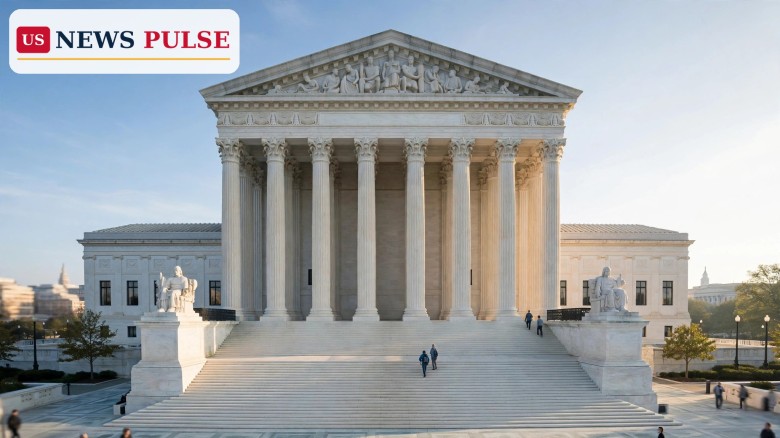
WASHINGTON — The Supreme Court heard oral arguments on Tuesday, November 3, 2026, in the Supreme Court preschool case pitting religious freedom against nondiscrimination rules, as two Catholic preschools asked to join Colorado's publicly funded Universal Preschool program while refusing to enrol children on the basis of sexual orientation or gender identity. The case, St. Mary Catholic Parish v. Roy, docket No. 25-581, could reshape how states attach conditions to public money flowing to faith-based schools nationwide.
The Election Day hearing drew swift reactions from both sides. The schools called Colorado's rule punishment for Catholic teaching; the state called it a neutral condition applying equally to every provider taking taxpayer money. A decision is expected before the term ends in summer 2027.
Key Points
- The Supreme Court heard arguments on November 3, 2026, in St. Mary Catholic Parish v. Roy, over Colorado's Universal Preschool program.
- Two Archdiocese of Denver preschools — St. Mary in Littleton and St. Bernadette/Wellspring in Lakewood — want state funding while keeping religious admissions policies.
- Colorado requires participating providers to offer equal enrolment regardless of sexual orientation and gender identity.
- The Tenth Circuit upheld Colorado's requirements in September 2025, holding the rule applies equally to all schools.
- A decision is due before the term ends in summer 2027 and could affect state-funded education programs nationwide.
What Happened
The justices heard on Tuesday morning from lawyers for the Catholic preschools, for Colorado officials, and for the federal government. At the centre is a consequential question: when a state offers public money to private preschools, can it require every participating school to promise equal access, even when a religious school says that promise conflicts with its faith?
The schools, represented by the Becket Fund for Religious Liberty, argue Colorado's condition excludes them because of their religious beliefs. Colorado counters that the schools remain welcome to participate on the same terms as every other provider, public and private, secular and religious. The schools say they have been shut out of a program launched in 2023 giving parents roughly $6,000 to $6,300 per child for 15 hours a week of preschool.
Background and Context
Colorado launched Universal Preschool in 2023 to give every four-year-old free, part-time preschool, including at faith-based schools. The dispute began when the Archdiocese of Denver's preschools sought to join while keeping admissions policies rooted in Catholic teaching on marriage, sexual orientation, and gender identity. Colorado said its rules left no room for that exception.
The lower courts sided with the state. A district court upheld Colorado's protections in 2024, and the Tenth Circuit affirmed in September 2025, holding that the requirements apply equally to all schools and do not single out religion. The backdrop is a series of recent Supreme Court decisions expanding religious institutions' access to public benefits, holding that states cannot categorically withhold public funds from religious institutions simply because they are religious. The preschools say those rulings control here; Colorado says this case differs because it welcomed religious schools, provided they accept the same nondiscrimination promise as everyone else.
Supreme Court Preschool Case: The Legal Question Before the Justices
The court framed two questions. First, whether exceptions to Colorado's enrolment requirements undermine their general applicability under the First Amendment's Free Exercise Clause. Second, whether prior rulings protecting religious institutions' access to public benefits apply to this dispute.
A law that is neutral and generally applicable receives less searching judicial review than one targeting religion. The schools argue Colorado's rule is not truly general, because the state allows other exceptions and lets participating preschools favour LGBTQ families while penalising Catholic beliefs. Colorado says the rule is even-handed. On benefits, the schools say Colorado denies an otherwise available benefit because they are religious; the state replies the benefit is available on the same terms as anyone else. A ruling for the schools could require states to fund religious providers that decline nondiscrimination rules; a ruling for Colorado could confirm states may attach equal-access conditions to public funds.
Reactions and Quotes
Americans United for Separation of Church and State, which filed an amicus brief supporting Colorado alongside more than a dozen national and religious organisations, issued a statement as arguments were heard.
"Religious freedom should never be used as a license to discriminate and deny children access to a taxpayer-funded educational program," said Rachel Laser, the organisation's president and chief executive. "We urge the U.S. Supreme Court to protect the religious freedom of Colorado taxpayers and LGBTQ+ children and families by ensuring public programs don't fund discrimination."
The schools' side framed it in mirror-image terms. Nicholas Reaves, counsel at the Becket Fund for Religious Liberty, has said Colorado denied families "the ability to use that funding at Catholic preschools, simply because those preschools have religious beliefs the state doesn't like." A coalition of 19 state attorneys general filed a brief backing Colorado, and the Trump administration has backed the Catholic groups.
Why It Matters
Preschool is often a family's first encounter with the education system, and the ruling will signal how far states can go in attaching civil-rights conditions to money flowing to religious providers. For LGBTQ families, it asks whether a taxpayer-funded program can include a school that would turn their child away. For religious schools, it asks whether the state can use funding power to require them to act against their faith as the price of participation. Lawmakers considering universal preschool or expanded vouchers will watch closely, since the ruling will define the trade-offs they must build into their statutes.
What Happens Next
The justices will confer privately and draft opinions, a process that typically takes months. Until the decision, Colorado's program continues under the existing rules, and the two preschools remain outside it unless they agree to the equal-opportunity requirement. For Colorado parents, the effect will be felt in enrolment season: if the schools win, Catholic families could use state funds at St. Mary and St. Bernadette/Wellspring for the first time; if Colorado wins, the status quo holds.
Frequently Asked Questions
What is St. Mary Catholic Parish v. Roy about?
Two Catholic preschools want to join Colorado's Universal Preschool program while refusing to enrol children on the basis of sexual orientation or gender identity; Colorado requires equal enrolment from all participating providers.
When did the Supreme Court hear arguments?
Oral arguments were held on Tuesday, November 3, 2026. A decision is expected before the term ends in summer 2027.
How much funding does Colorado's program provide?
Launched in 2023, it gives parents about $6,000 to $6,300 per child for 15 hours a week of preschool, including at faith-based schools accepting its requirements.
What did the lower courts decide?
A district court upheld Colorado's protections in 2024, and the Tenth Circuit affirmed in September 2025, holding the requirements apply equally to all schools.
What happens if the schools win?
They could join the program while keeping their religious admissions policies, and other states might have to reconsider their own nondiscrimination conditions for religious providers.
Related coverage: our earlier report on the Colorado preschool case, lawmakers urge Trump to cancel Afghan deportation flights, and Justice Department bars Jack Smith from testifying in Trump's BBC case.
Leave a Comment