


 | Today's Date:
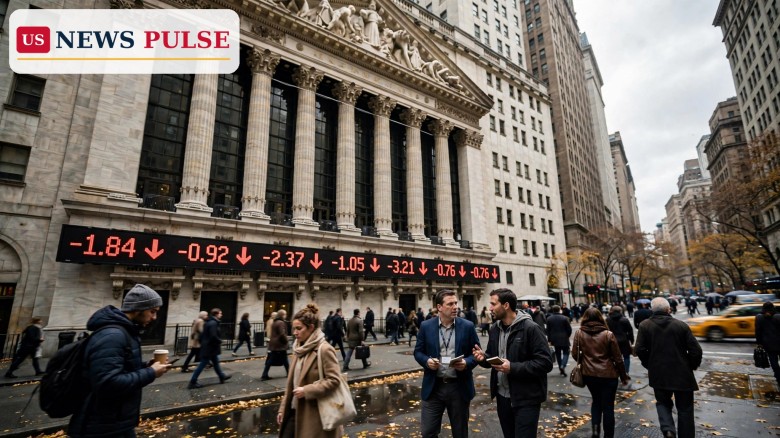




Wall Street Closes Mixed Monday: Dow Rises as Nasdaq Falls on Tech Sell-Off
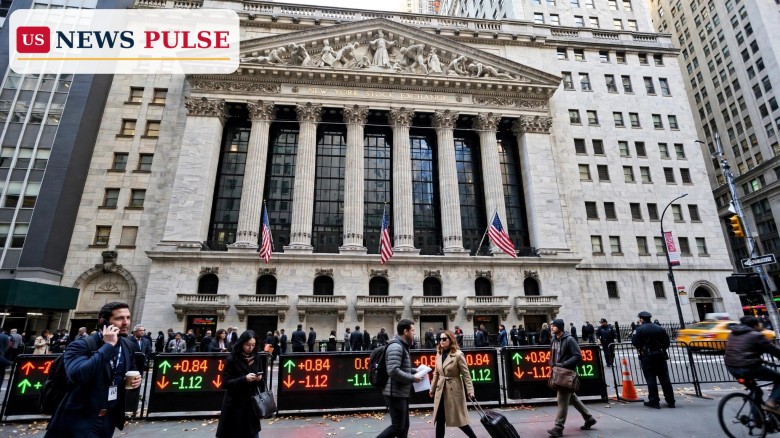
Wall Street closes mixed on Monday, November 2, 2026, after a session that began with a rebound and ended with technology stocks dragging the broader market lower. The Dow Jones Industrial Average rose 0.41% to 51,983.98, the only major index to finish higher, while the S&P 500 fell 0.51% to 7,541.40 and the Nasdaq Composite dropped 1.07% to 25,164.32.
Key Points
- The Dow gained 213.67 points (+0.41%) to 51,983.98, the session's only major-index rise.
- The S&P 500 fell 38.67 points (-0.51%) to 7,541.40, and the Nasdaq Composite fell 272.68 points (-1.07%) to 25,164.32.
- Technology fell 2.66% as a sector, its third straight daily decline, and the Philadelphia Semiconductor Index dropped 3.37%.
- Intel fell 8.8%, Marvell Technology dropped 12.72% and Oracle fell 8.85%, extending the AI-stock sell-off after October's rout.
- Oil plunged on hopes for US-Iran diplomacy: WTI crude fell about 8% to $95.80 a barrel, and energy shares fell 3.97%.
What Happened
Stocks surged in early trading but turned lower as the technology sector came under pressure, Salem Radio Network reported, with investors bracing for a busy week of earnings on the eve of Tuesday's midterm elections. At the closing bell, the Dow had gained 213 points, the S&P 500 had lost 38 points and the Nasdaq had fallen 272 points.
The split was stark. Consumer discretionary led the sectors, up 2.25%, with materials up 1.83% and financials up 1.76%, according to the market wrap carried by The Edge. Energy fell 3.97%, the deepest sector move of the day, as crude prices sank. The Nasdaq 100 closed 1.39% lower at 27,989.82, and the Russell 2000 was little changed.
Chip stocks were the big decliners. Intel, which had plunged nearly 30% on Friday in its worst day since the 1980s, fell another 8.8% on Monday. Marvell Technology dropped 12.72%, Lumentum fell 18.59%, Micron Technology fell 5.7% and Oracle dropped 8.85% to $119.10. The iShares Semiconductor ETF fell nearly 4%, and the Philadelphia Semiconductor Index closed 3.37% lower at 10,328.33.
Not everything fell. Sherwin-Williams rose 6% to pace Dow advancers, while Walmart and McDonald's each added about 3%, as did American Express and Visa. Transportation stocks got a boost from cheaper oil: United Airlines rose 5%, while American and Delta each added about 4%. The Nasdaq Golden Dragon China Index rose 2.2%, with Alibaba up 3.5% and Bilibili up 6.5%. Gold futures rose 1.5% to $3,955 an ounce, after falling below $3,900 on Friday to their lowest level in more than a year. Bitcoin traded at about $76,700.
Background: From Friday's Rout to Monday's Reversal
Monday's close followed one of the worst sessions of the year. On Friday, October 30, the Dow slid 1.1%, or 572.25 points, to 51,770.31, the S&P 500 fell 1.8% to 7,580.07 and the Nasdaq tumbled 2.9%, or 747.73 points, to 25,437 — the Nasdaq's worst single-day percentage drop in nearly five months. The CBOE Volatility Index jumped 12.91% to 19.42, and nearly 19.87 billion shares changed hands, above the recent 20-session average.
October itself was brutal for technology. The Nasdaq posted its biggest one-month decline since March 2025, and the Nasdaq 100 shed more than $2.5 trillion in value during the month, coming close to correction territory, even as the Dow ended the month about 2% higher. Monday morning had looked like a clean rebound: US News Pulse reported the Dow jumping 407 points in early trading as AI stocks recovered and oil fell, with Nvidia up 1.6% and Alphabet up more than 1%. By the close, that rebound had survived only in the Dow.
Two forces pulled the market in opposite directions on Monday. Hopes for a diplomatic path out of the eight-month US-Iran war pushed oil sharply lower — Brent settled 7.63% lower, according to The Edge, and WTI fell about 8% — which helped airlines, retailers and other consumers of fuel. At the same time, doubts about the costs and returns of artificial-intelligence investment, sharpened by last week's earnings from Alphabet, Intel and Amazon, kept pulling money out of the chip and software names that had powered the market to record highs.
Wall Street Closes Mixed: Tech Leads the Decline
The pattern of Monday's session — an early rally that faded as technology fell — is the third straight day of steep declines for the Nasdaq, Investopedia reported, and the third consecutive decline for the S&P 500 technology sector. The S&P 500 technology index fell 2.7% on Monday alone. That persistence matters: a one-day drop can be noise, but three straight days of technology-led selling, on top of October's rout, looks like a rotation out of the market's leaders and into value, defensive and energy-adjacent names — at least for now.
The ISM Manufacturing PMI for October, reported earlier on Monday at 55.5, up from 54.5 in September and above the 54.5 forecast, gave the broader economy a tailwind in the morning. Manufacturing has now been above the 50 expansion mark all year, and domestic demand was the strongest in more than five years in the third quarter. But a strong factory report could not hold up the chip stocks, whose problem is not demand for manufactured goods in general but the specific question of whether AI spending will pay off fast enough to justify their valuations.
Apple and Palantir, both reporting after Monday's close, were the evening's other big event. Apple shares had fallen 2.4% ahead of its results, and Microsoft was down 1.3%, Micron down 5.3% and AMD down 6% during the session, according to TradingView's intraday reporting. Amazon climbed 3.5% and Tesla gained 1.3% on the day. The after-close results — Palantir revenue up about 96% and Apple revenue up 12%, both beating expectations — are covered in separate US News Pulse reports.
Reactions and Market Commentary
Market commentary on Monday centred on the same tension that has defined the last month: a resilient real economy against a technology sector whose valuations are being re-examined. Analysts noted that the Dow's rise, led by consumer, materials and financial shares, showed money rotating rather than leaving the market altogether — value absorbing what technology was shedding, as The Edge's wrap put it.
The oil move drew its own commentary. CNBC reported US crude falling below $100 a barrel amid reports of US-Iran diplomatic efforts, and the drop in energy shares that followed was the mirror image of the gain for airlines and transport stocks. For American households, the market session also connects to the petrol pump: with Election Day petrol prices already set for a record, according to AAA data reported by US News Pulse, cheaper crude could eventually ease the pressure — though wholesale and retail prices move with a lag.
No single analyst call defined the day, and this article does not invent one. What the reported commentary agrees on is the shape of the week ahead: Tuesday's midterm elections, Friday's jobs report, and the earnings season still to come will decide whether Monday's split close was a pause in a rotation or the start of a deeper correction in technology.
Why It Matters
A split close matters because it tells a different story from a uniform sell-off. When everything falls together, investors are usually reacting to a single shock. When the Dow rises while the Nasdaq falls, the market is making a judgement about which companies deserve their valuations — and on Monday, that judgement went against the AI and chip complex that had driven the market for two years.
For ordinary savers, the distinction is real. Retirement accounts and index funds hold both the Dow's winners and the Nasdaq's losers, so a mixed day is less damaging than Friday's rout — but a sustained rotation out of technology would still change the balance of most portfolios, because technology has been the largest weight in the S&P 500. The gold move, up 1.5% after Friday's fall below $3,900, is another sign that some investors are hedging rather than simply selling.
The session also matters politically, on the eve of the midterms. Voters heading to the polls on Tuesday will do so with petrol at record Election Day levels, a stock market that has just had its worst technology month since early 2025, and a manufacturing sector that, by the ISM measure, is still expanding. Markets do not vote, but they shape the mood in which votes are cast.
What Happens Next
Tuesday brings the midterm elections themselves, and markets will react to the results — particularly to whether Democrats take the House, the Senate, or both — when trading resumes on Wednesday. Friday brings the jobs report, with about 55,000 new jobs expected, and the rest of the earnings season continues through the week, with AMD reporting on Tuesday.
Traders will also watch oil. If diplomatic hopes around Iran fade, crude could retrace part of Monday's plunge, which would reverse the boost for airlines and transport and put energy shares back in the lead. If diplomacy advances, the opposite rotation could continue. Either way, the technology question — whether AI spending pays off — will not be settled by one earnings season, and Monday's close suggests investors are no longer willing to assume the answer.
Frequently Asked Questions
How did the major indexes close on Monday, November 2, 2026?
The Dow Jones Industrial Average rose 0.41% to 51,983.98. The S&P 500 fell 0.51% to 7,541.40. The Nasdaq Composite fell 1.07% to 25,164.32. The Dow was the only major index to finish higher.
Why did the Nasdaq fall while the Dow rose?
Technology stocks fell for a third straight day, with the S&P 500 technology sector down 2.66% and chip stocks hit hard — Intel down 8.8%, Marvell down 12.72% and Oracle down 8.85%. Meanwhile, consumer, materials and financial shares rose, lifting the Dow.
What happened to oil prices?
Oil plunged on hopes for US-Iran diplomacy. WTI crude fell about 8% to $95.80 a barrel, and Brent settled 7.63% lower. Energy shares fell 3.97%, while airlines including United (+5%) gained.
How does Monday compare with Friday's session?
Friday, October 30, was a broad rout: the Dow fell 1.1% to 51,770.31, the S&P 500 fell 1.8% to 7,580.07 and the Nasdaq tumbled 2.9% to 25,437. Monday was a split session — a Dow gain against Nasdaq and S&P 500 declines — rather than a uniform sell-off.
What should investors watch next?
Tuesday's midterm election results, Friday's jobs report (about 55,000 jobs expected), further earnings including AMD on Tuesday, and whether oil holds Monday's decline or retraces it.
Related coverage: Monday's early Wall Street rebound, the ISM Manufacturing PMI jump to 55.5, and record Election Day petrol prices.
Leave a Comment