


 | Today's Date:
DHS Chief Mullin Warns Ineligible Voters on Election Day: 'We Will Hunt You Down'
Homeland Security Secretary Markwayne Mullin issued a blunt Election Day warning on Tuesday, November 3, 2026: anyone who votes illegally will be found, hunted down and prosecuted. The DHS election warning, posted on X as millions of Americans voted in the midterms, arrived alongside the largest federal election-monitoring operation in US history.
“If you vote illegally in this country, and you are NOT eligible to vote, @DHSgov will find you, hunt you down, and you will be prosecuted to the fullest extent of the law,” Mullin wrote. “Only American citizens should be deciding American elections.”
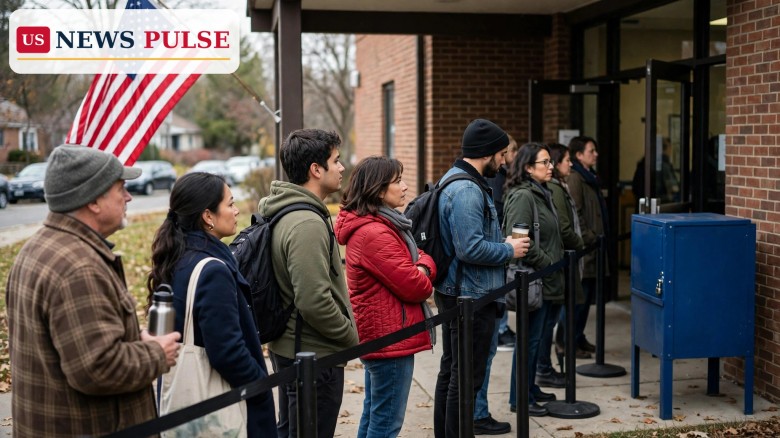
Voters were choosing all 435 House seats, 35 Senate seats and governors in 36 states. The Justice Department confirmed it had sent more than 1,000 monitors and observers to all 50 states, a first for the programme.
Key Points
- Homeland Security Secretary Markwayne Mullin warned ineligible voters on Election Day, November 3, 2026, that DHS will “find you, hunt you down, and you will be prosecuted.”
- Mullin said only American citizens should be deciding American elections.
- Assistant Attorney General Harmeet K. Dhillon confirmed the Justice Department sent more than 1,000 monitors and observers to all 50 states, its largest effort ever.
- Voters were asked to report problems to local officials or to the Civil Rights Division at 1-800-253-3931.
- The midterms decided all 435 House seats, 35 Senate seats and governors in 36 states.
What Happened
Mullin posted his warning on X on Tuesday morning, as polls were open across the country. The post was short and direct, leaving no doubt about the administration’s position: voting by someone who is not eligible is a crime, and the Department of Homeland Security intends to pursue it.
Alongside the warning, Assistant Attorney General Harmeet K. Dhillon confirmed the scale of the Justice Department’s monitoring operation. More than 1,000 monitors and observers were deployed to all 50 states, described as the largest election-monitoring effort in the department’s history. Voters who encountered problems were asked to report them to local officials or to the Civil Rights Division hotline, 1-800-253-3931.
Background and Context
Under federal law, only United States citizens may vote in federal elections, and voting by a noncitizen in a federal election is a criminal offence. States run their own elections, but federal law sets the citizenship requirement for House, Senate and presidential races.
The Department of Homeland Security is central to enforcement because it holds immigration records. When questions arise about a voter’s eligibility, DHS databases are among the sources investigators can check, so a warning from its secretary carries more weight than a general election-integrity statement.
The monitoring operation also has a long history. The Justice Department has sent observers to elections for decades under federal voting-rights law, checking that eligible voters can cast ballots and that federal protections are respected. What changed in 2026 was the scale: from selected jurisdictions in past cycles to all 50 states at once. US News Pulse reported the full deployment, including the jurisdictions named by the department, earlier on Election Day.
DHS Election Warning: What Mullin Said and What It Means
The DHS election warning rests on a simple claim: only American citizens should decide American elections. That principle is already the law, but Mullin’s language was deliberately forceful. “Hunt you down” is not the usual language of an election notice; it is the language of a law-enforcement threat, plainly meant to deter anyone considering voting without eligibility.
Deterrence is the point of such warnings, but it raises a familiar Election Day question: how do officials warn against illegal voting without discouraging eligible voters? Voting-rights advocates have long argued that strong enforcement language can worry lawful voters, particularly naturalised citizens. The administration’s answer, reflected in Mullin’s post, is that the warning targets only people who are not eligible.
There is also a practical side. Prosecutions for illegal voting are rare, and documented cases of noncitizen voting in federal elections have historically been very small in number. The warning’s main effect is therefore likely to be as a signal — to voters, election officials and the public debate — rather than the start of a wave of cases. Monitors and observers, who watch, record and report rather than running polling places, give that signal institutional backing.
Reactions and Quotes
Mullin’s post was the centrepiece, its closing line — “Only American citizens should be deciding American elections” — setting the tone for the day. Dhillon’s confirmation supplied the operational detail: more than 1,000 monitors and observers across all 50 states, presented as the largest monitoring operation in Justice Department history.
No charges, arrests or specific cases were announced alongside the warning. The post named no individual, state or polling place, and did not claim that illegal voting had been detected on Election Day. It was a general warning, issued before results were known, rather than a report of wrongdoing found.
Why It Matters
First, the warning sets the enforcement tone for the rest of the midterm count. Ballots will be tallied, including mail-in and provisional ballots, and disputes over eligibility could surface in close contests. A public warning from the Homeland Security secretary on Election Day itself becomes part of the record in any later argument about how the election was policed.
Second, it reflects how central immigration and citizenship have become to the administration’s election message. The midterms were fought, in part, over who belongs in the American electorate and how strictly that line should be enforced.
Third, it sits alongside an unprecedented monitoring effort. A 50-state deployment changes the federal footprint on Election Day and could become the template for 2028, or test the limits of federal election oversight.
What Happens Next
Attention now turns to the count. Close races may take days to call, and any allegations of ineligible voting will be tested against voter rolls and federal records. The warning may be followed by enforcement action if cases are found, or stand alone as a deterrent. The monitors’ reports will inform future decisions about where observers are sent.
Election Day was not without problems elsewhere. In Westchester County, New York, ballot scanners failed countywide on Tuesday morning, and voters cast paper ballots placed in secure orange emergency bags.
Frequently Asked Questions
What did Secretary Mullin actually say?
On X on Election Day, November 3, 2026, he warned that if you vote illegally and are not eligible, DHS will “find you, hunt you down, and you will be prosecuted to the fullest extent of the law.”
Who is eligible to vote in federal elections?
Only United States citizens may vote in federal elections for the House, Senate and president. Voting by a noncitizen in a federal election is a criminal offence under federal law.
How many federal monitors were deployed on Election Day?
More than 1,000 monitors and observers were sent to all 50 states, according to Assistant Attorney General Harmeet K. Dhillon — the largest operation in Justice Department history.
Where can voters report problems?
To local election officials or to the Justice Department Civil Rights Division at 1-800-253-3931.
What was decided on Election Day 2026?
All 435 House seats, 35 Senate seats and governors in 36 states in the midterm elections.
Leave a Comment